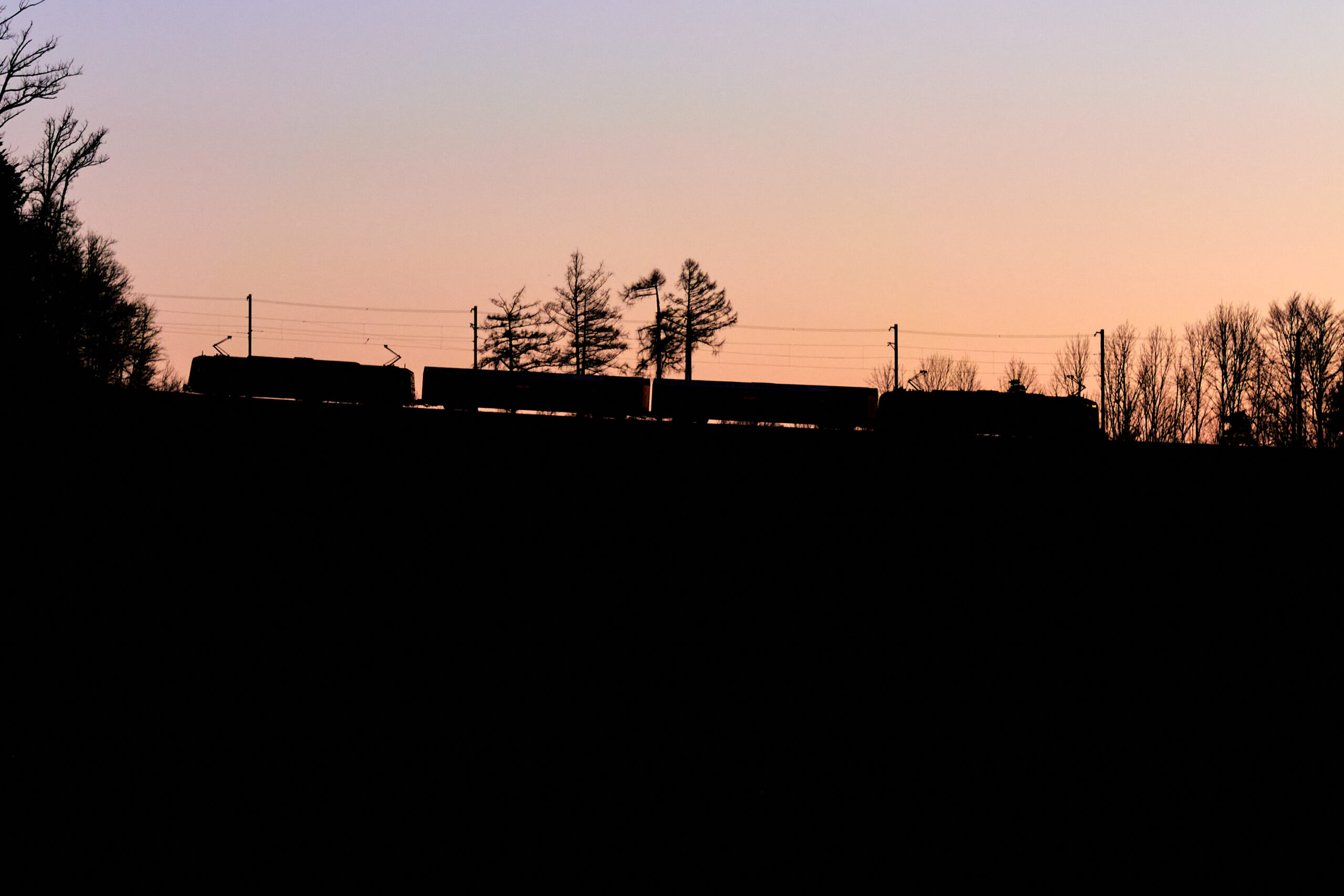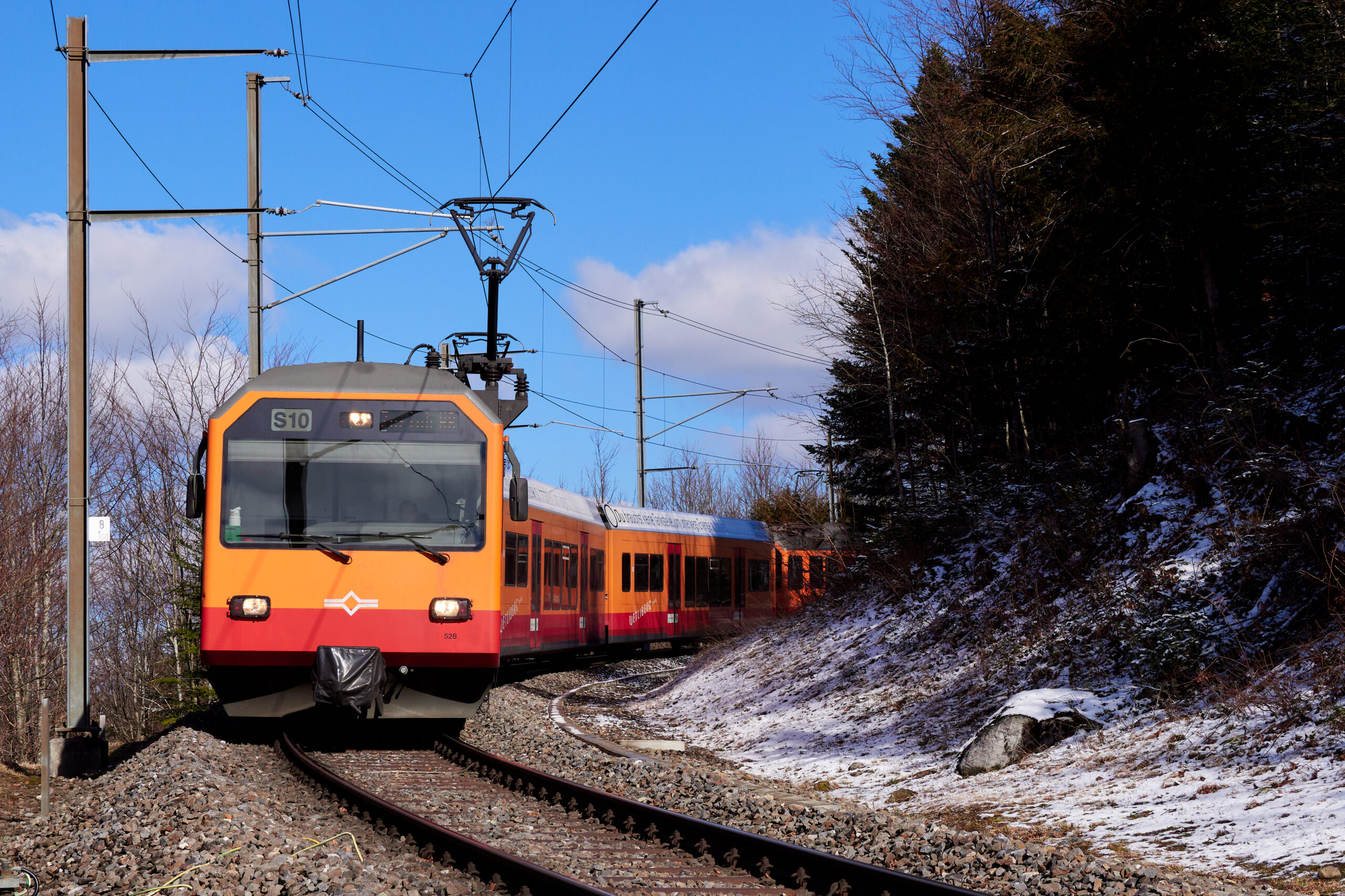
Back in twitter times, I used to write threads about Swiss railway lines every now and then. The most successful of all these threads was undoubtedly the one which basically waited on my doorsteps for years: Welcome to Zurich’s quirky Uetlibergbahn, my #MountainMetro.
Apart from my special relationship with this line – it is, after all, my everyday railway – the S10 is actually one of the craziest railways in Switzerland. Or was. Because the line lost a lot of its special features in spring 2022 with the start of extensive modernisation.
In the months before, I climbed Mount Uetliberg at least once a week, always hoping to catch one of the peculiar class Be 520s railcars for a photo or the ride downhill. Working on this thread was also my personal farewell to an era of my local railway. Join me on a journey back to spring 2022 to the last days of the orange fleet on the #MountainMetro.
#MountainMetro was first published as a thread on my meanwhile deleted Twitter acocunt in April 2022. This a recreation of the thread in its original format. The content (texts, photos) refers to the state at the time of the first publication. Update boxes indicate major changes up to January 2026.
Dominic Stucki
@dominicstucki
This Easter Monday, my local railway bids farewell to its 1992 stock, the class Be 520. This means: Railway portrait time!
Today: Zürich’s steepest, quirkiest and loveliest S-Bahn. The #SZU S10 #Uetlibergbahn, my #MountainMetro. Welcome to my neighborhood! 🏘️


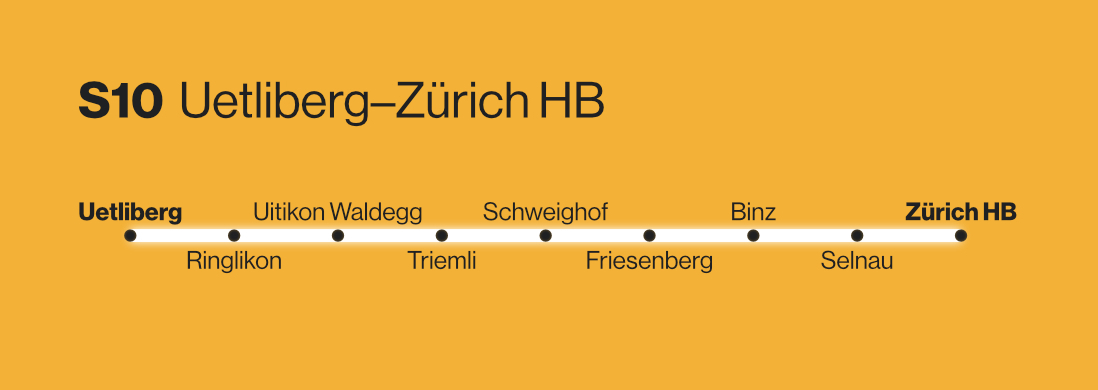
The S10 connects mount Uetliberg, Zürich’s landmark mountain, the Friesenberg residential area and the important work area of Binz with Zürich’s main station „Zürich HB“ in the city centre.
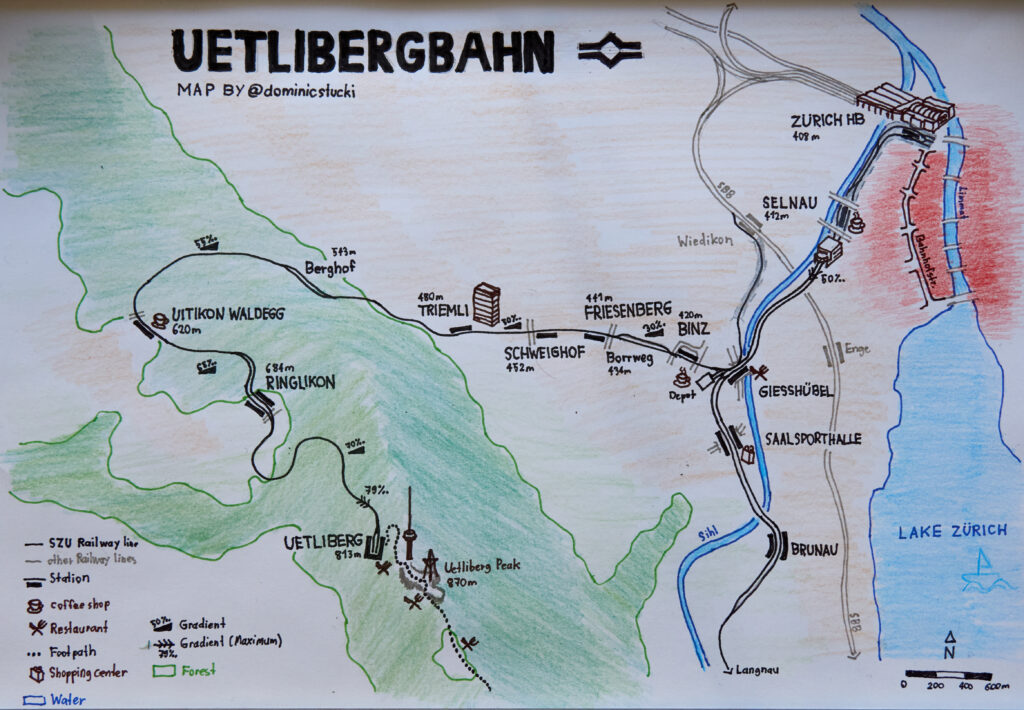
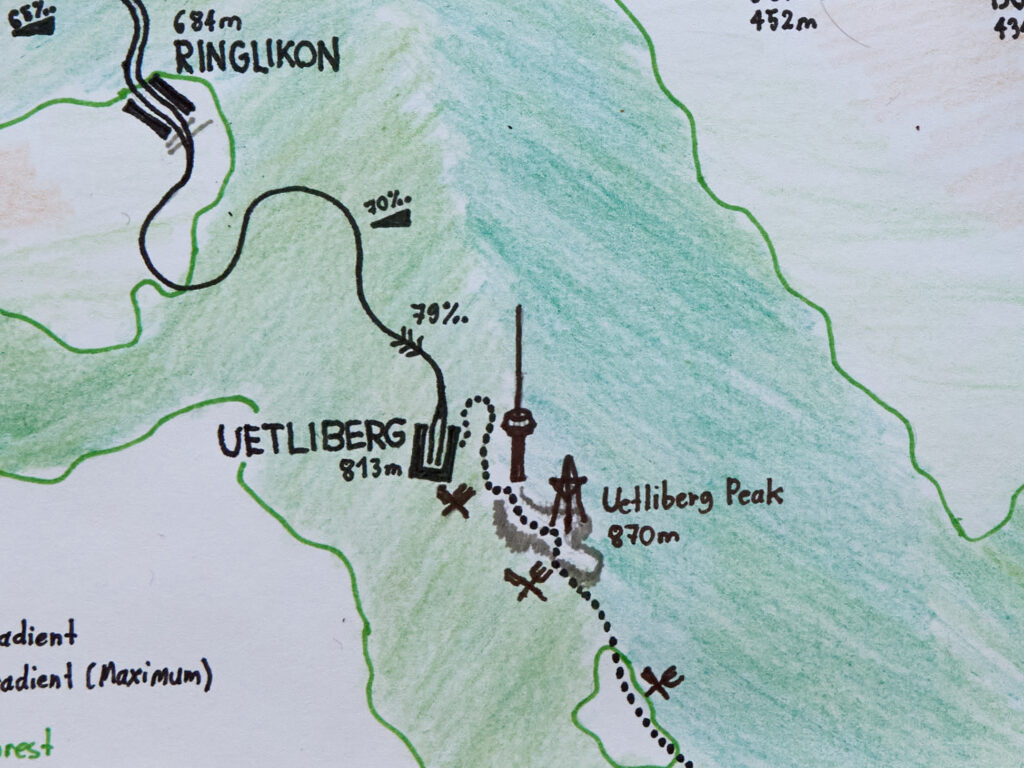
The 9.1 km long line is a standard gauge railway, electrified with 1200 V DC and with gradients up to 79 per mil. The line opened in 1875 and is today operated by Sihltal-Zürich-Uetliberg railway SZU.

📈 Quelle: SZU

Our journey starts at Zürich HB, where #SZU has its own underground station. Before 1990, the lines ended at Zürich Selnau, roughly 1 km south of Zürich HB. The underground station at HB was built for the never completed Zürich metro and repurposed for SZU.
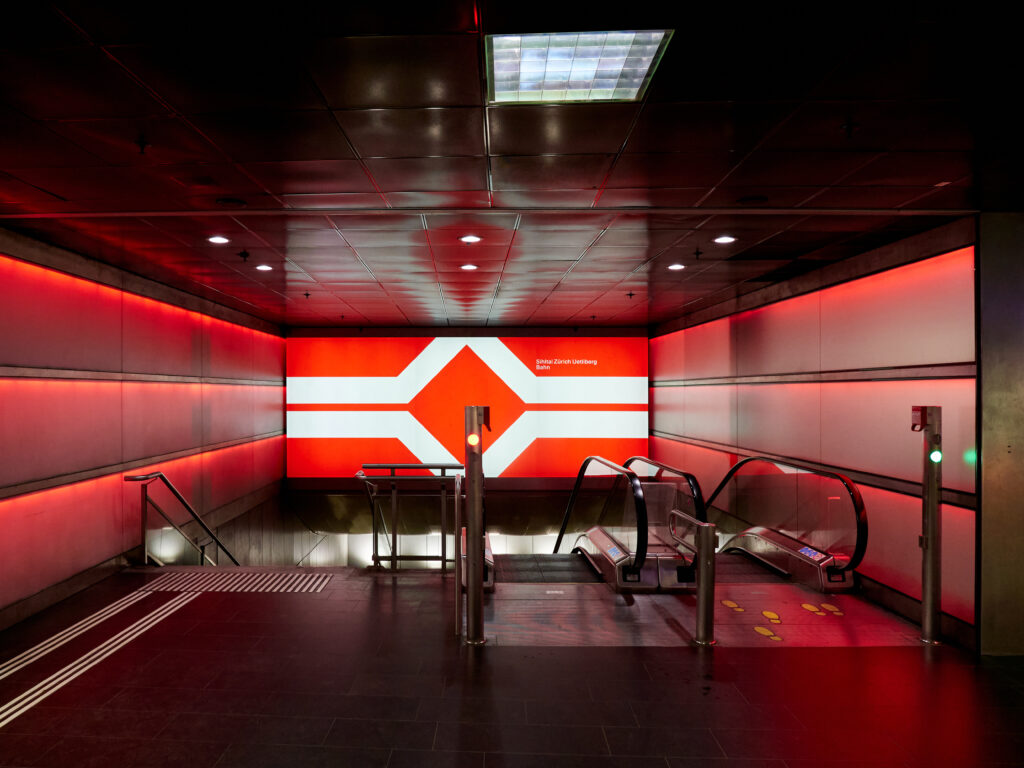
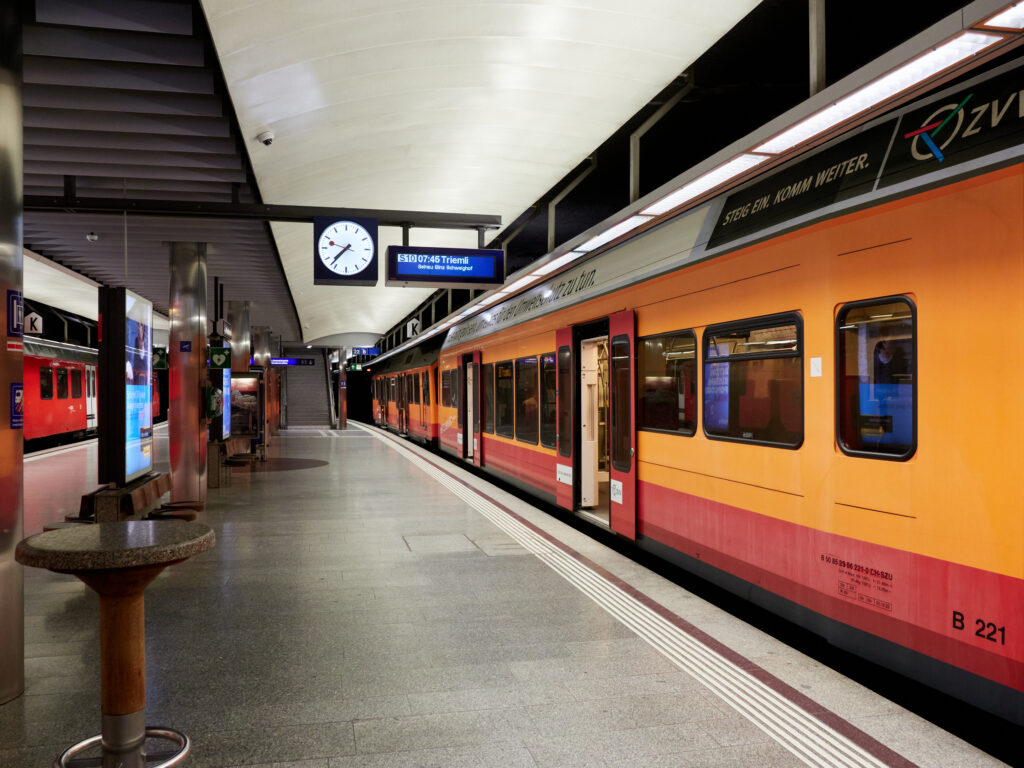
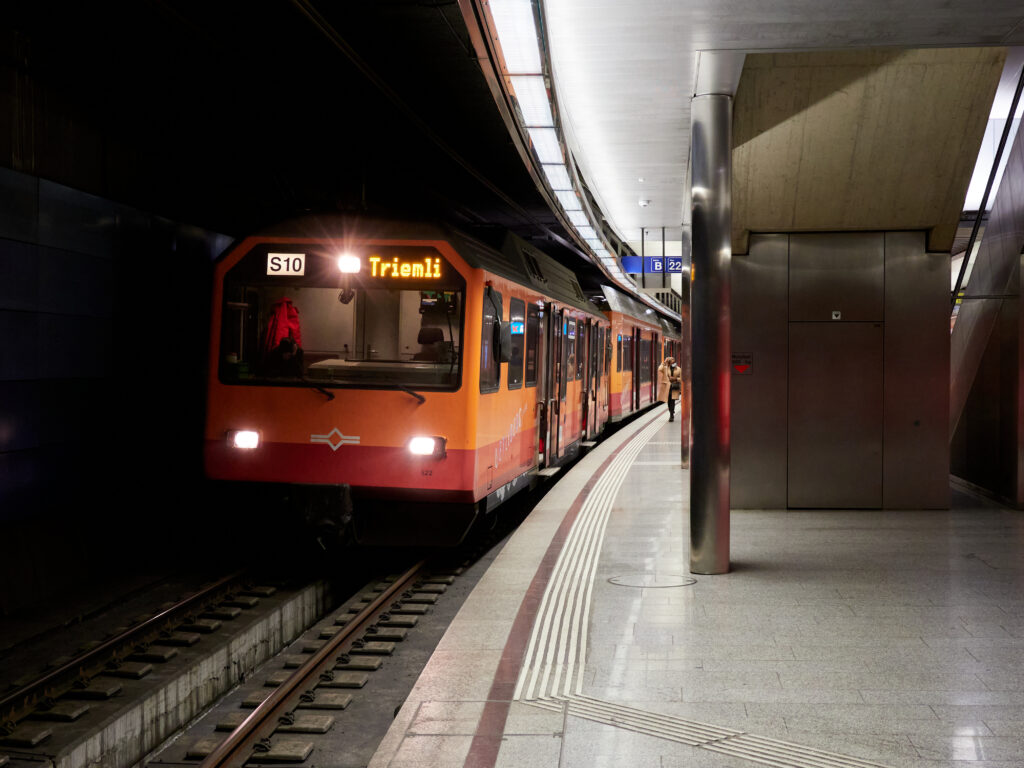
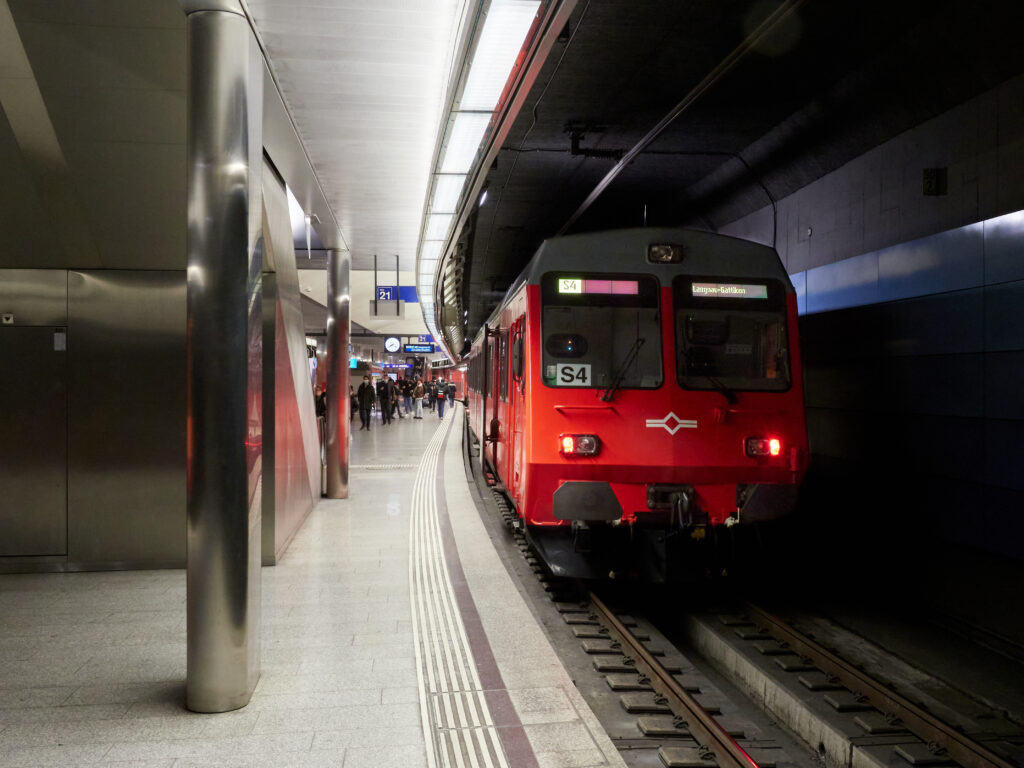
The line leaves Zürich HB in a tunnel under river Sihl. This is the „metro“ part of the line, built in 1990. The extension to Zürich HB resulted in an important rise of passenger numbers, making the formerly rather rural lines a „true“ S-Bahn.
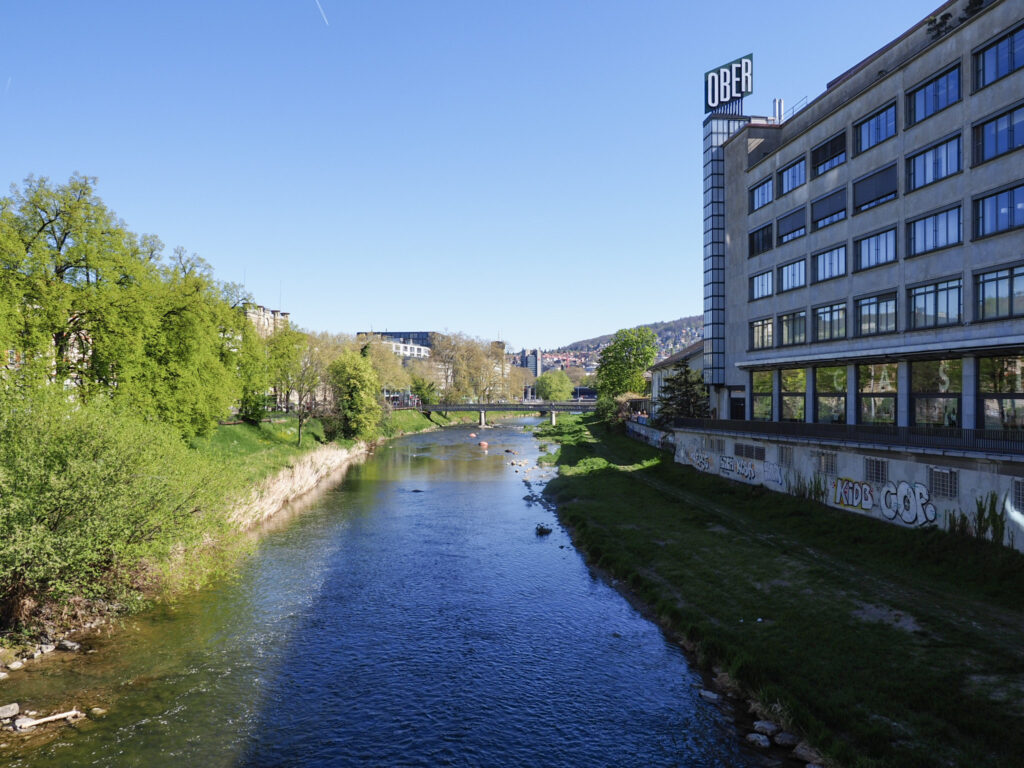
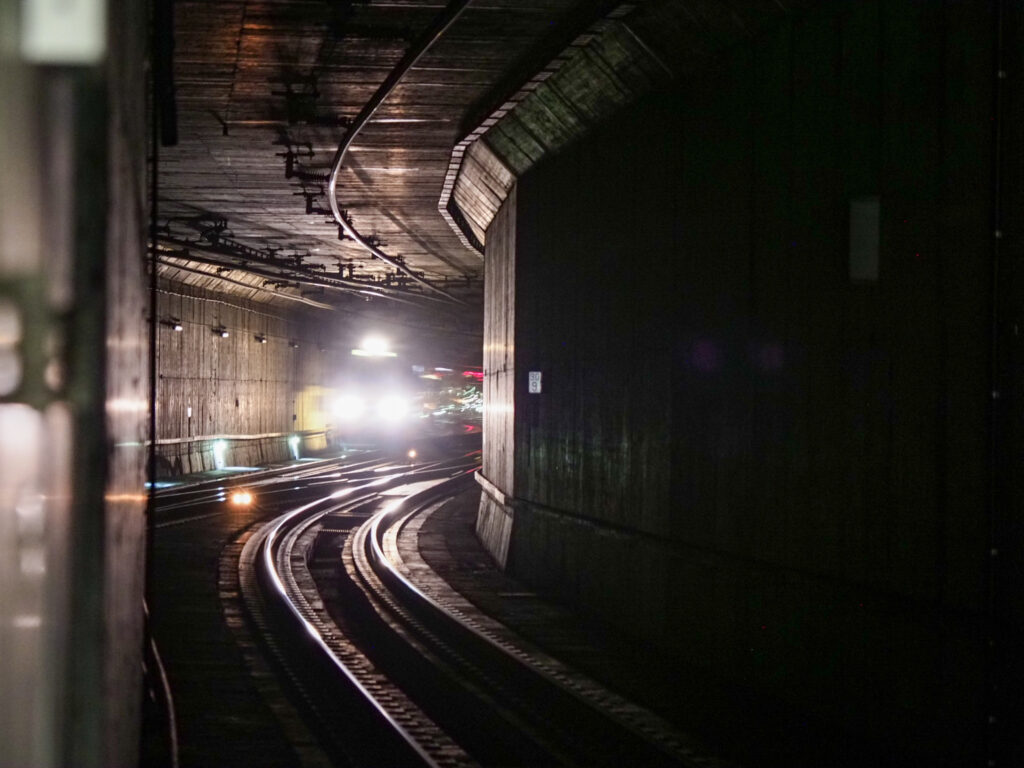
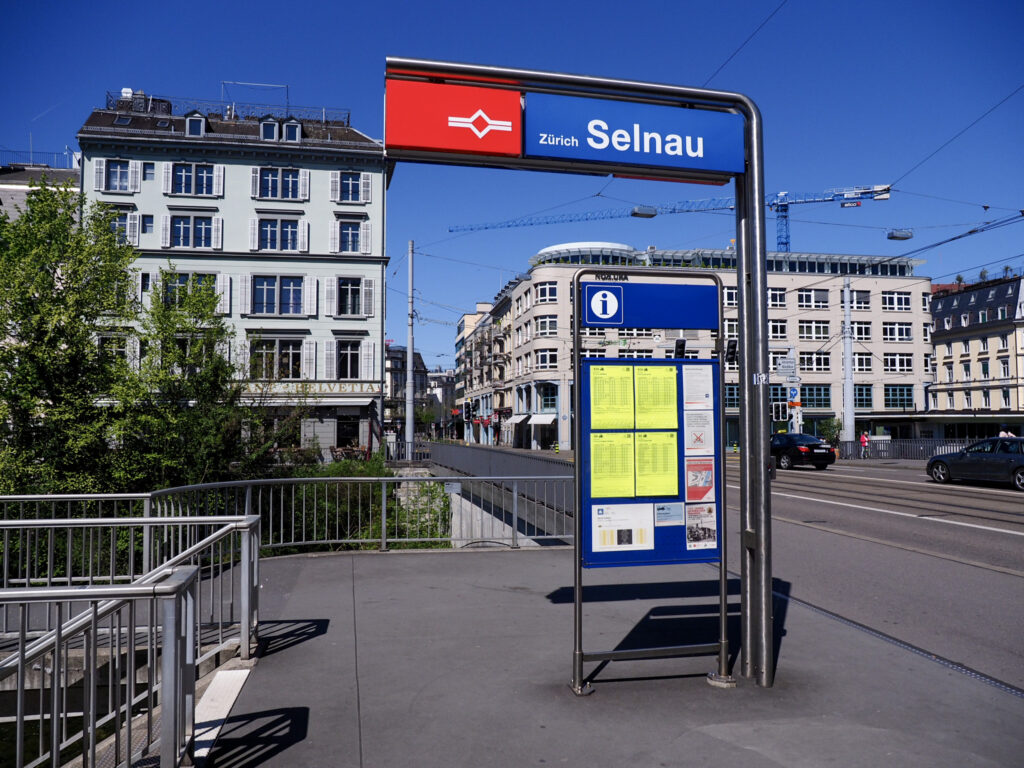
1st stop: Zürich Selnau, a bit to the north of the original overground terminus, partly located under the river. The northern entrance looks like a ship and at high water, river Sihl flows around it on both sides.
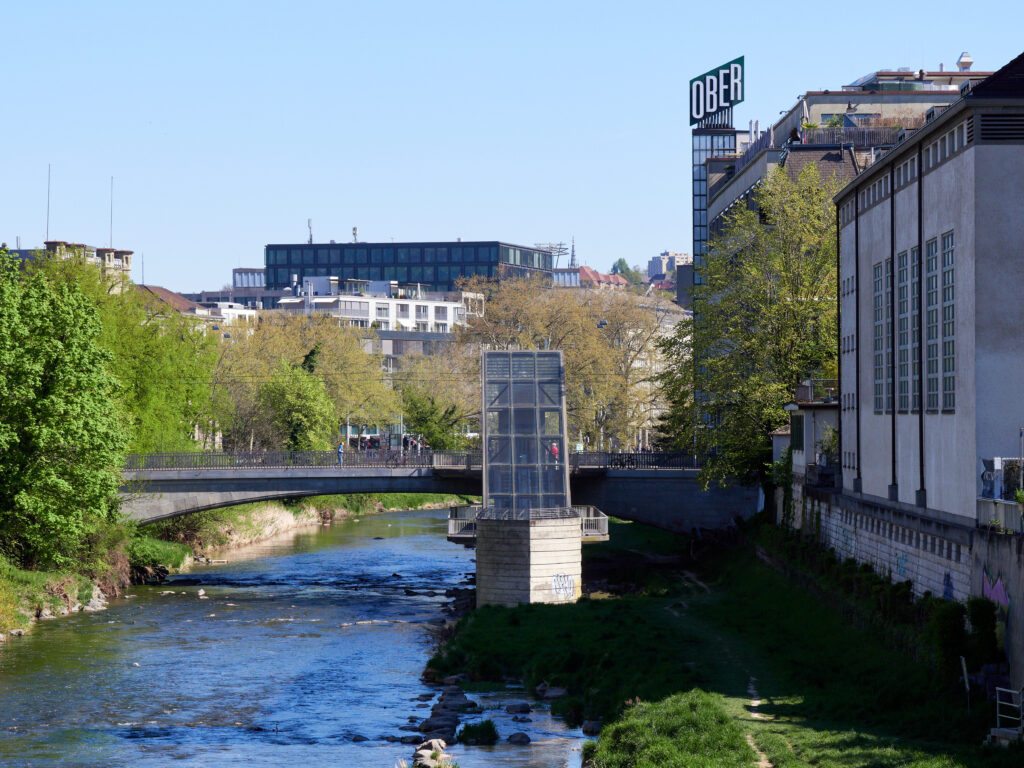
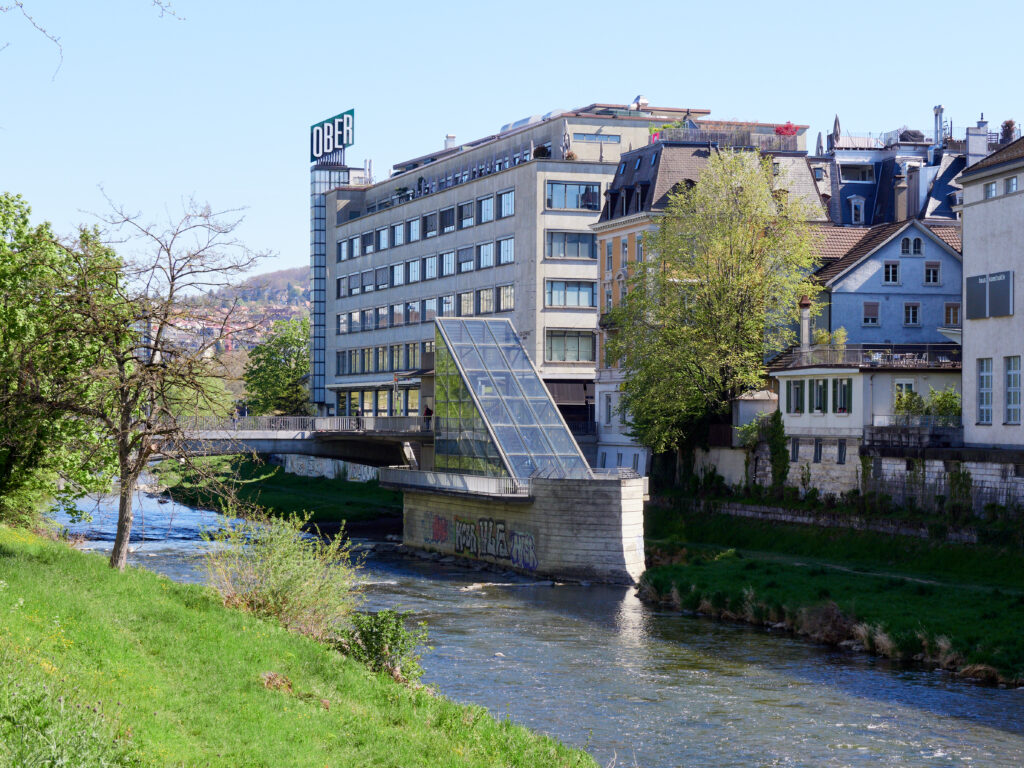
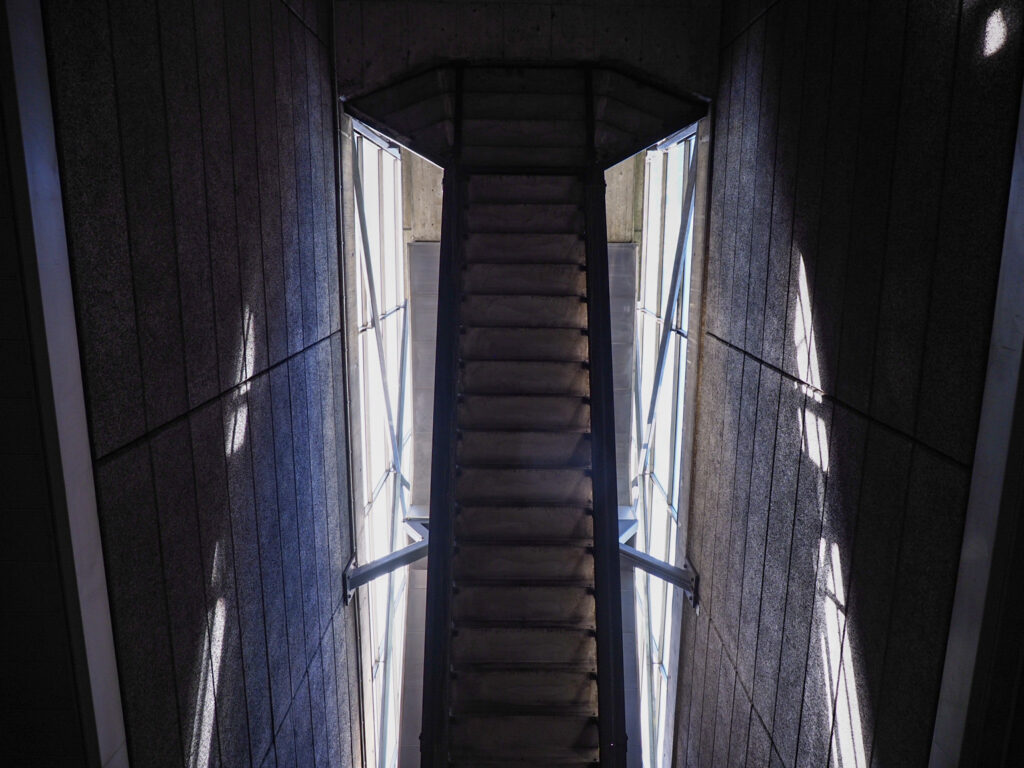

Selnau station is located quite close to the tram hub of Stauffacher. But as it’s a few hundred metres to walk, it often gets forgotten by people. The station features two tracks and is served by both lines, S4 and S10.



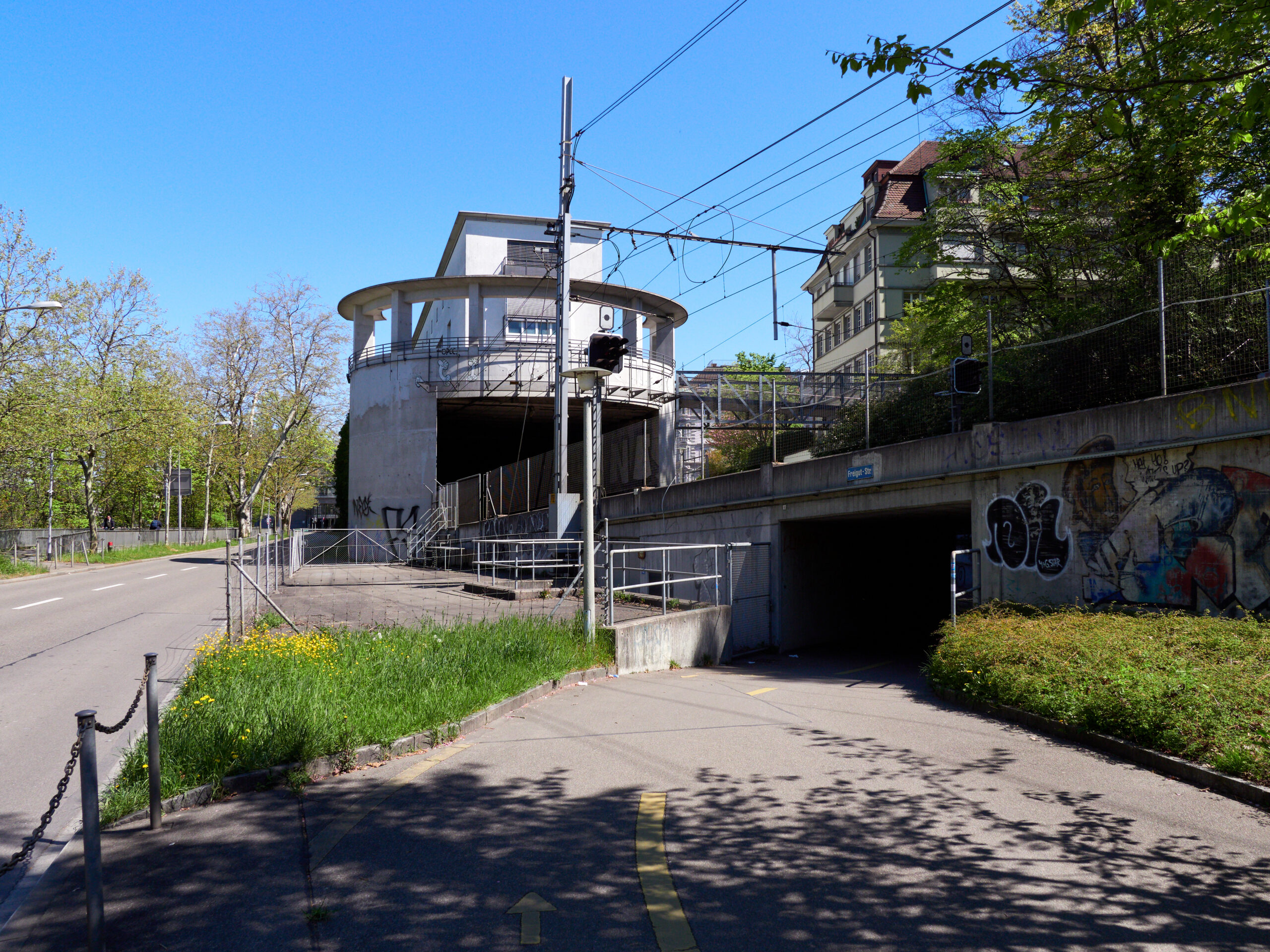
After Selnau, the line climbs to the surface on a 50 per mil ramp. The steep gradient was necessary to reach the height of the road bridge. The tunnel entrance is integrated into the house which was built where the former Selnau terminus once was.
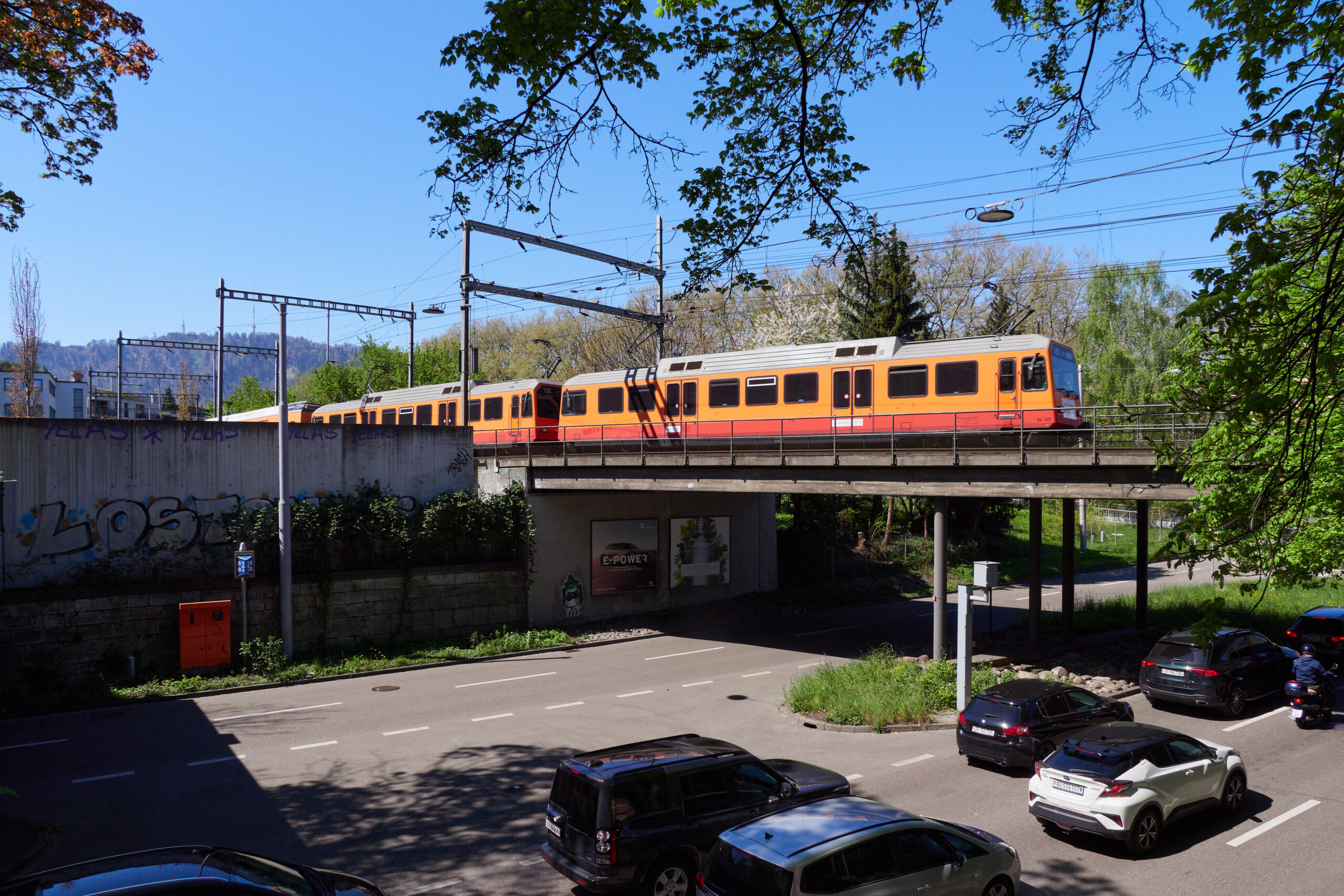
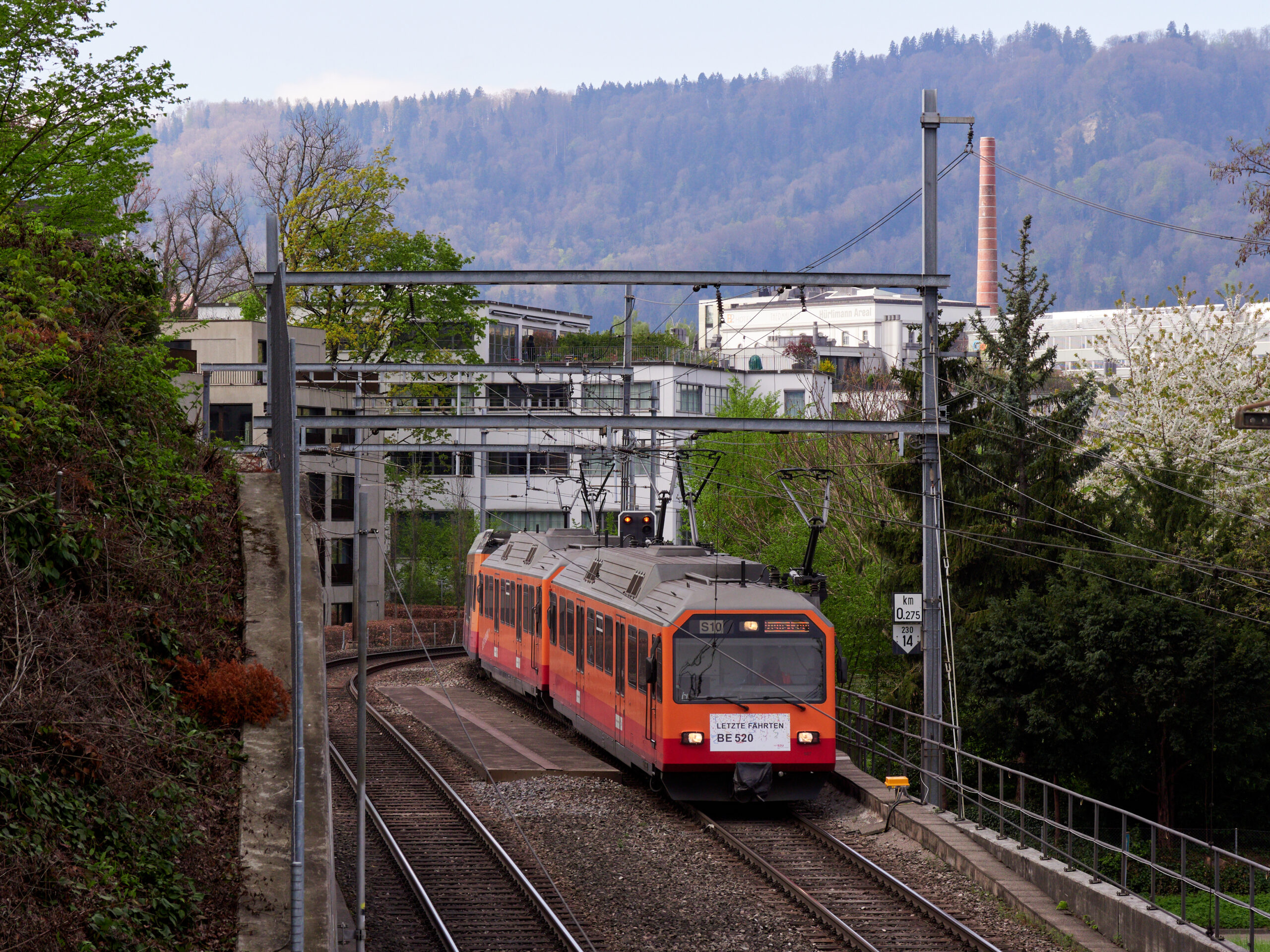
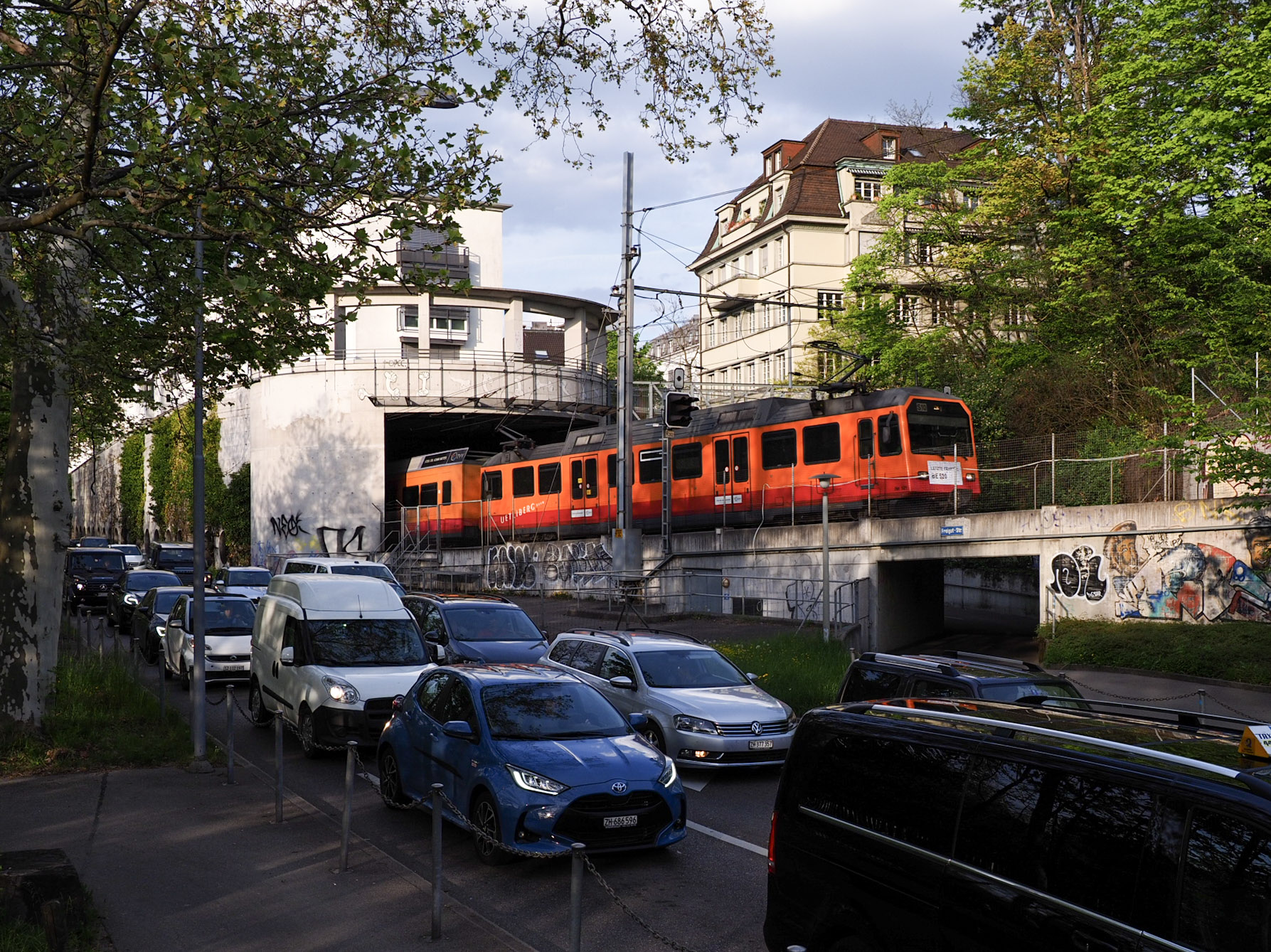
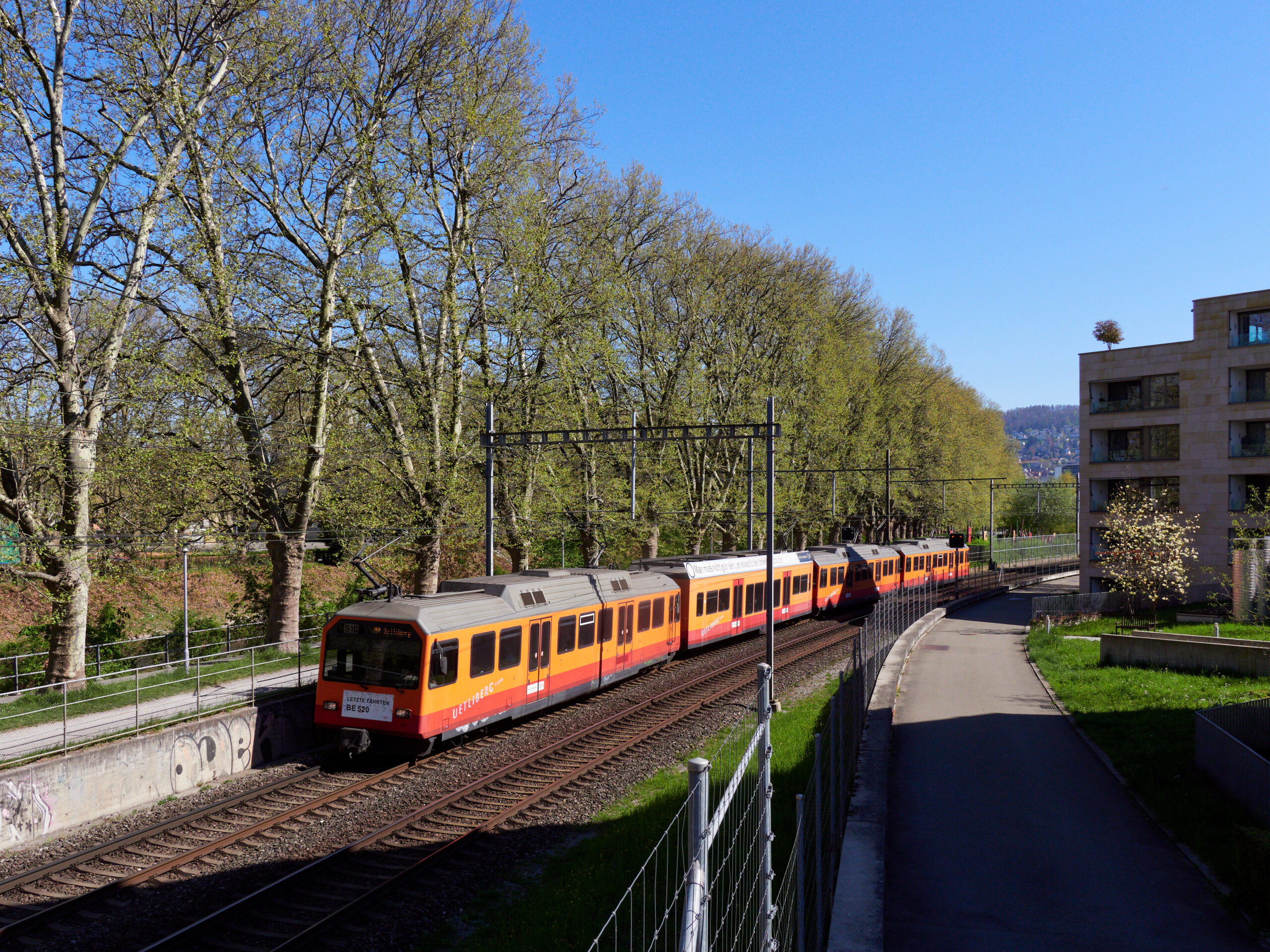
For the next kilometer, the line runs alongside river Sihl and the former Hürlimann brewery site. The mighty plane tree row along the river is 100 years old and an important recreation area for the inner city. 🌳
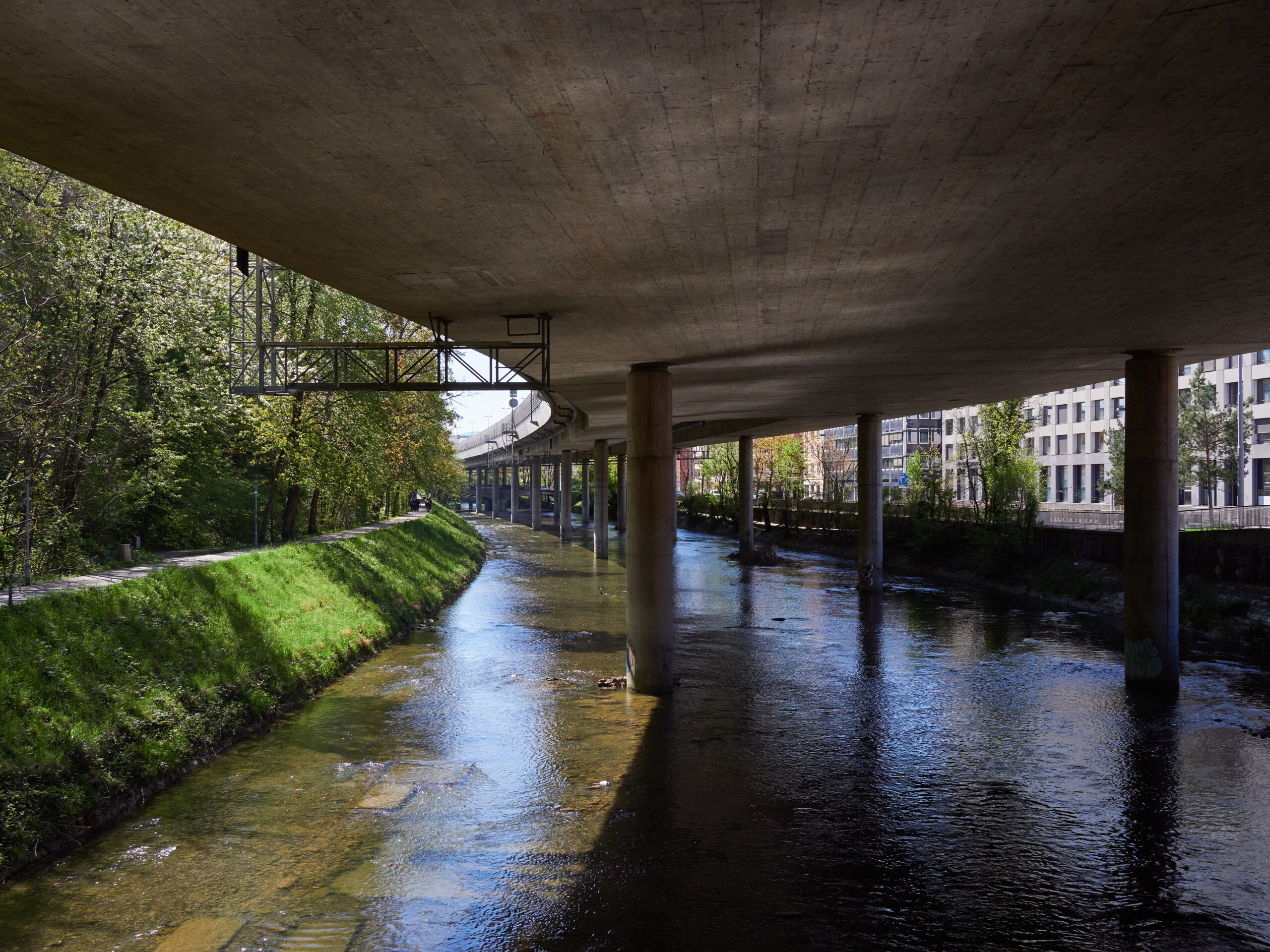
South of the Hürlimann site, the line crosses river Sihl and the highway. The huge highway bridge all over river Sihl is one of the biggest urban planning fails in Zürich. Sadly, there is still no project to undo this urban development nightmare.
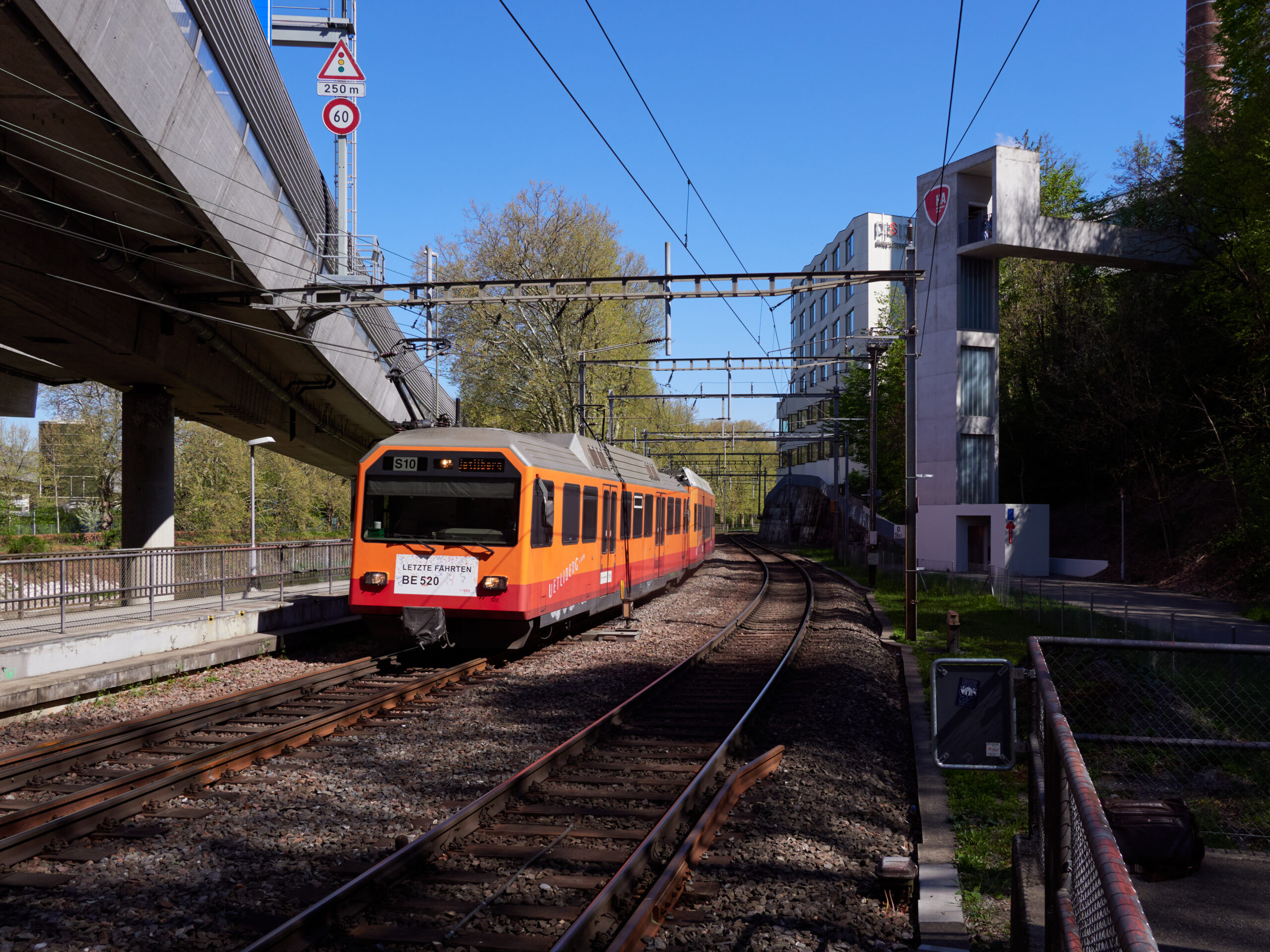
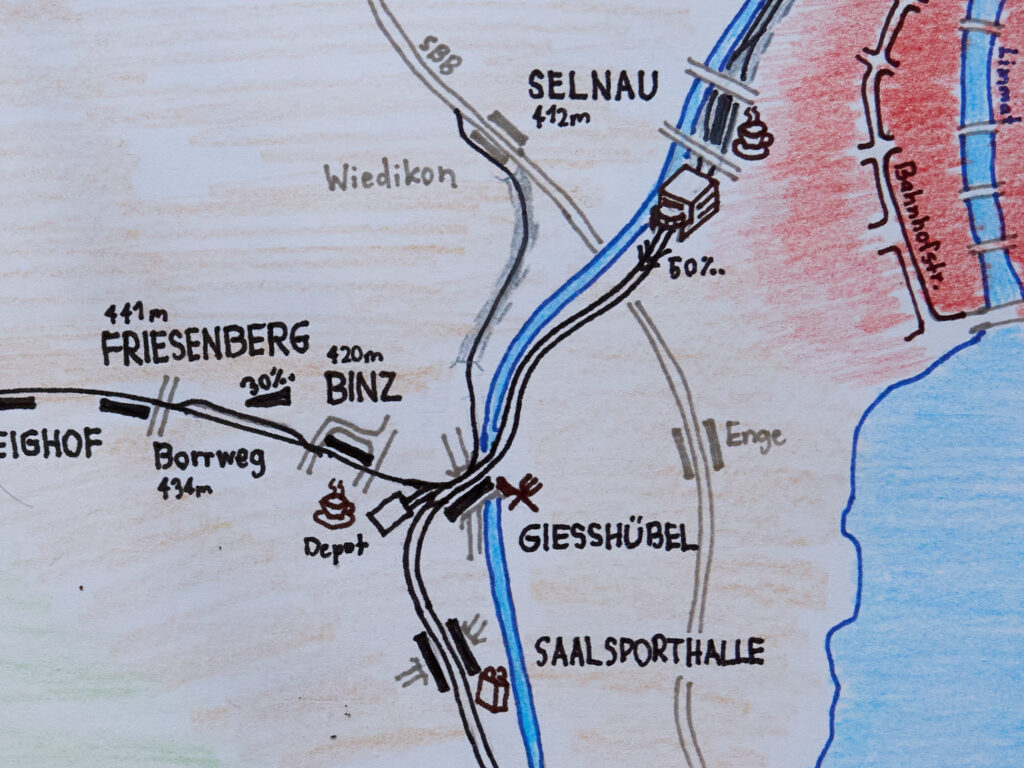
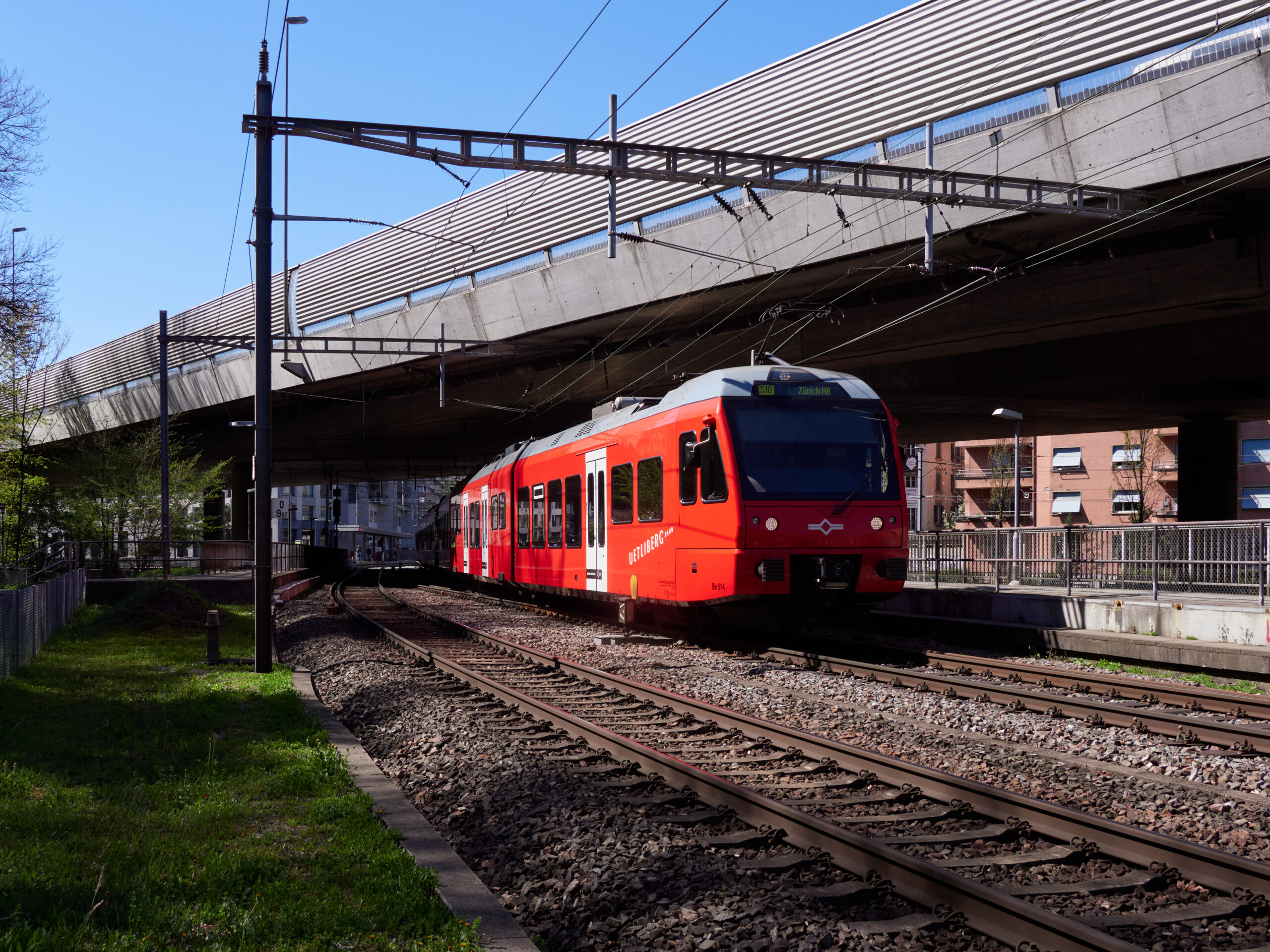
West of river Sihl, we reach Giesshübel station. This is where the lines to Uetliberg and Langnau split and where the #SZU depot is located. The station is served only by S4 „Sihltalbahn“, as there’s no platform at the Uetliberg track.
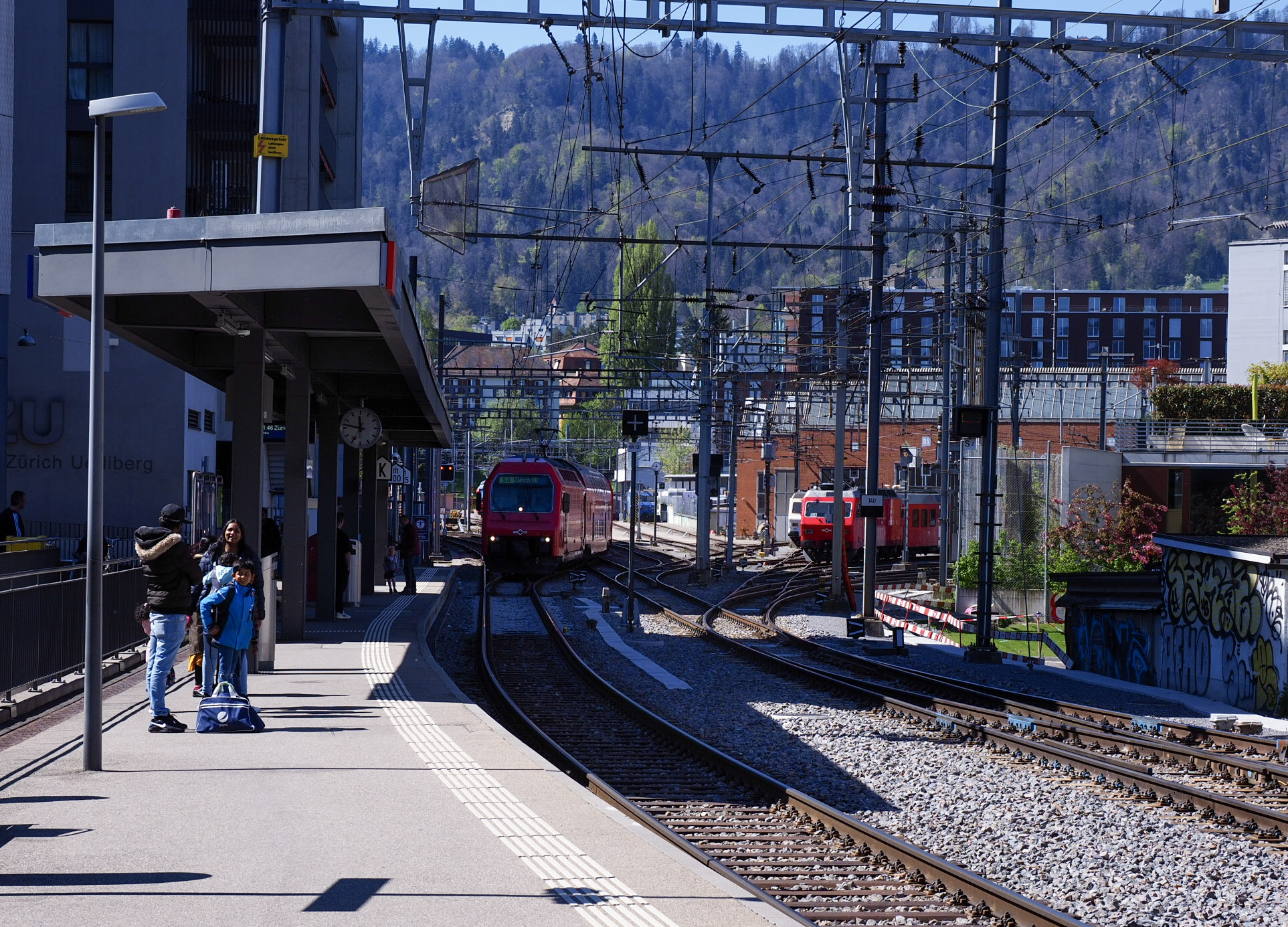
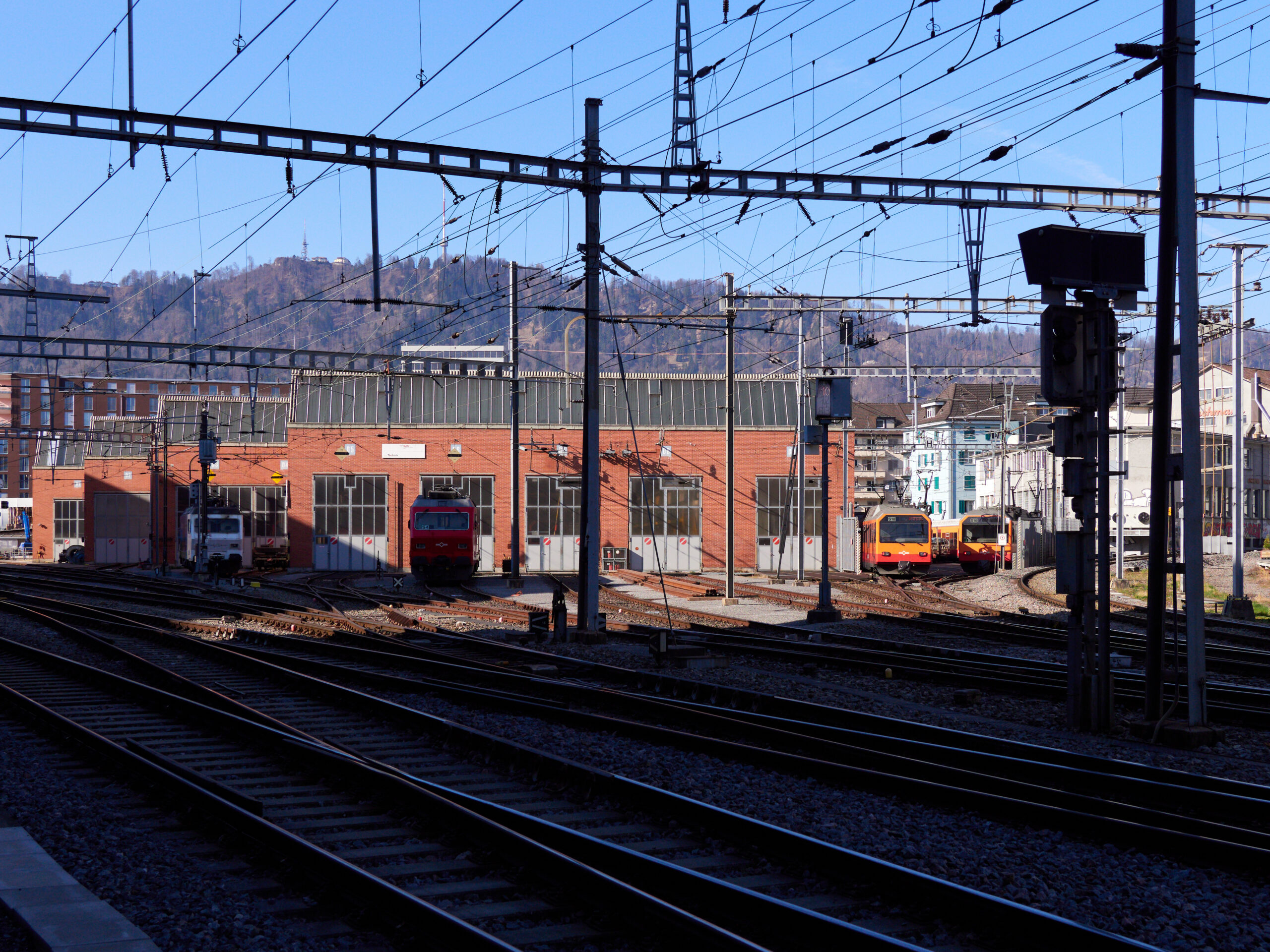
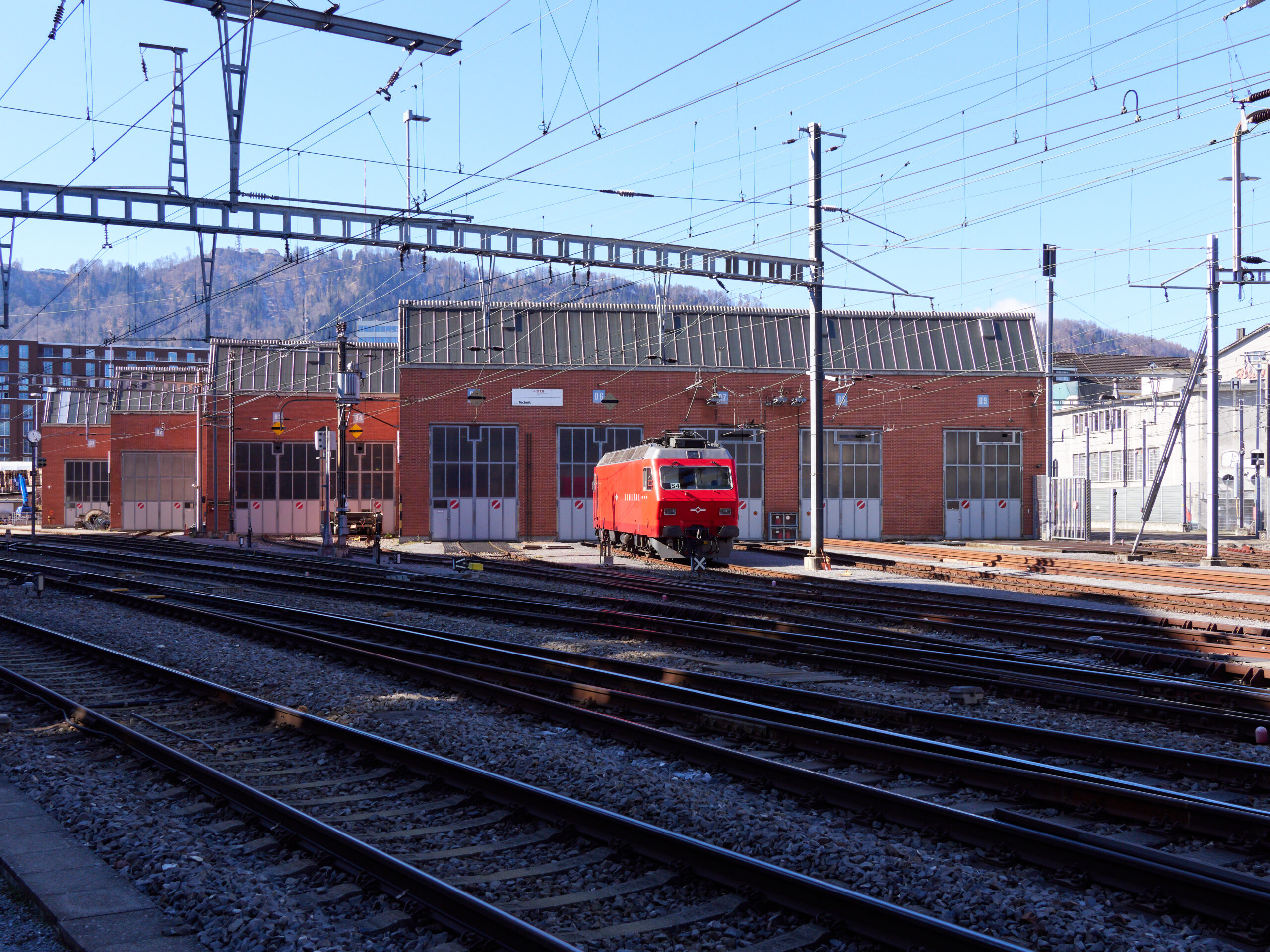
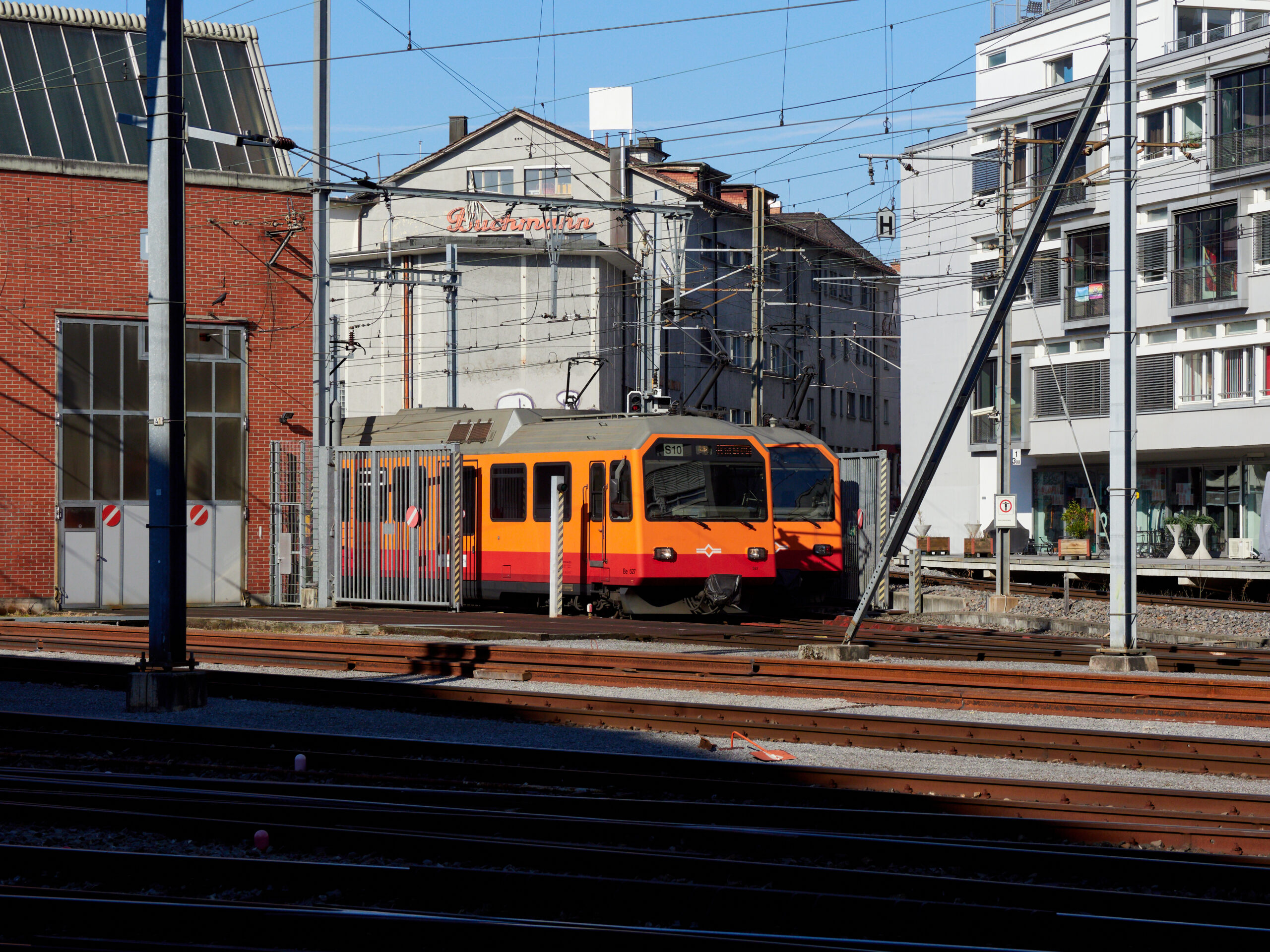
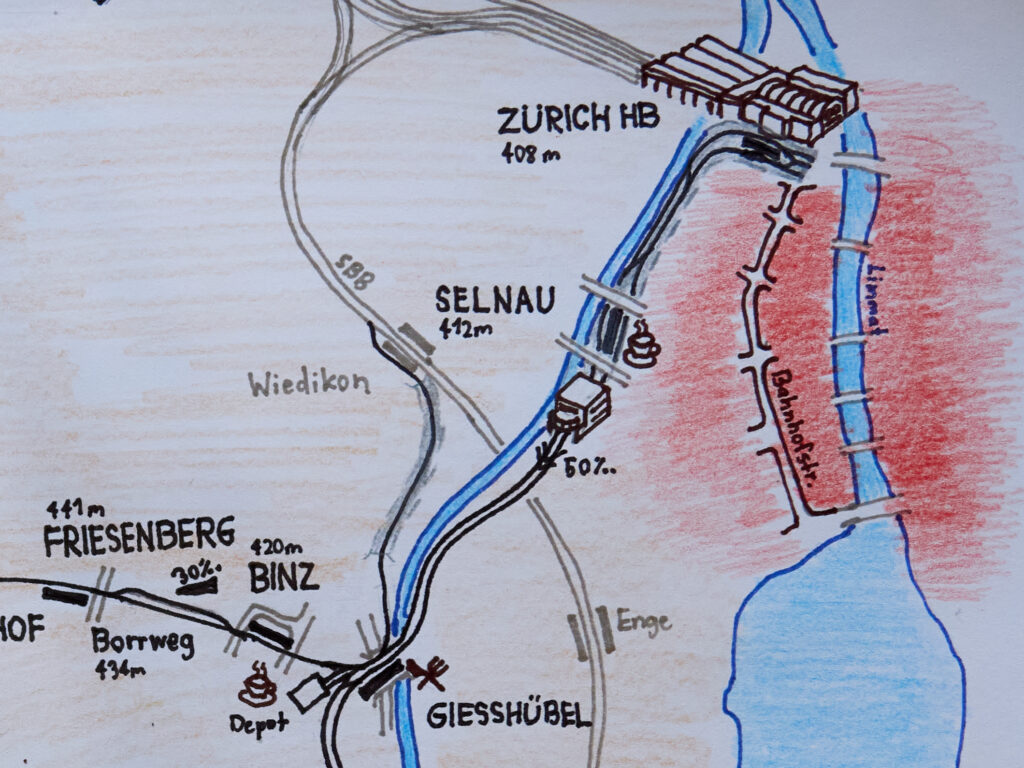
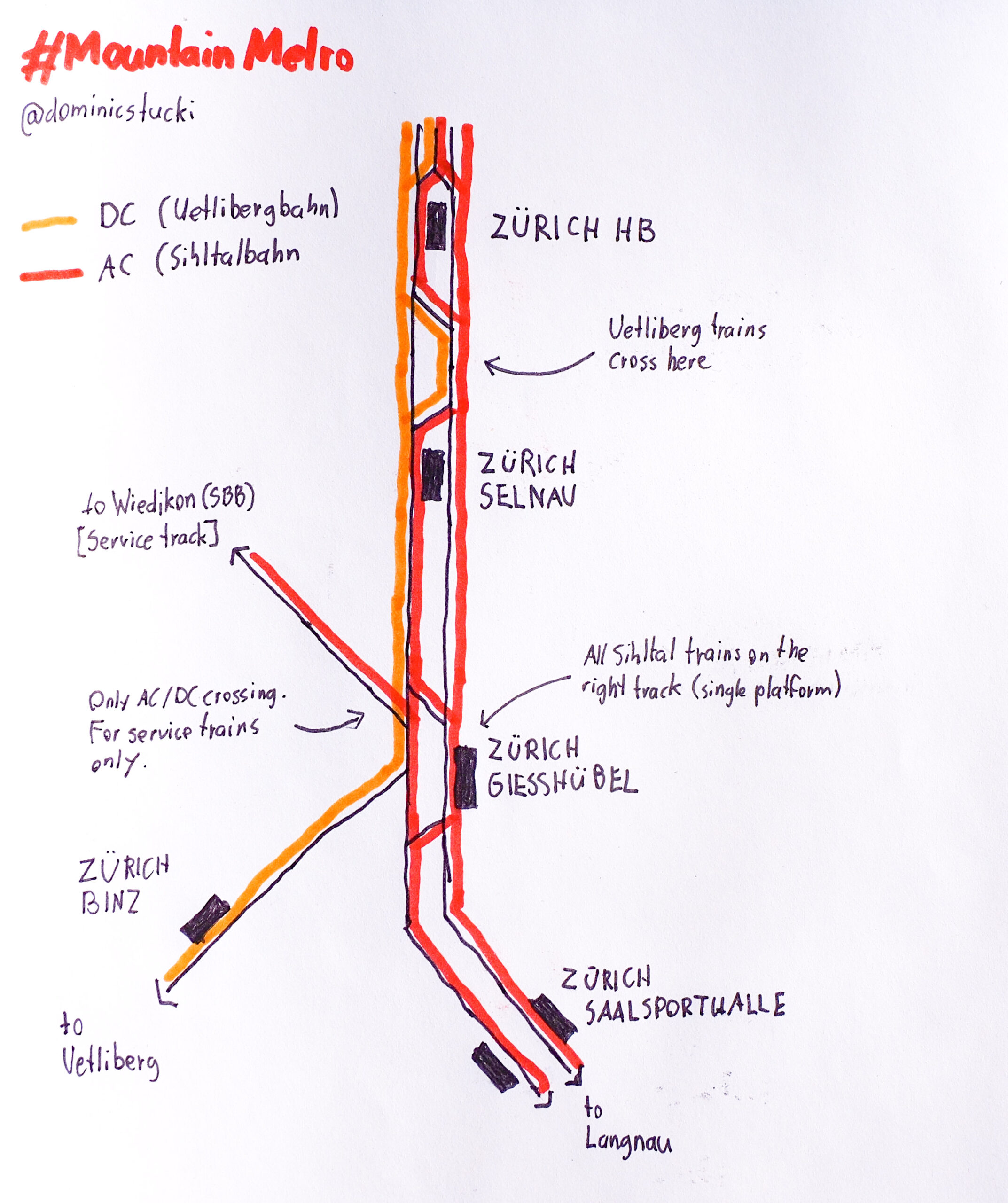
This is a good place to explain, what is happening here in the next months. One of SZU’s biggest capacity problems is that the double track line between Zürich HB and Giesshübel is operationally not a real double track section. The problem here: S4 runs with AC, S10 with DC. And it depends on the voltage you run with which tracks you can use here.
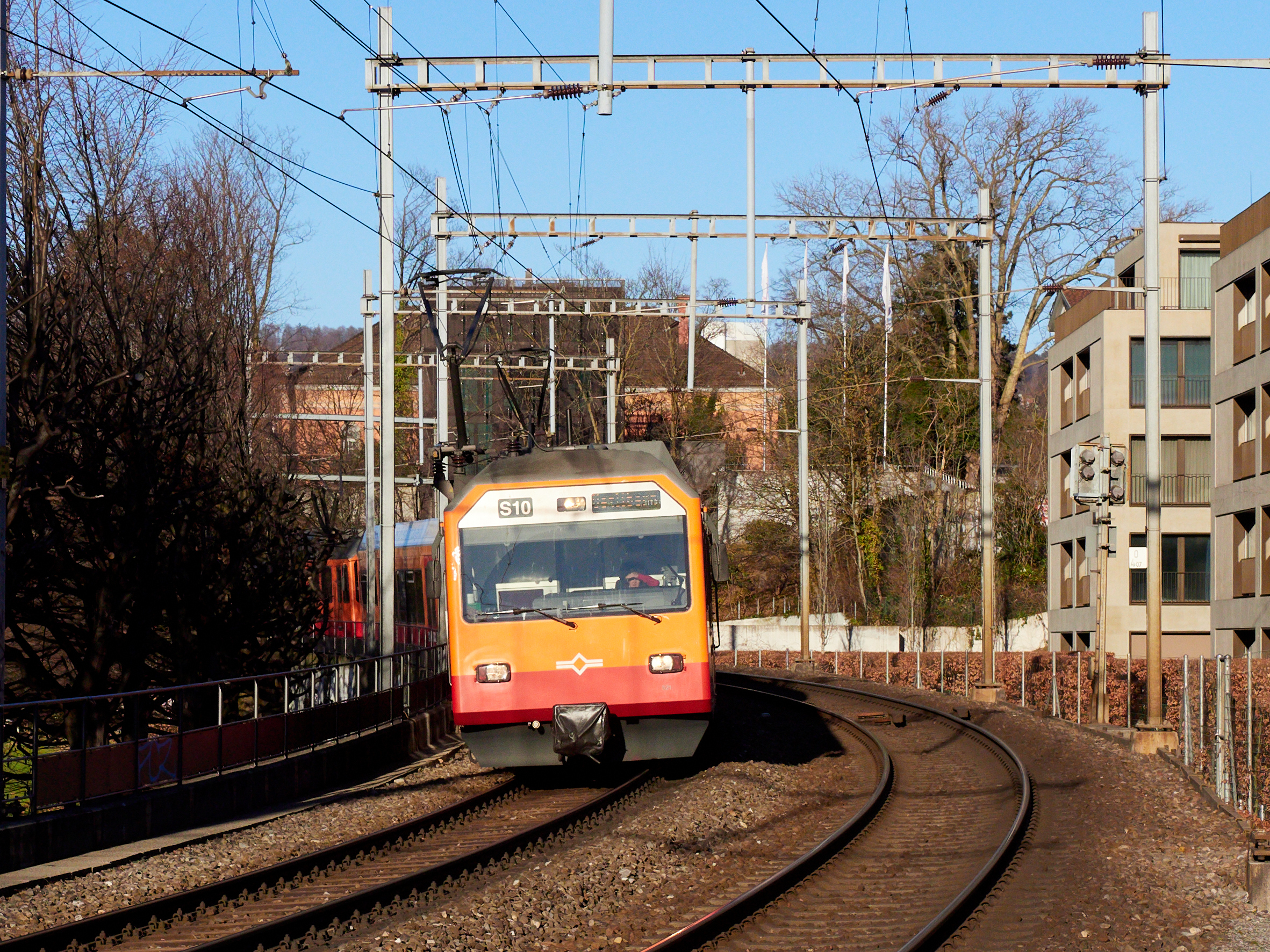
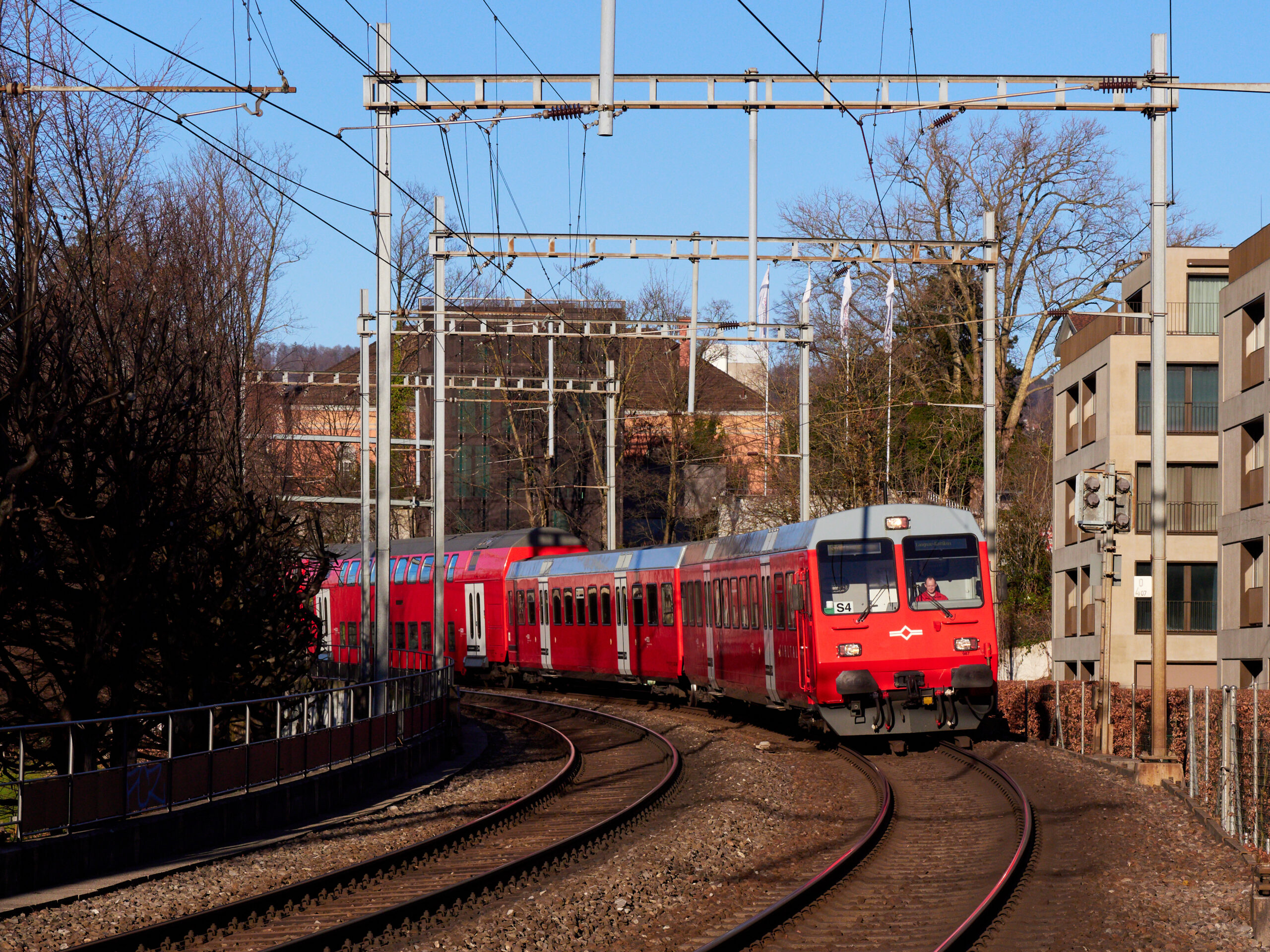
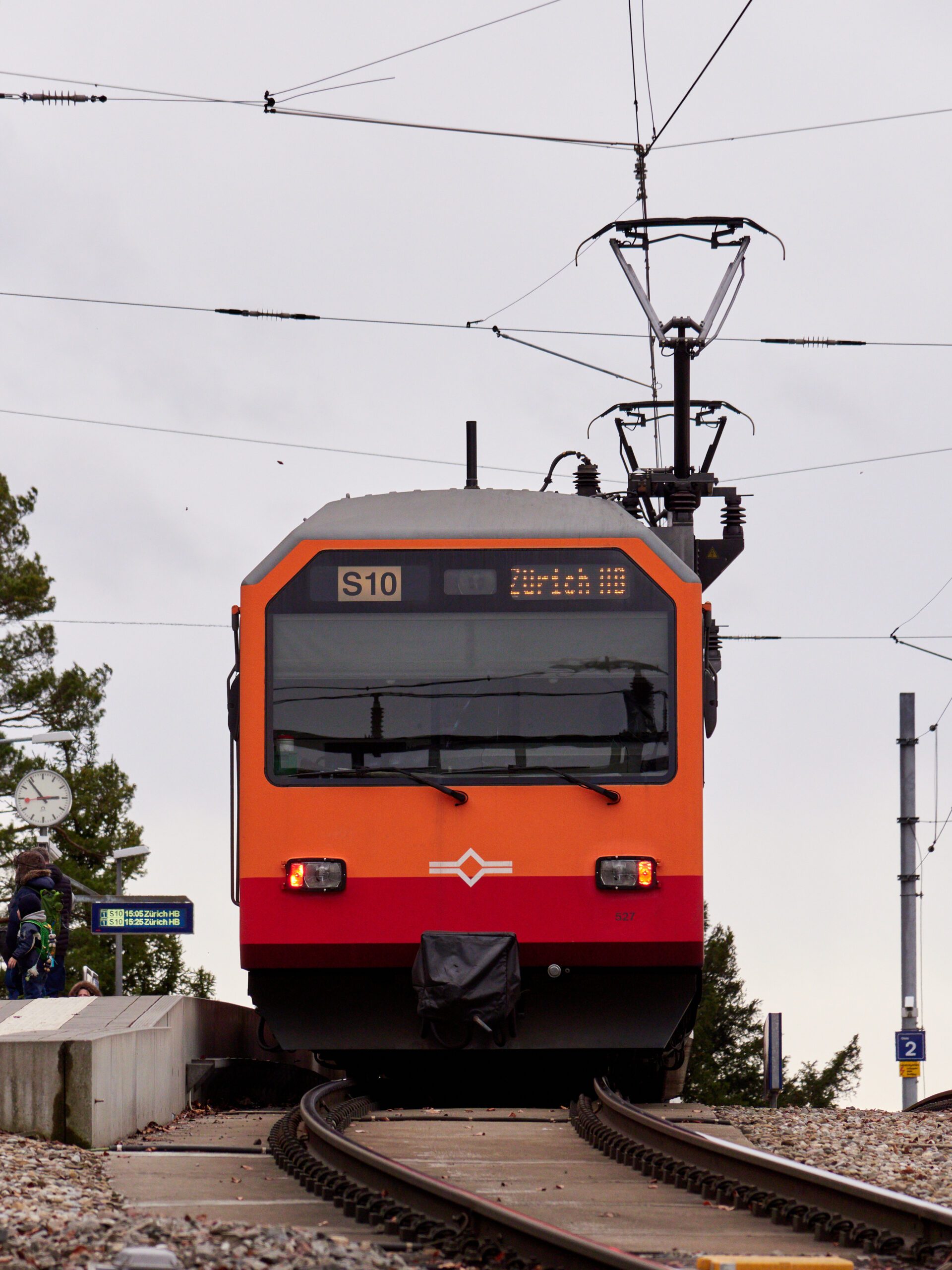
In order not to mix AC and DC overhead lines, S10 has an off-centred catenary and off-centre mounted pantographs on the vehicles. This way, AC and DC catenaries can be mounted parallel, as long as they don’t cross. Meaning: Only one track can have both, AC and DC.
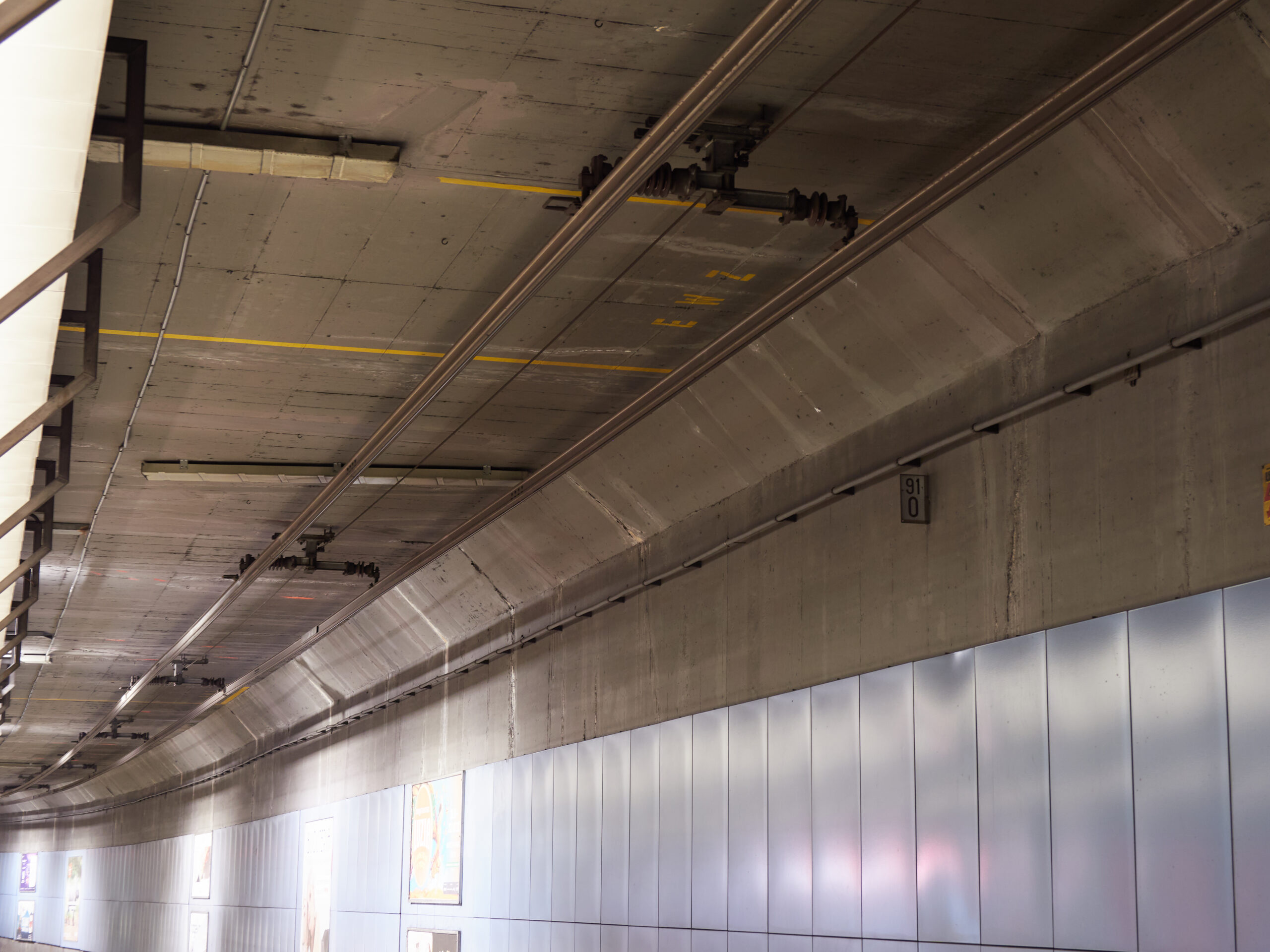
The quick sketch below shows the installations. You can see that AC and DC catenaries don’t cross each other except for the service track at Giesshübel. Thus, the double track line operationally is more like two single track lines with passing loops, the use of which is however in conflict with a train run on the other line. This system severly limits capacity, the maximum possible frequency with this system is a train every 10 Mins in each direction on both lines.
This is not enough, as growing passenger number require a train every 7.5 Mins. #SZU is carring out an investment programme in order to make this possible. Part of it: Converting the Uetlibergbahn to AC for flexible track use.
szu.ch [Archiviert]
«Nächster Halt: Pünktlichkeit» auf szu.ch
Die SZU stellt die Weichen für die Zukunft
The 2013 stock Be 510 is a multi-system unit equipped for AC and DC with a sliding pantograph. The 1992 stock class Be 520 however is DC only and can’t run anymore, when the power will be switched this summer. They’ll be replaced by an updated version of Be 510, called Be 570.
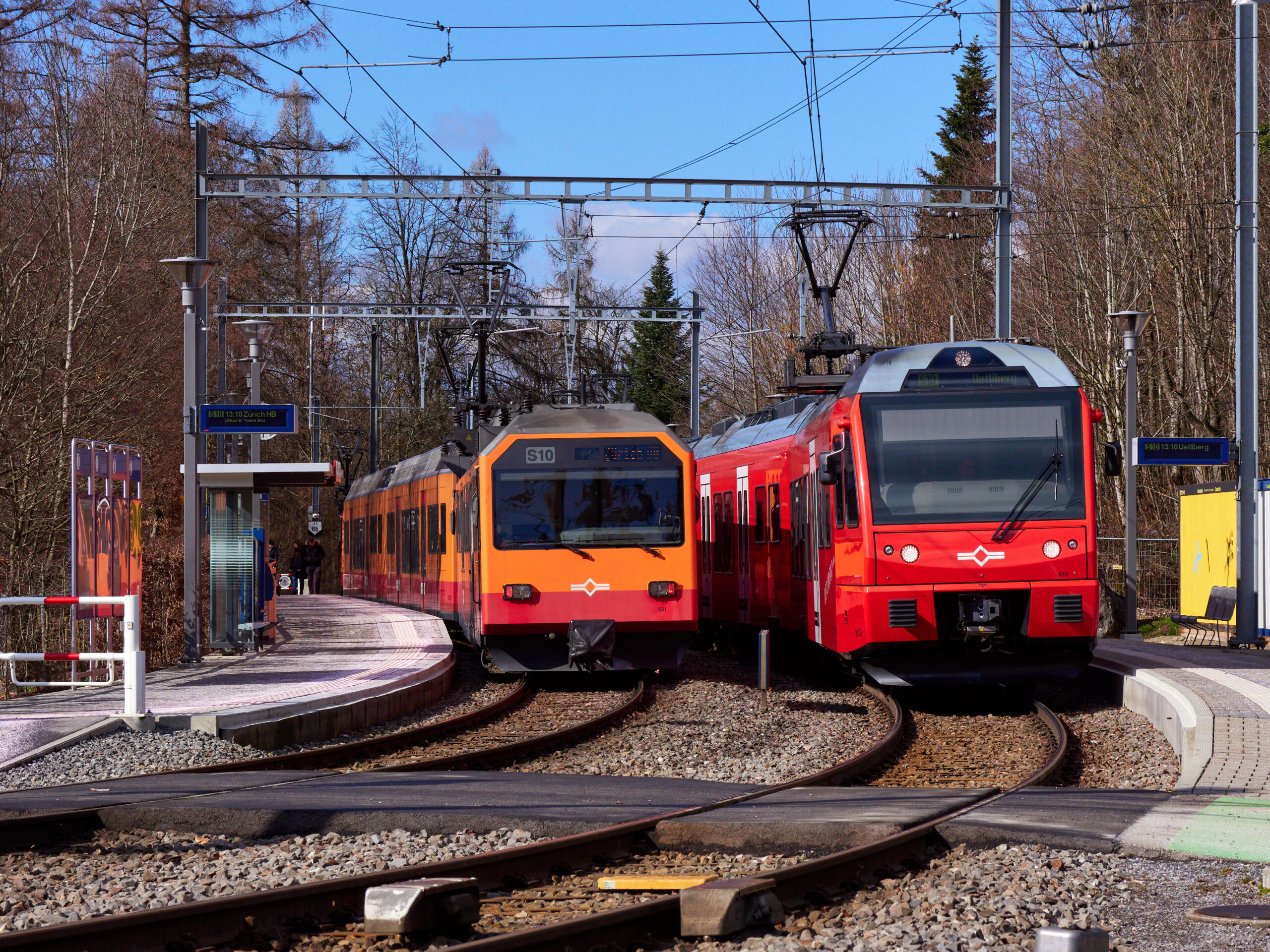
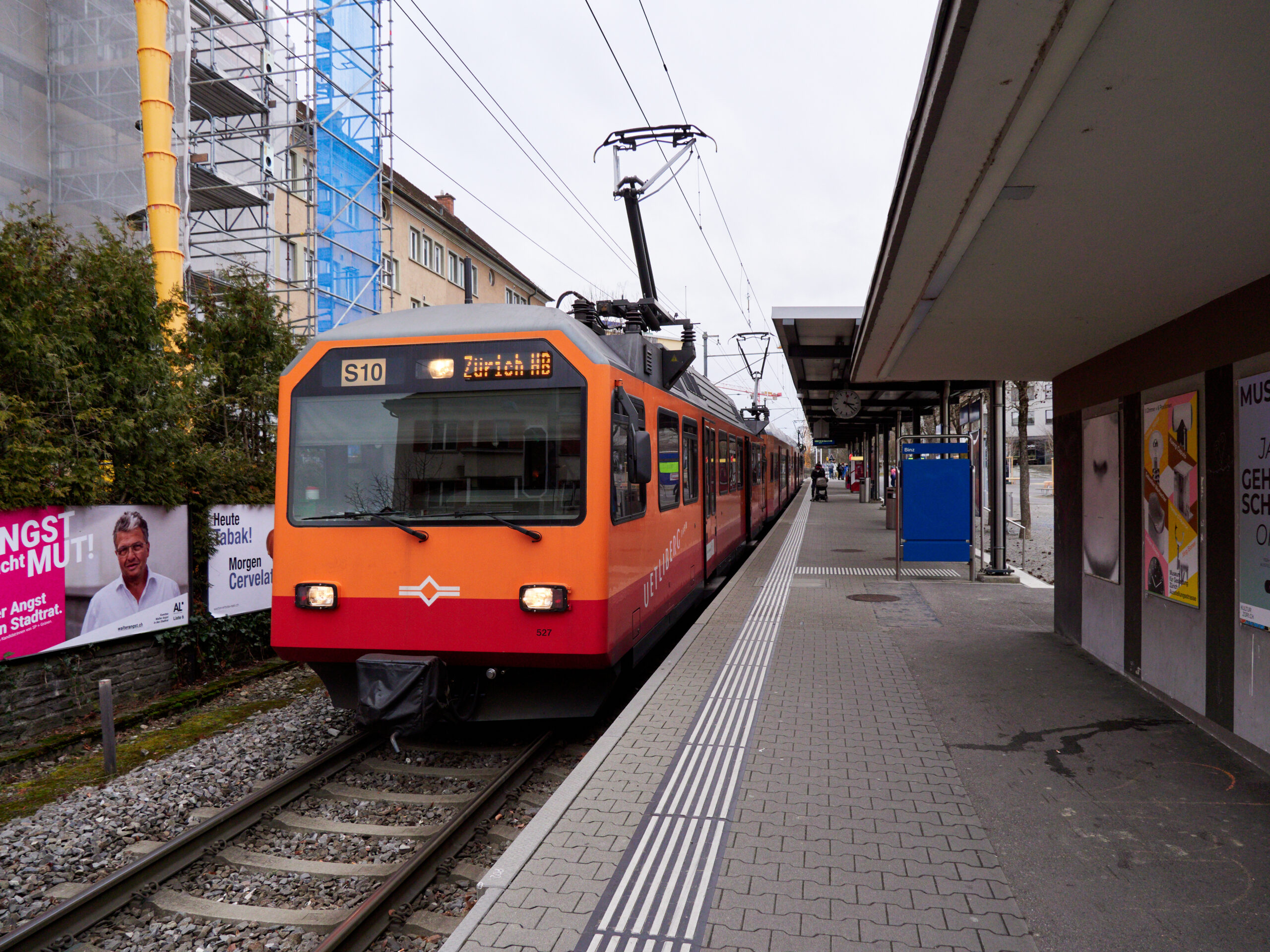
Now, let’s continue our journey along the line: After the Uetliberg line branched off at Giesshübel, it passes between two buildings – one of which is my favourite local bakery – to reach Binz station. It serves an important work area in a former clay pit.
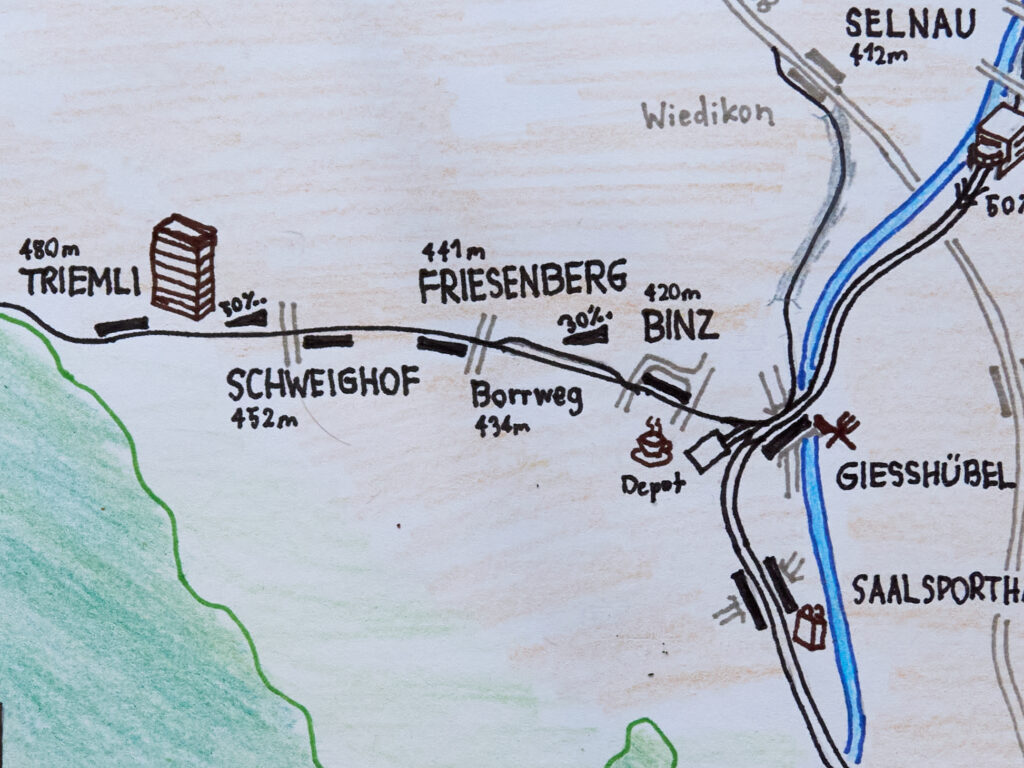
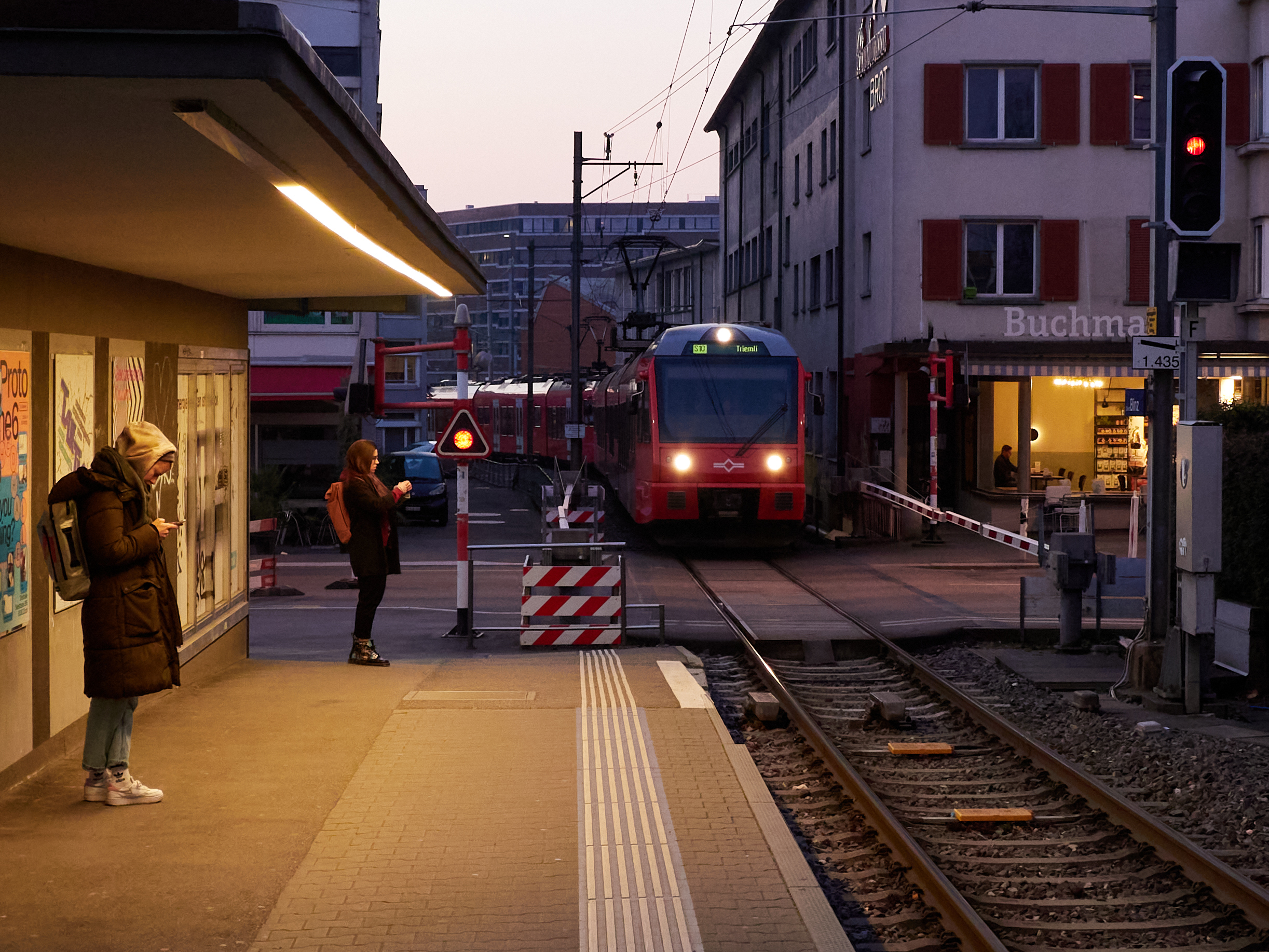
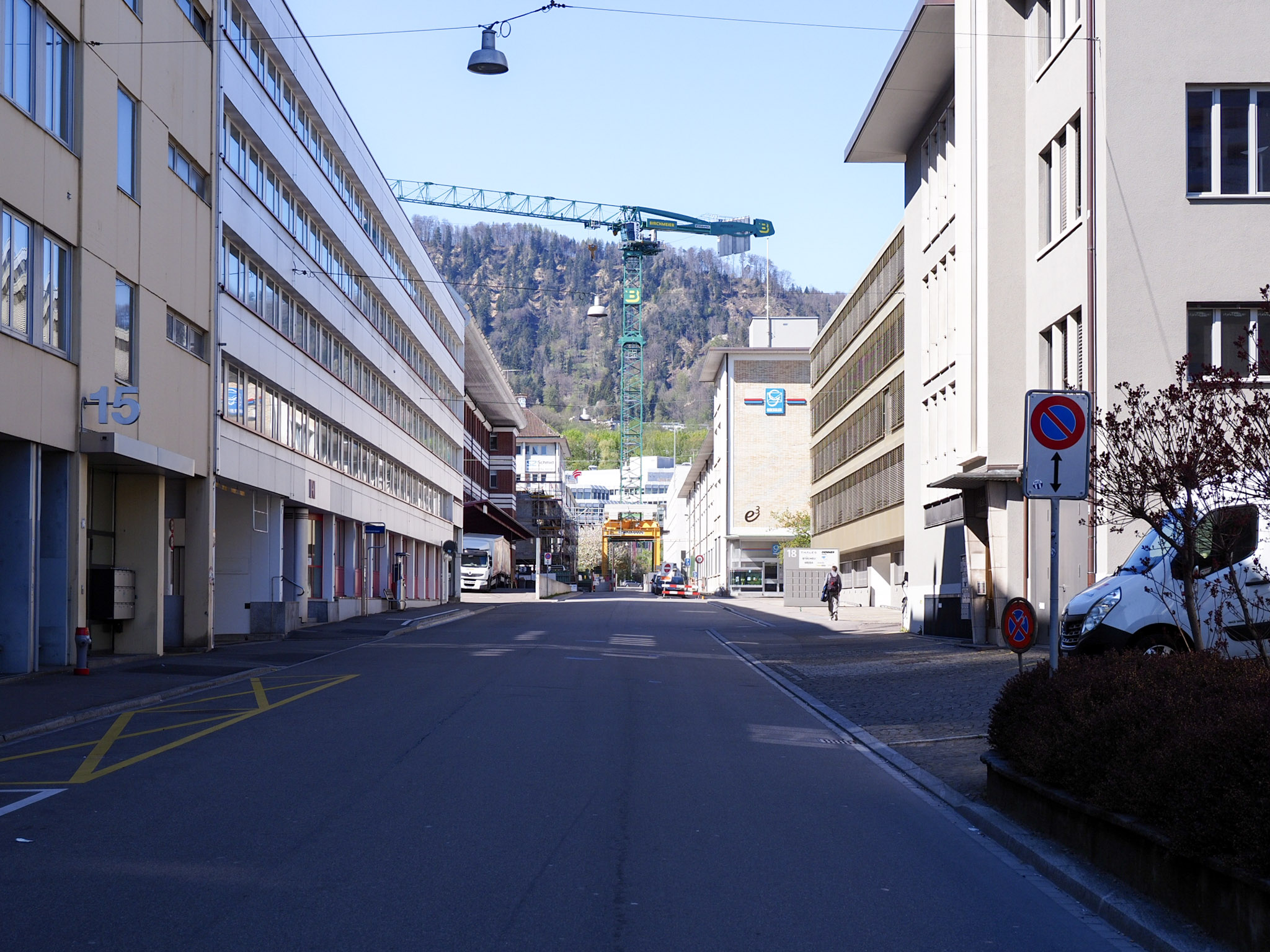
The line starts to climb with 30 per mill. Borrweg passing loop marks the border between the work area of Binz and the green residential area of Friesenberg with a lot of familiy friendly cooperative housing. The suburban part of the line starts here.
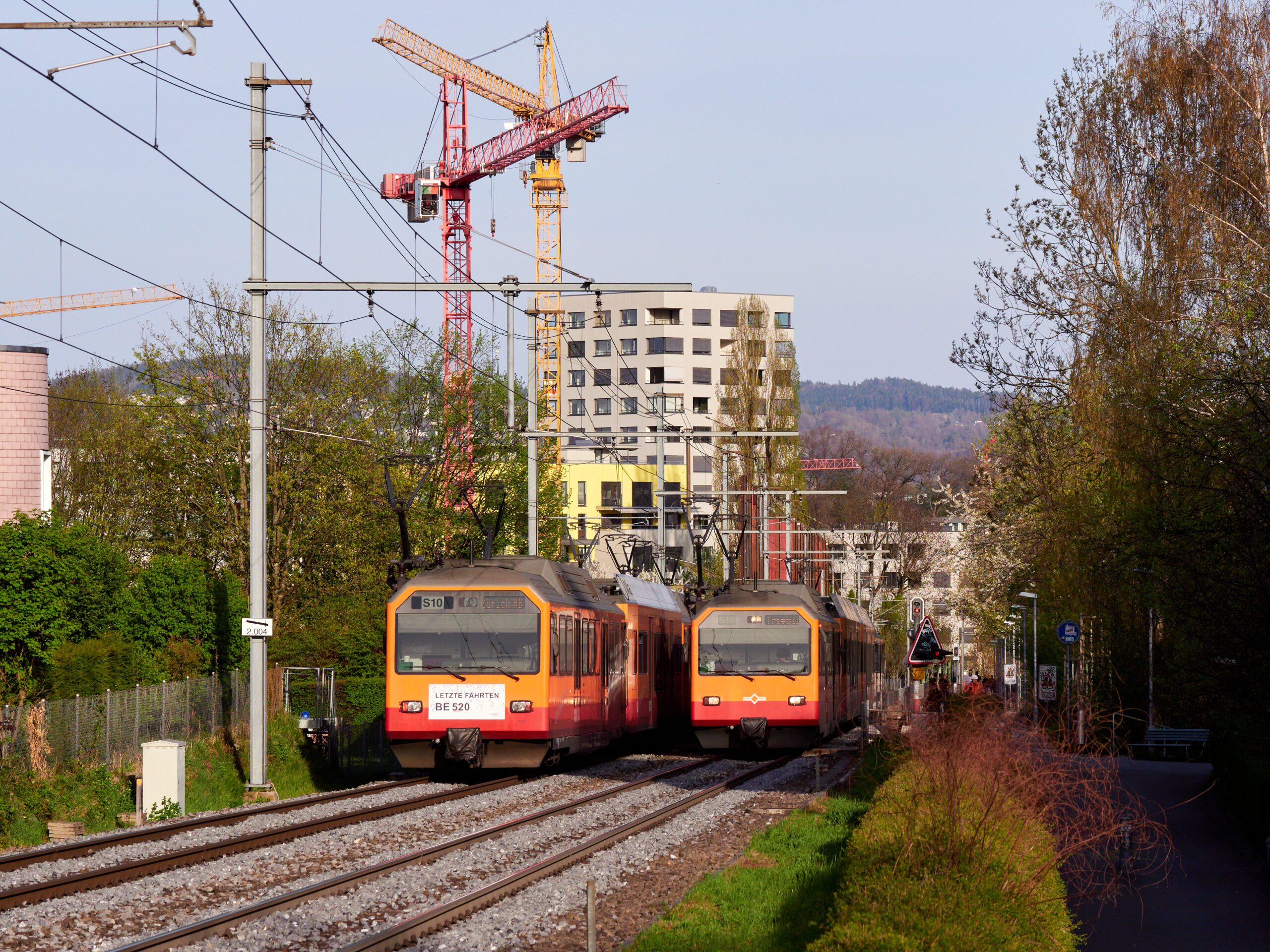
Friesenberg at the upper end of the passing loop is my favourite station. With its little shop, the small creek and the low and narrow platform next to the massive hedge of the jewish cemetery, it is somehow perfectly imperfect and therefore very un-swiss. 😉
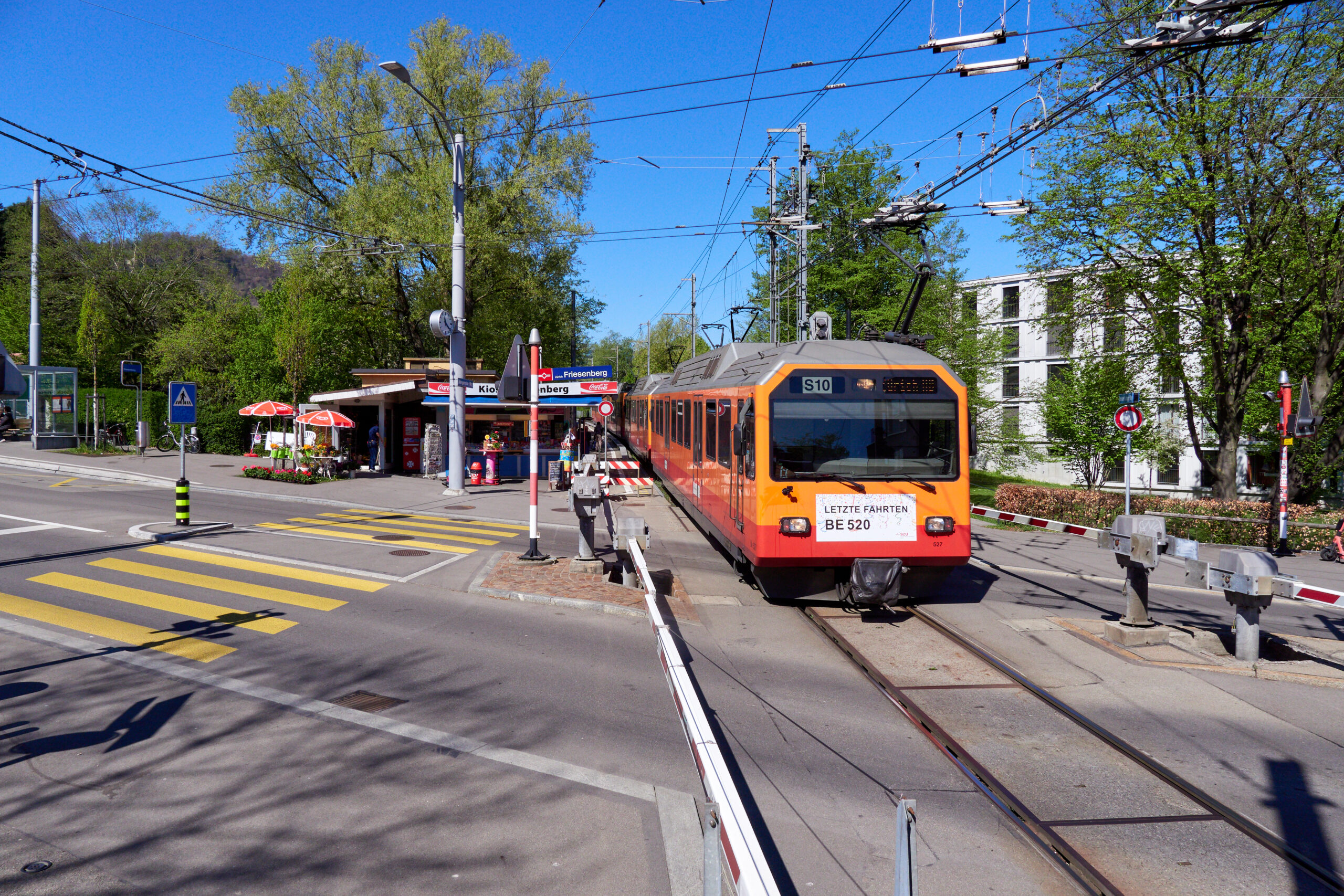
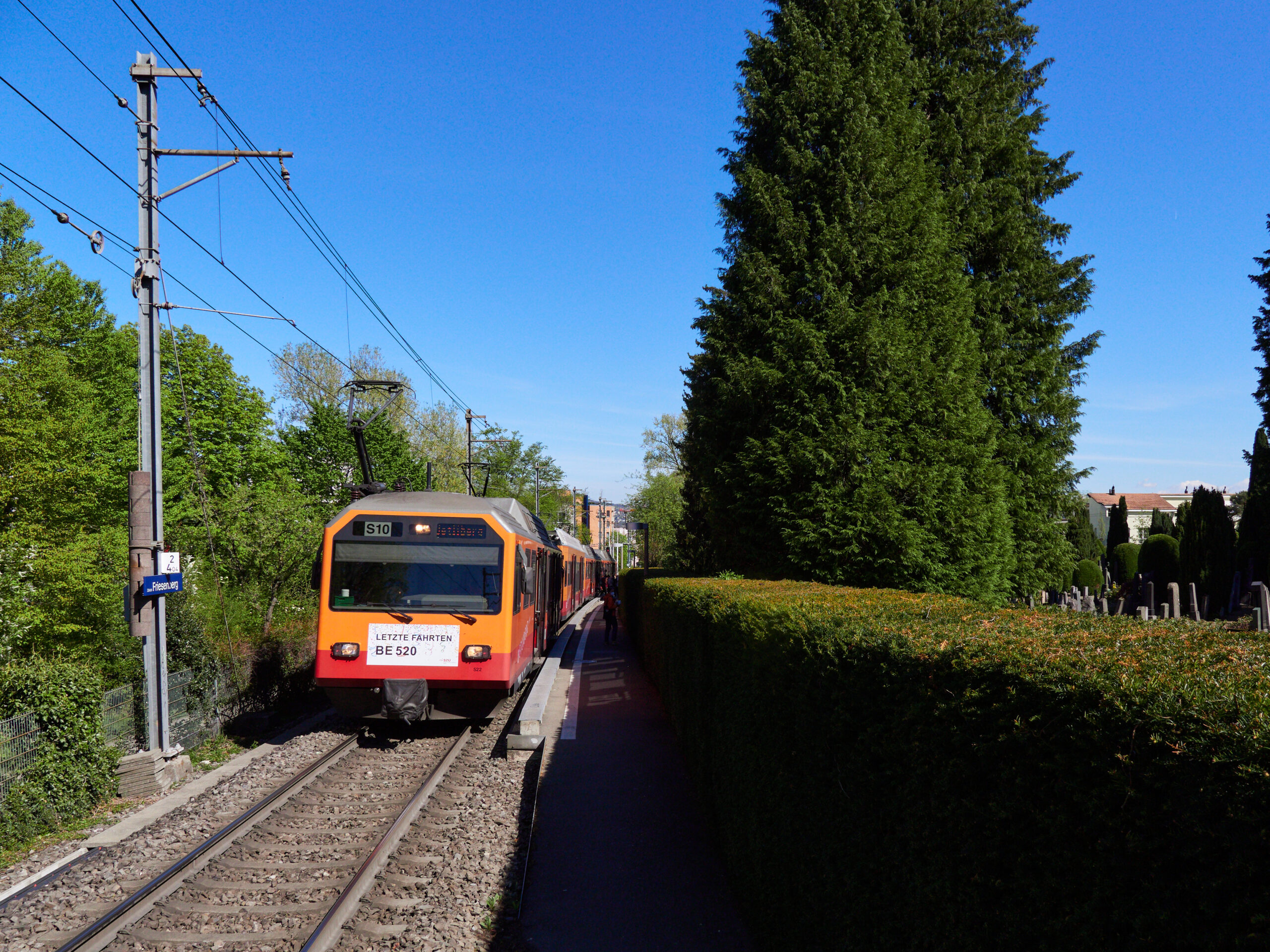
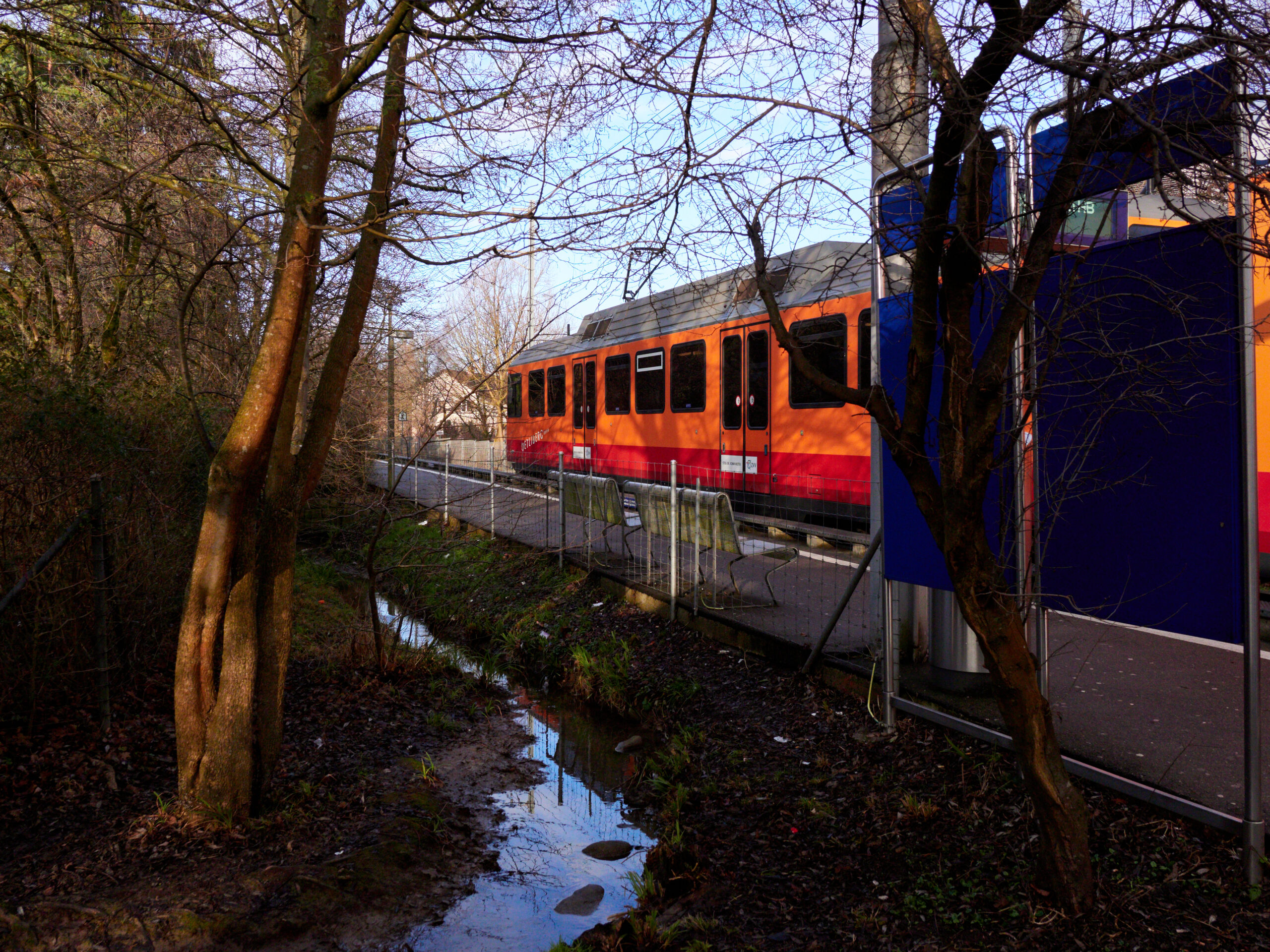
Friesenberg is also the place, where trolley bus line 32 crosses the railway à niveau. No problem with a DC catenary, but with the transition to AC, they’re gonna build a complex construction for it. Wondering why the bus can’t use the batteries for this section…
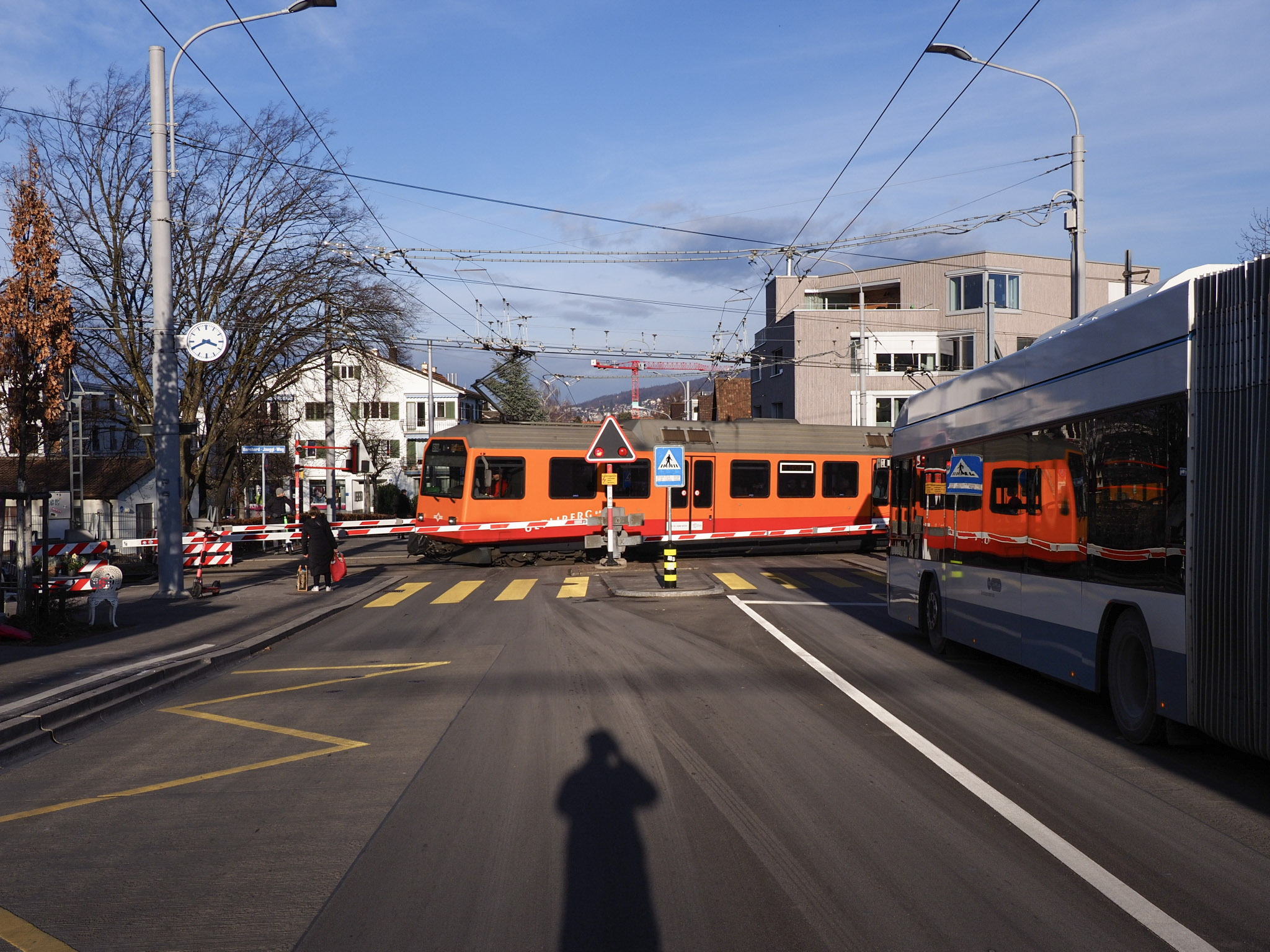
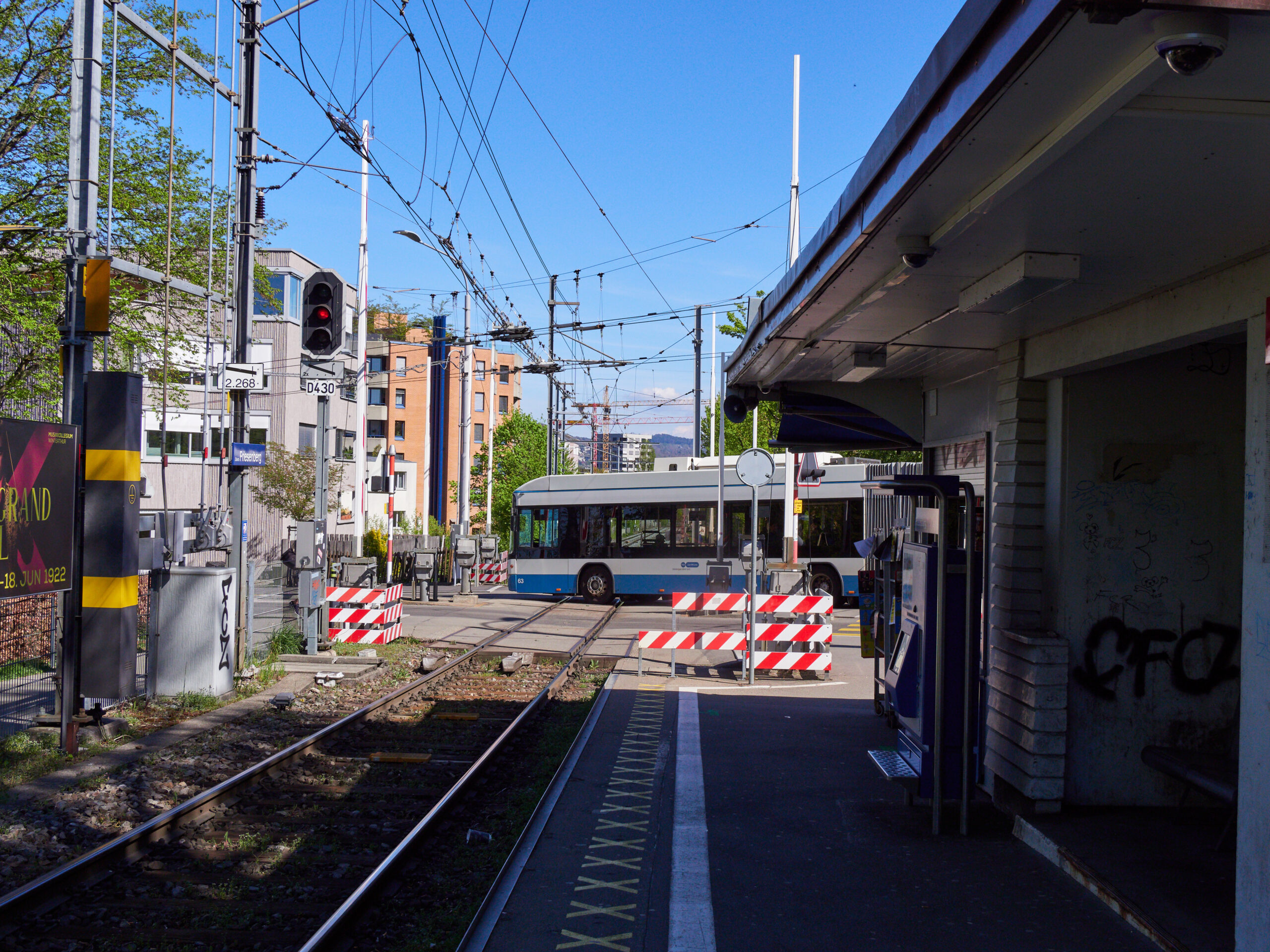
Update: The construction did not work as intended and will be dismanteled 2026. Instead, busses will indeed use their batteries.
It’s only 150m along a little creek between the platform ends of Friesenberg and Schweighof – maybe the shortest distance between two standard gauge stops in 🇨🇭? Unlike Friesenberg, Schweighof is a modernised stop with high platforms for level boarding.
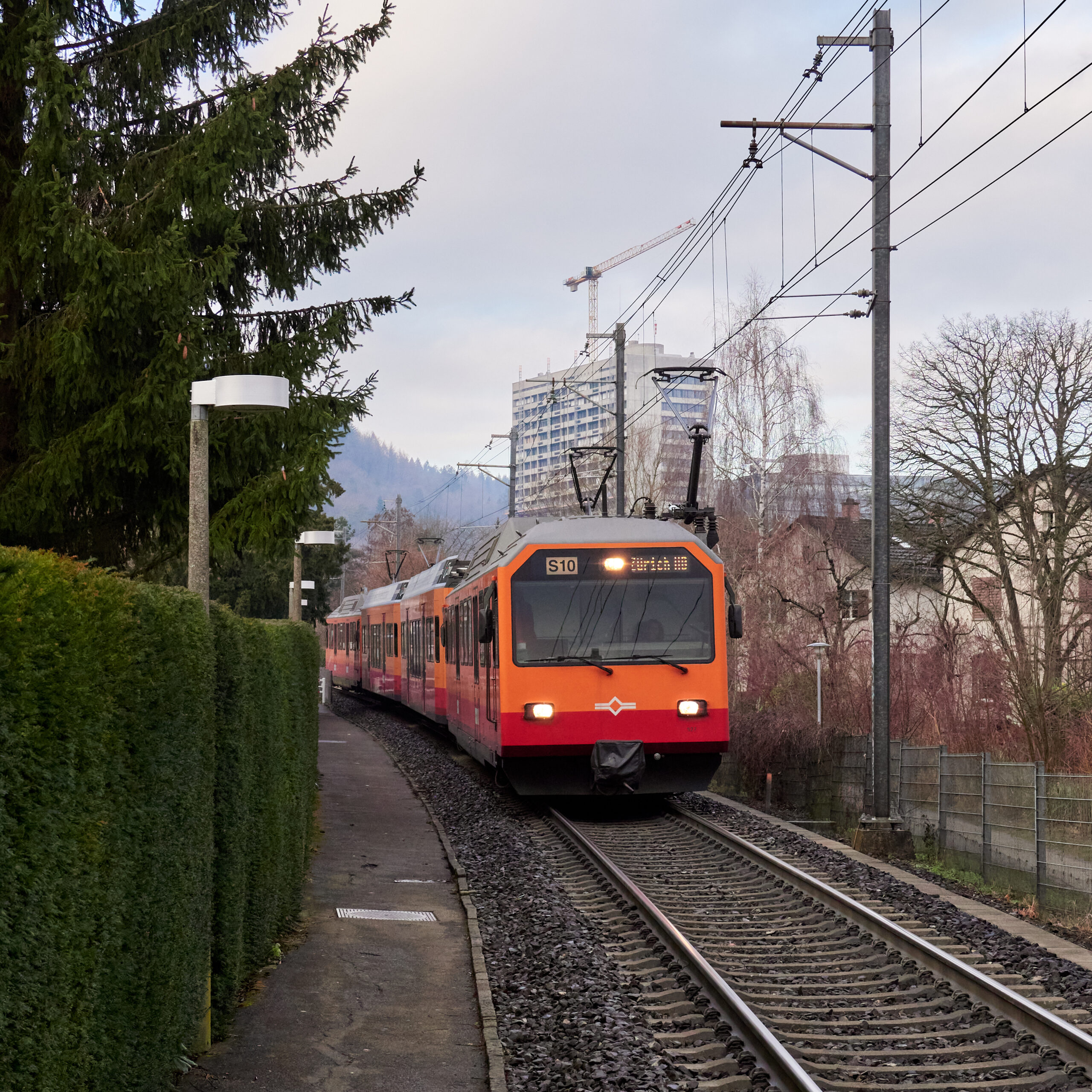
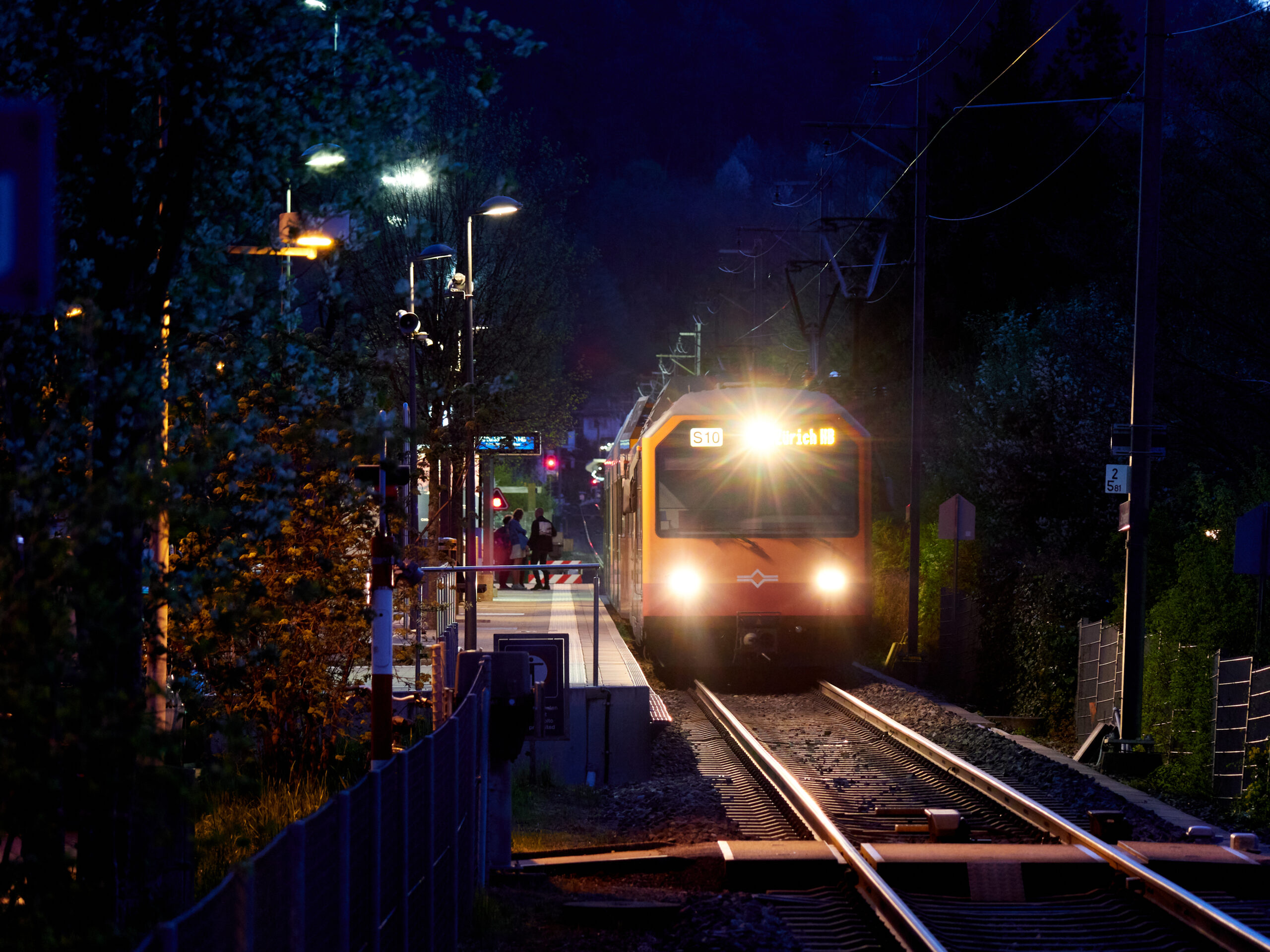
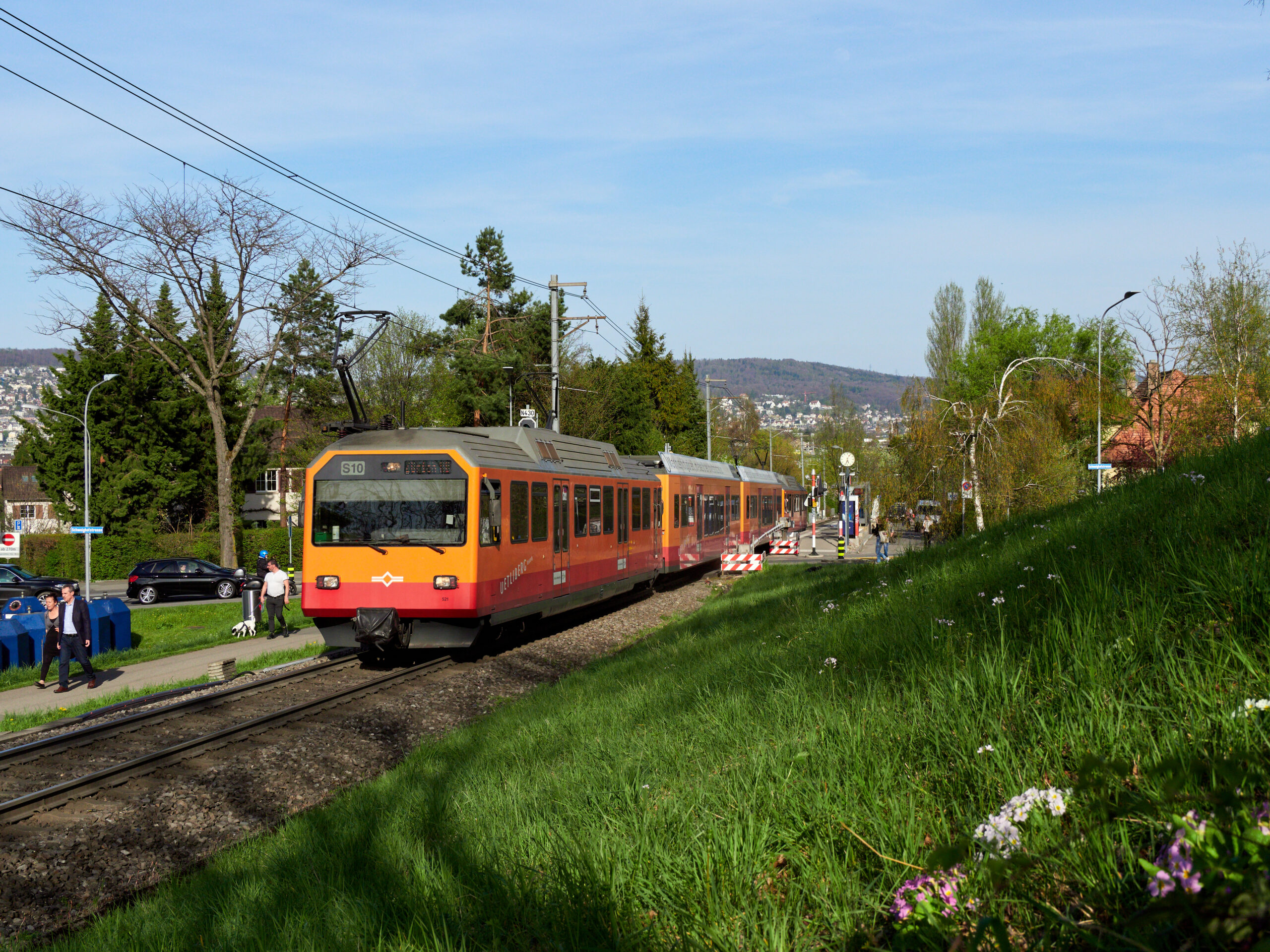
The houses get bigger as apartment buildings replace row houses when we approach Triemli. This is the city hospital’s station and got modernised a few years ago. The limited services terminate here.
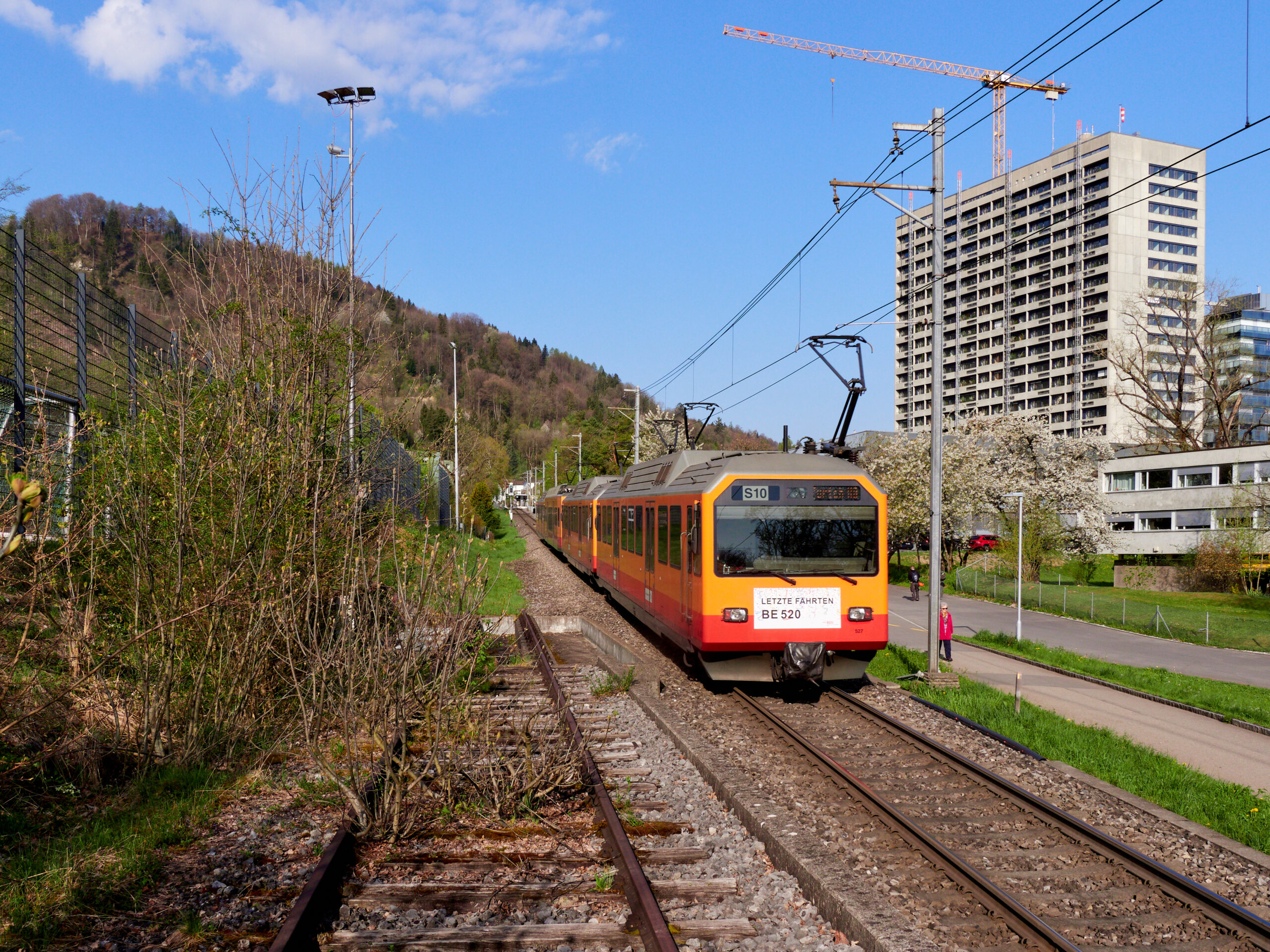
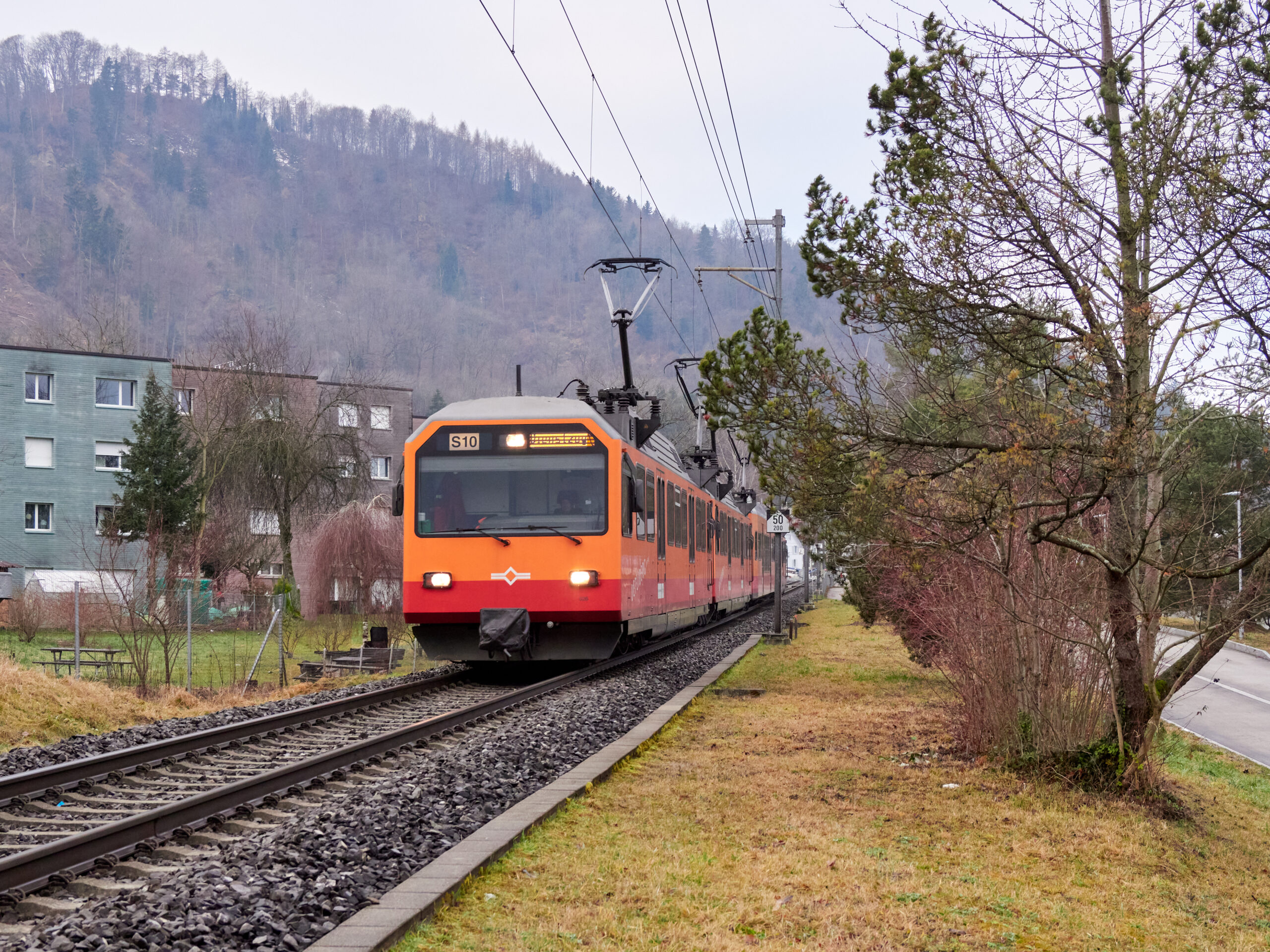
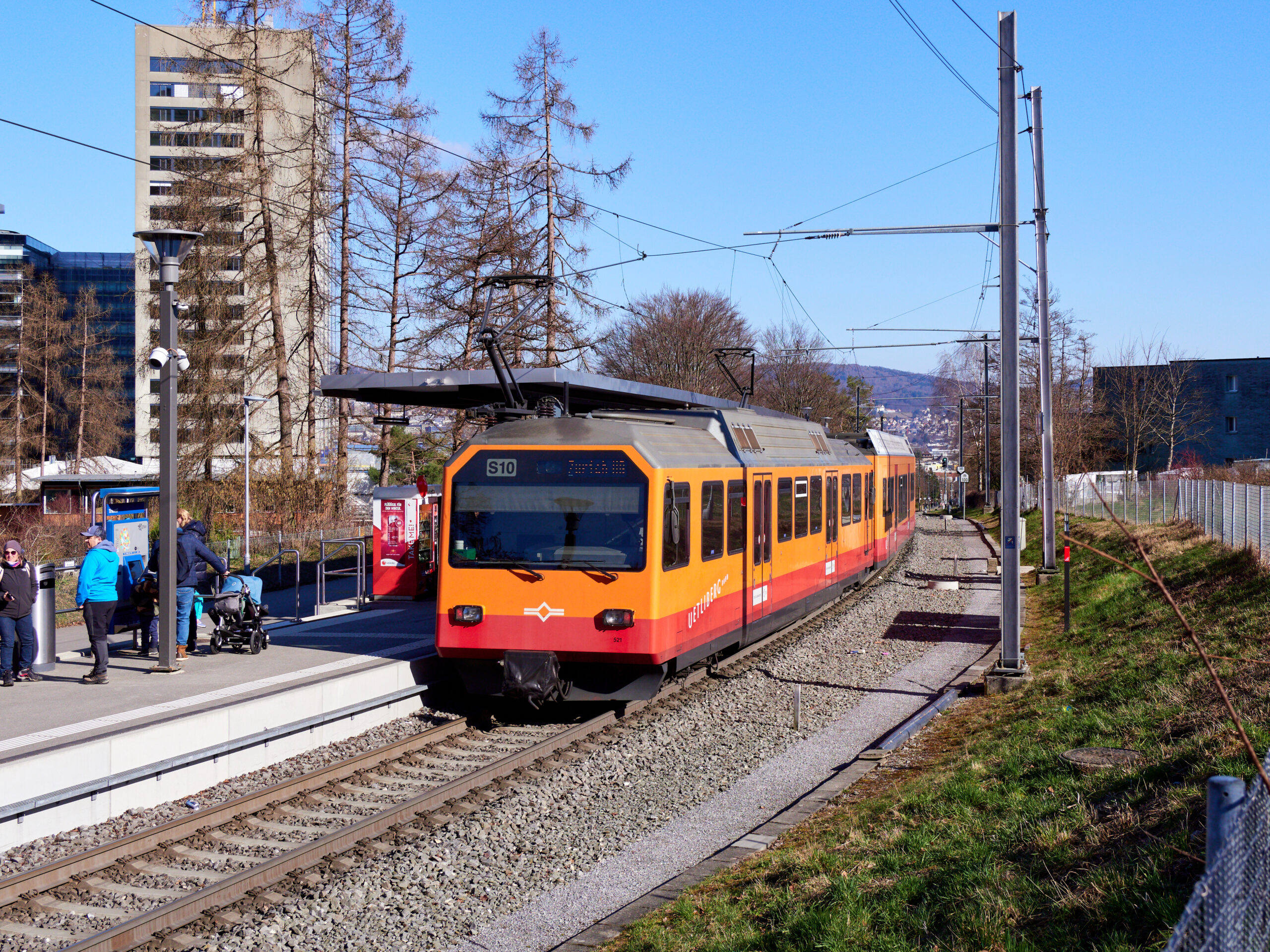
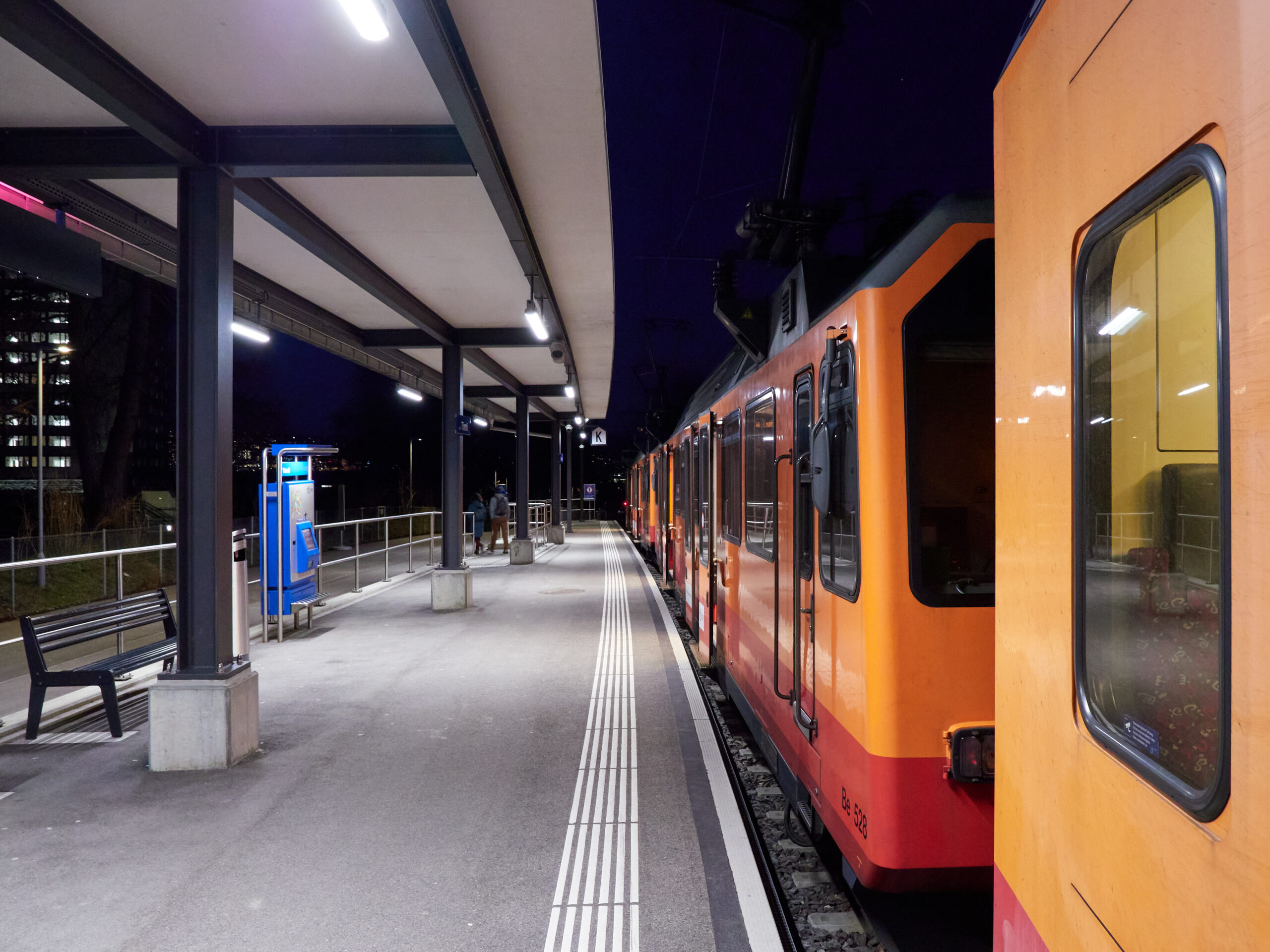
At Triemli, we also reached the city’s outskirts. The landscape changes from city to forest here. Line gradients are up to 50 per mill and get even steeper behind Triemli. This is where the mountainous part of the line begins.
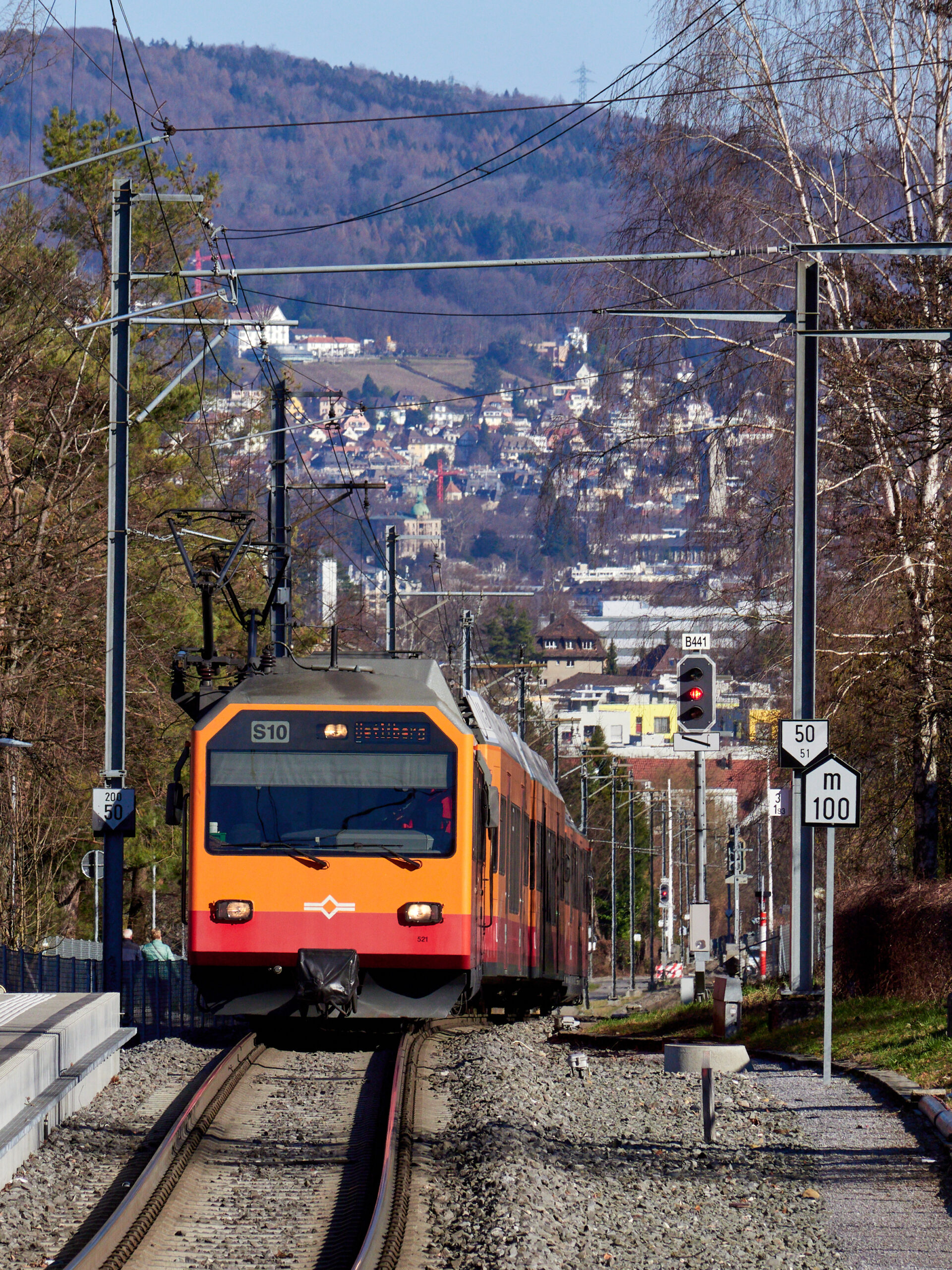
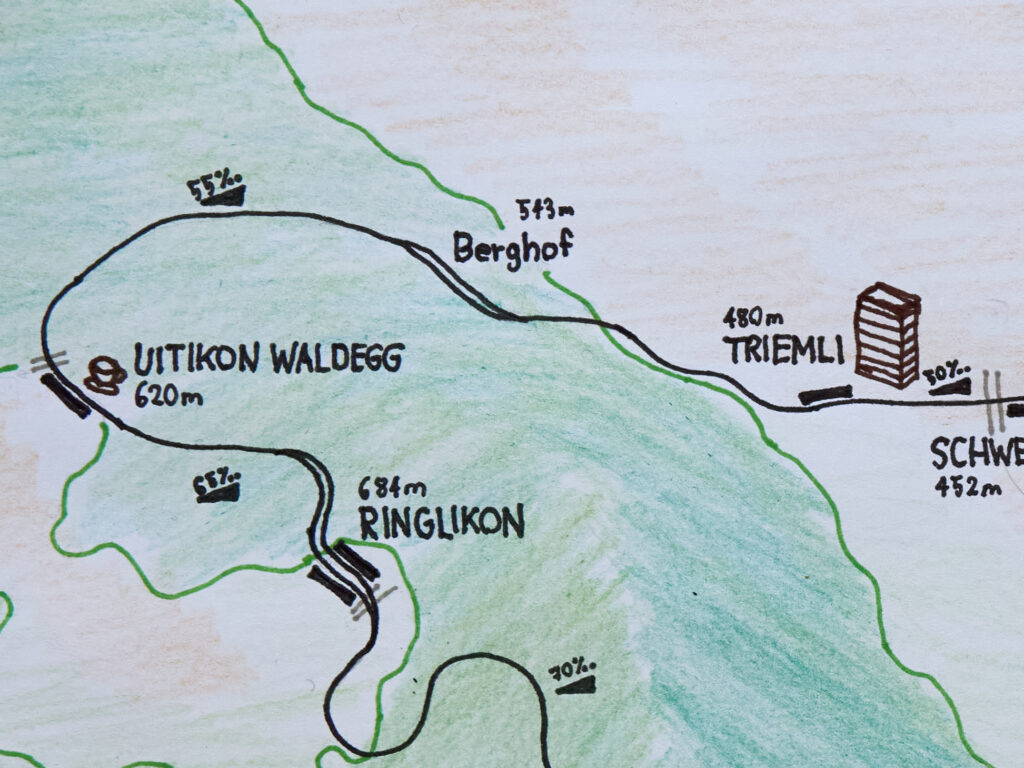
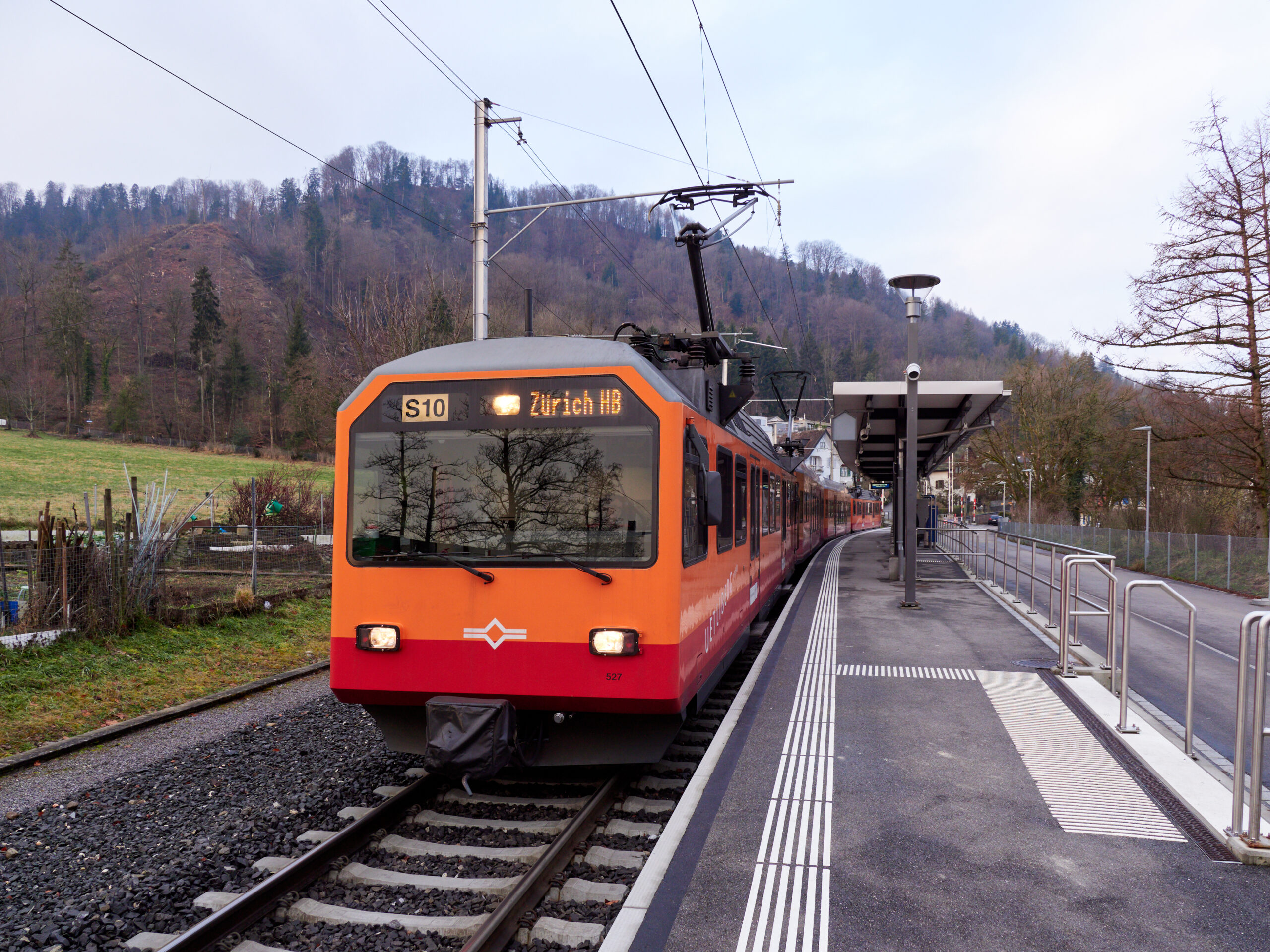
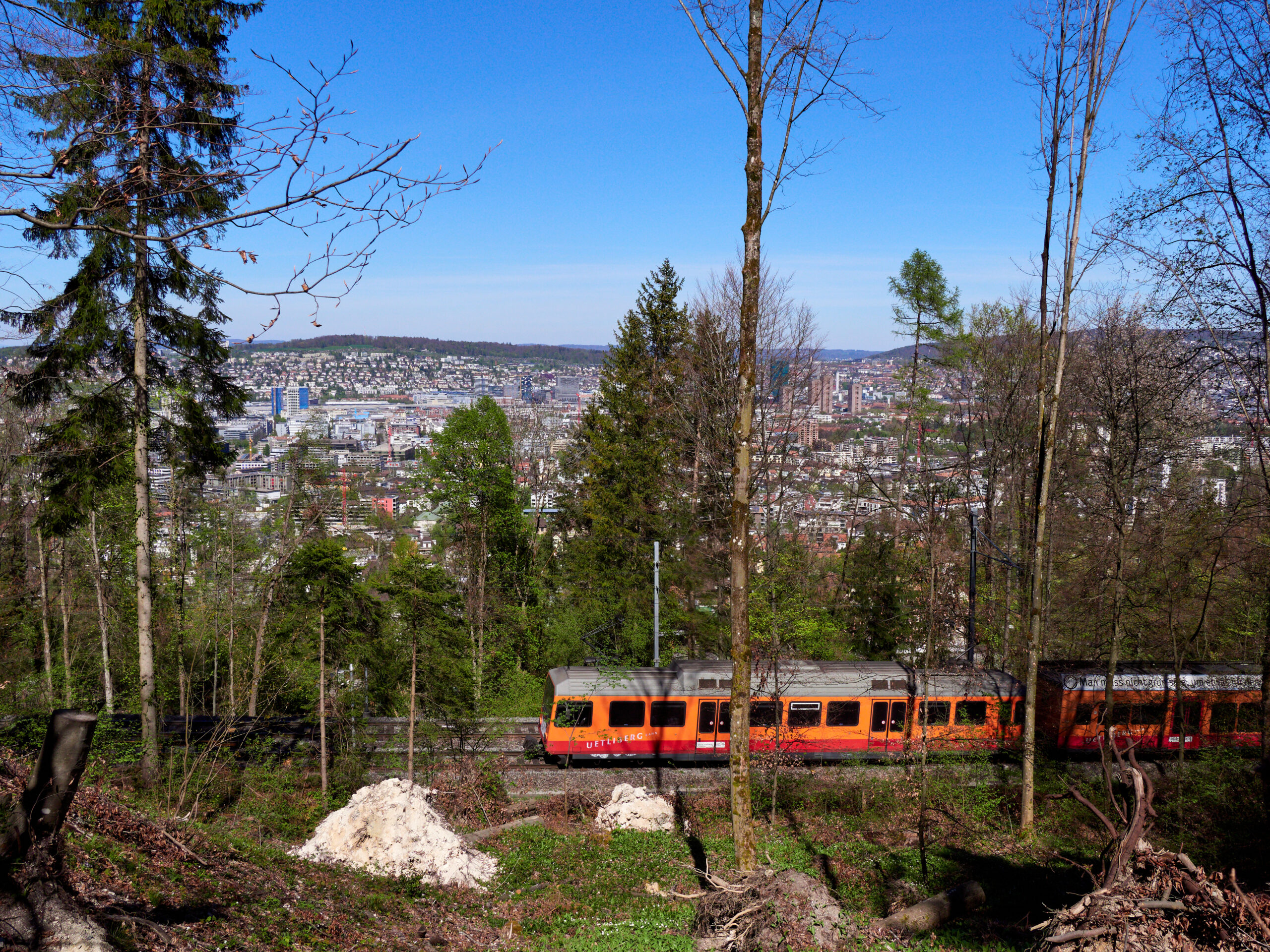
Through the forest, the line climbs with up to 57 per mill. You can enjoy the view over the city through the trees. Hidden in the forest, we find Berghof passing loop. Trains cross here Mon to Fri, when trains run in a 30 mins interval, but not on weekends, when a train every 20 minutes climbs Uetliberg.
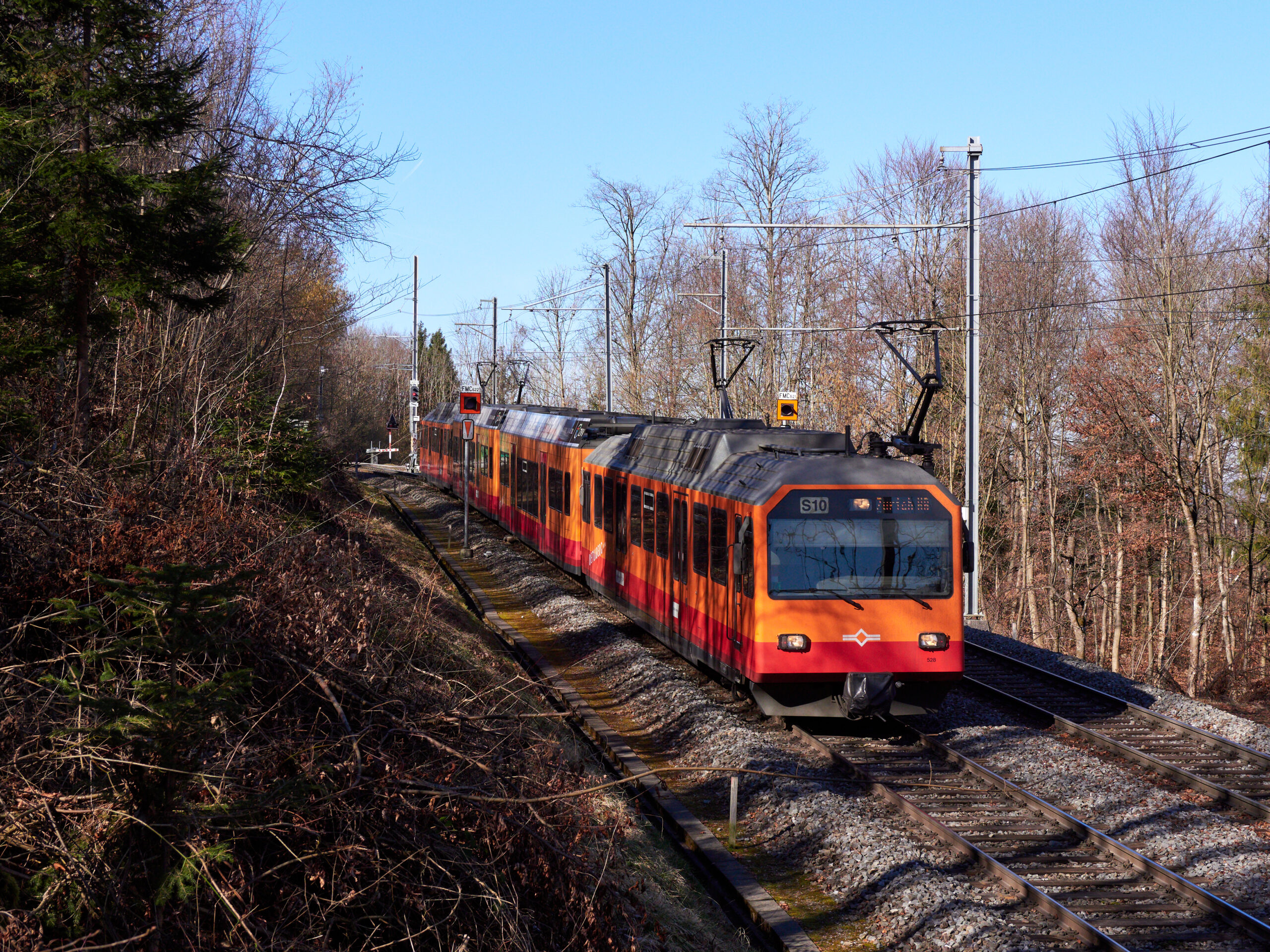
Update: With the new timetable concept as of 2023, trains also meet at Berghof on Weekends.
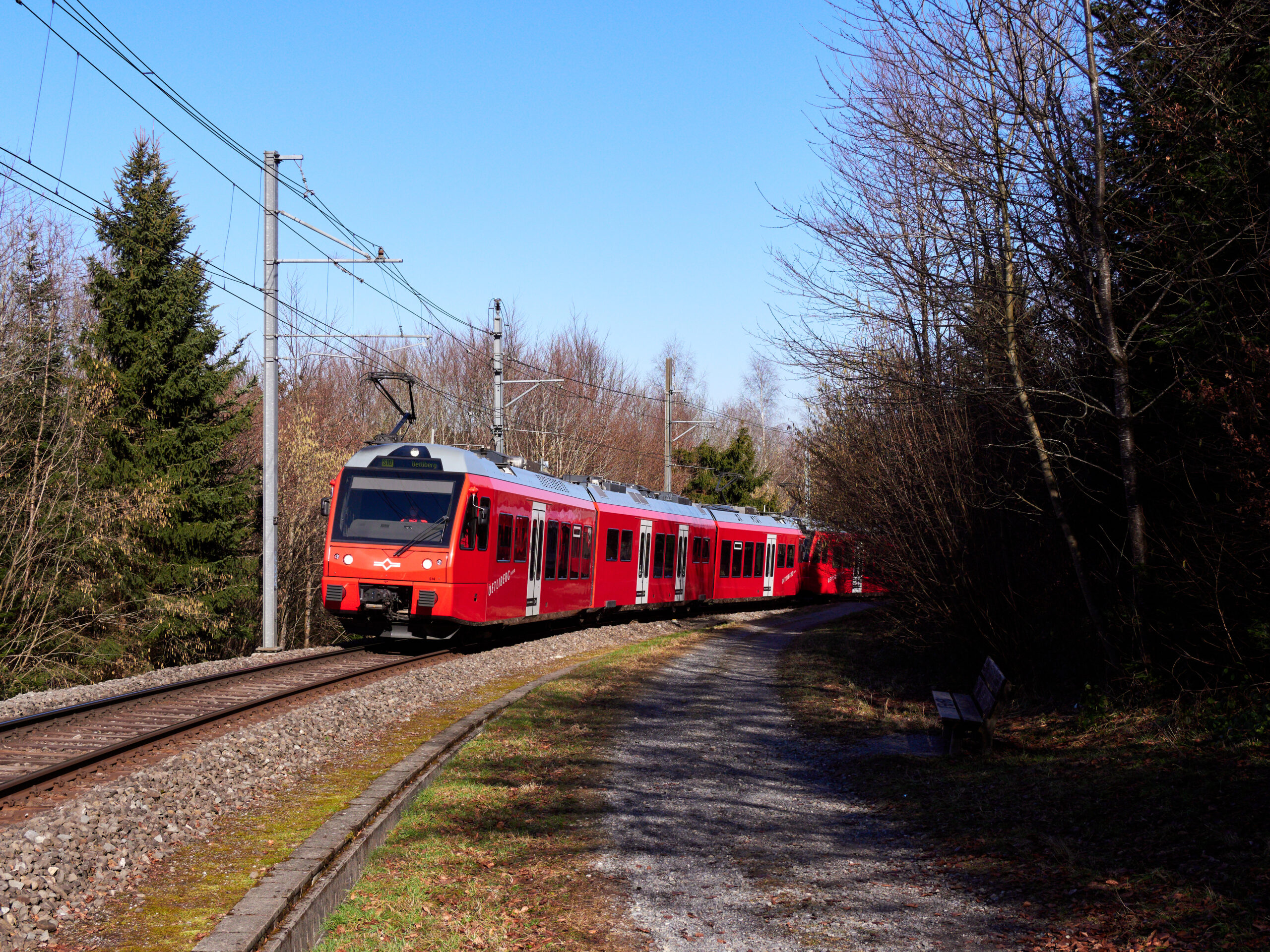
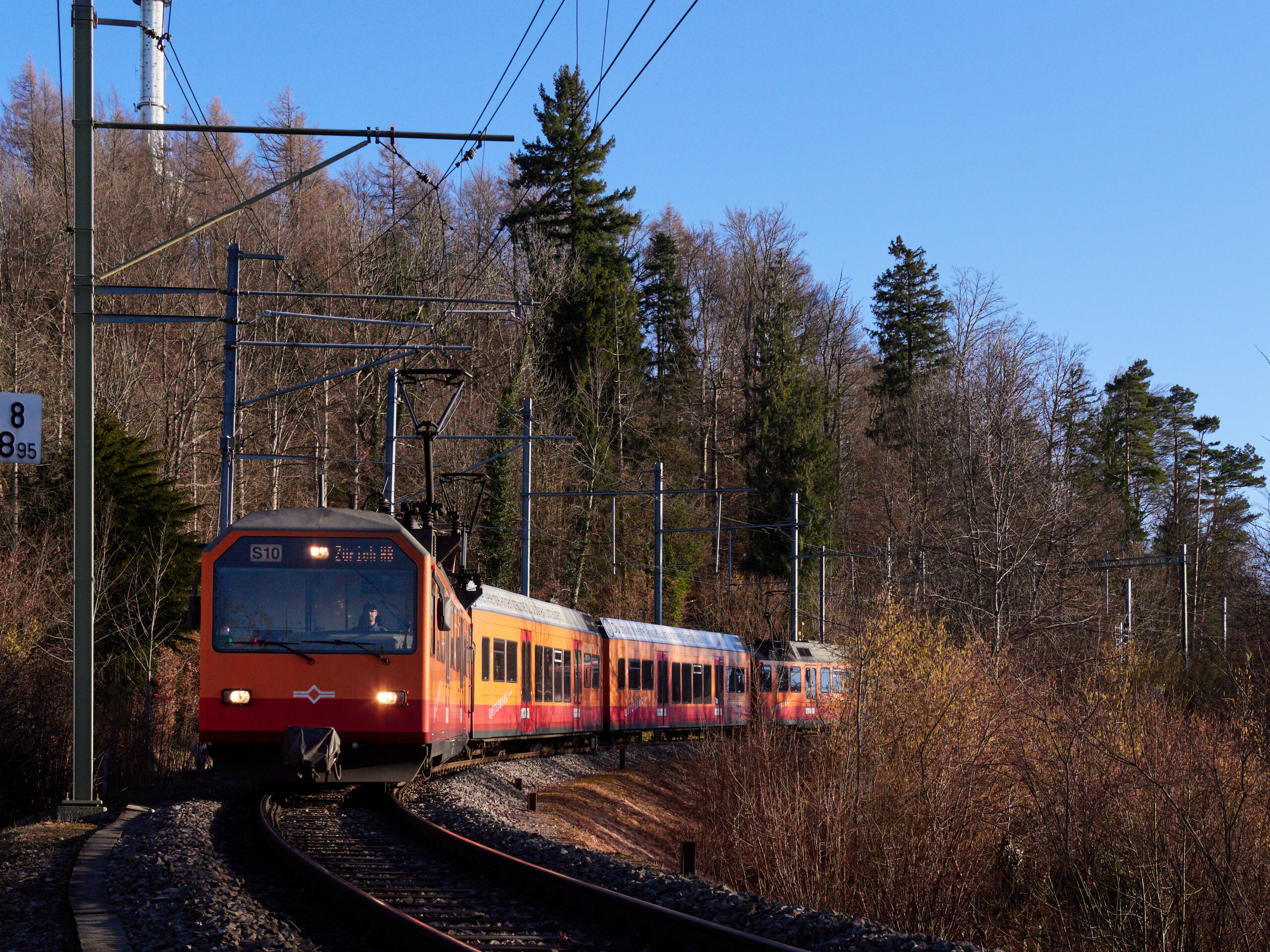
Still in the forest, the line describes a wide curve towards Uitikon. We are now on the other side of the Uetliberg chain. For a change, a double class Be 510 EMU.
Uitikon Waldegg station is situated above the village at the forest’s edge. Since a few weeks, the station even got its own coffee shop! ☕
A fantastic thing, as quite a lot of my Uetliberg walks end here. 😊
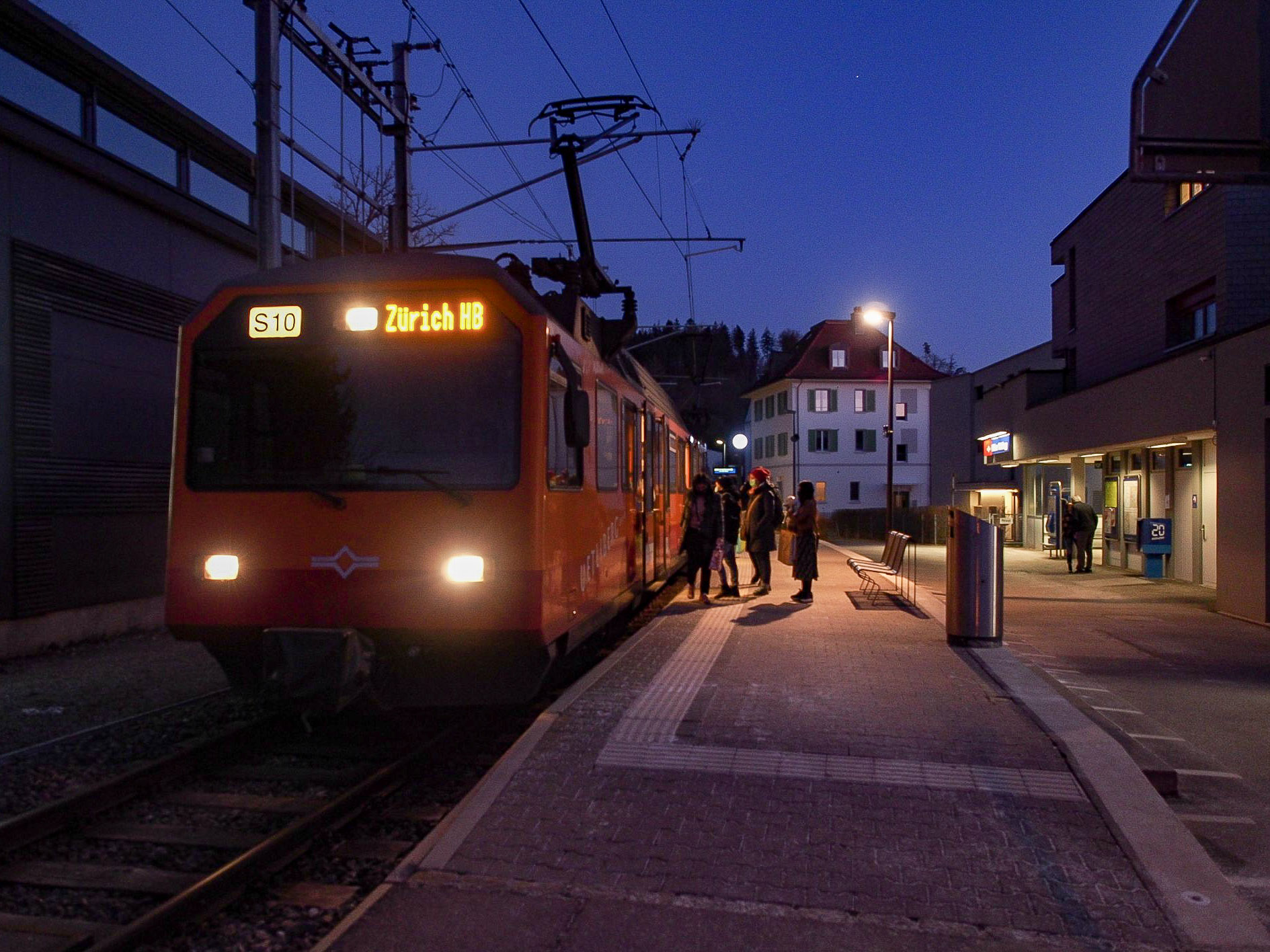
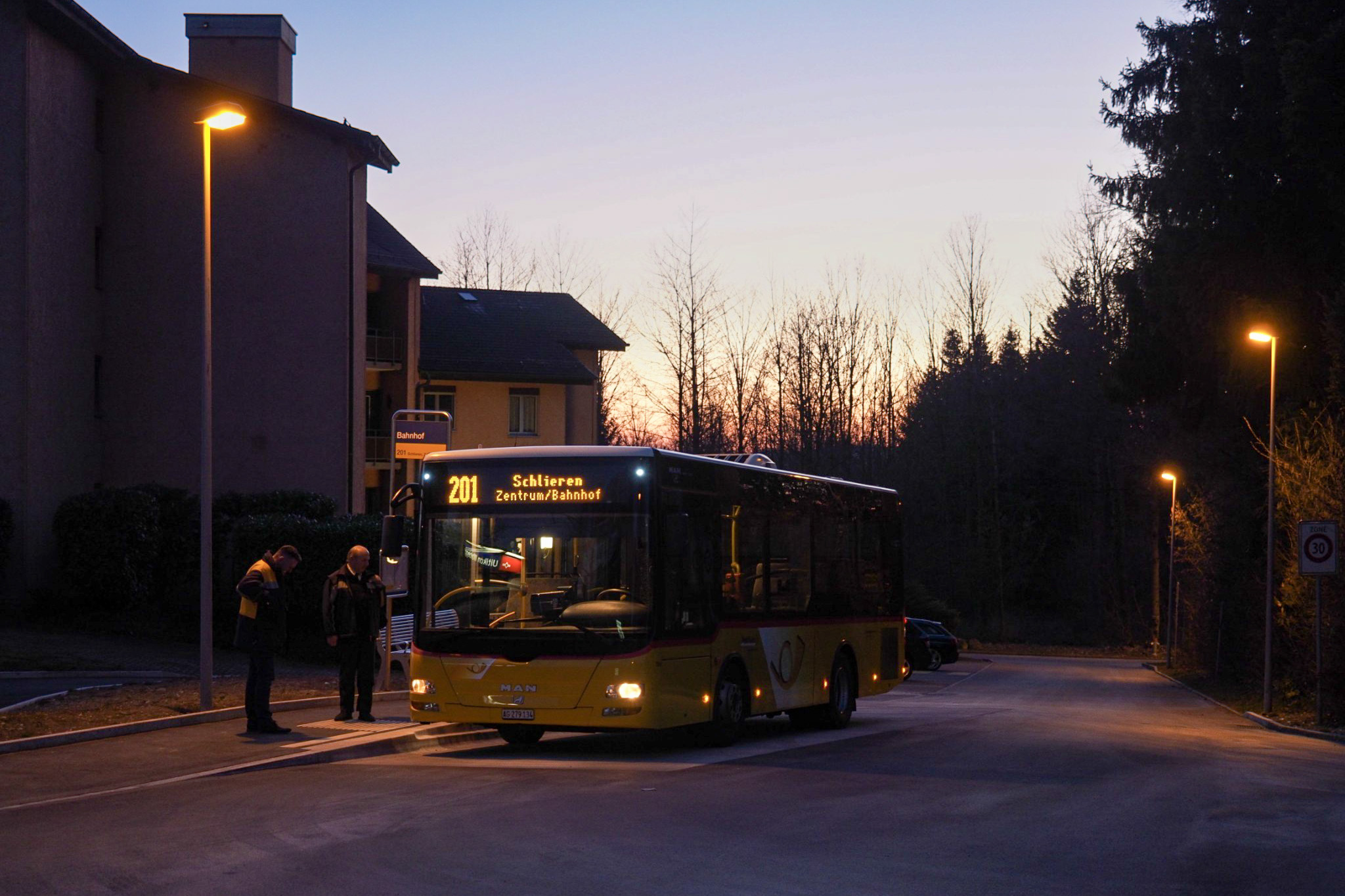
Update: The coffee shop at Uetikon Waldegg station unfortunately closed again in late 2024.
After Uitikon (pronounced as «Üüdike»), gradients get serious as the line climbs uphill through the forest. With up to 66 per mill, there are special brake requirements for vehicles running further than Uitikon.
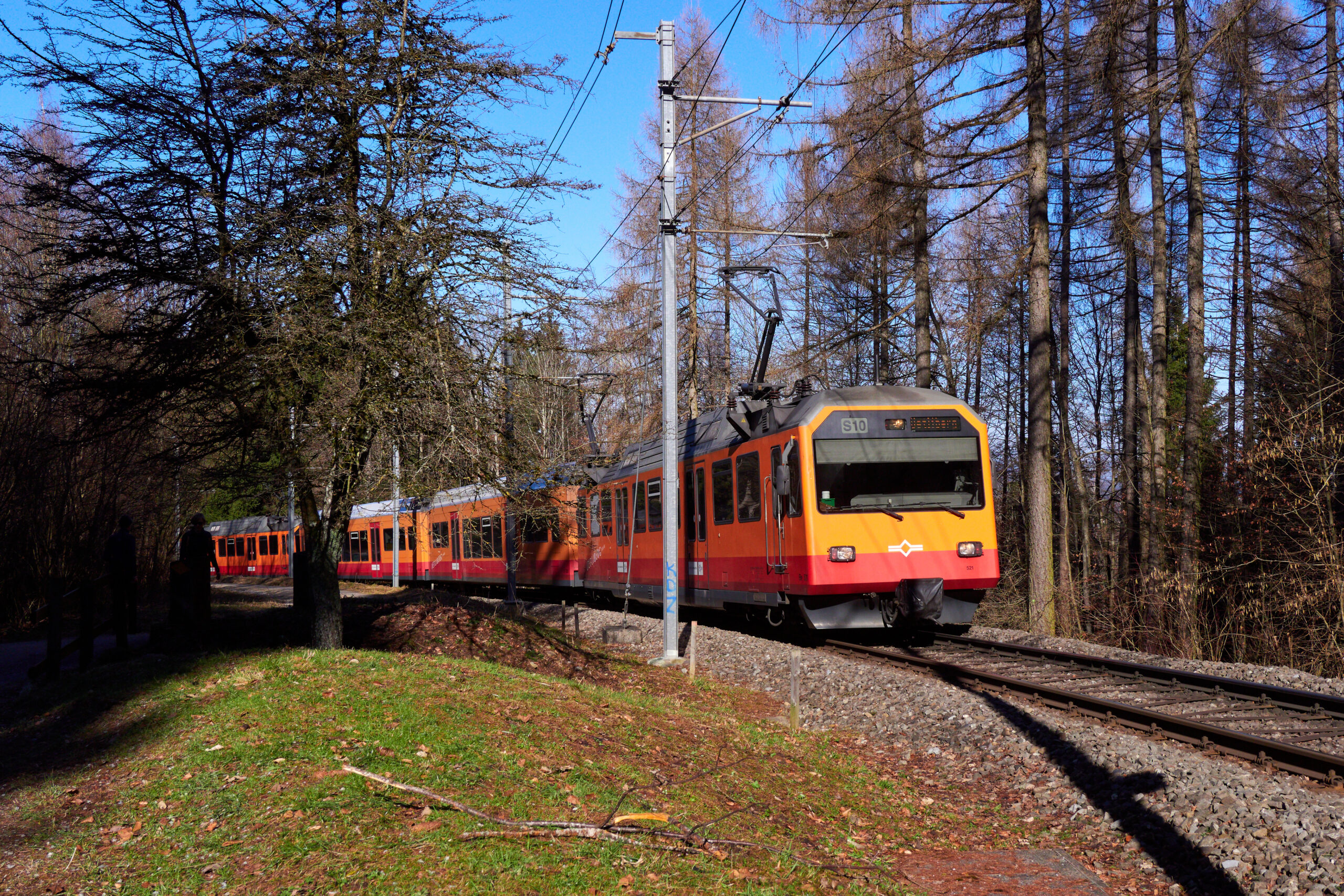
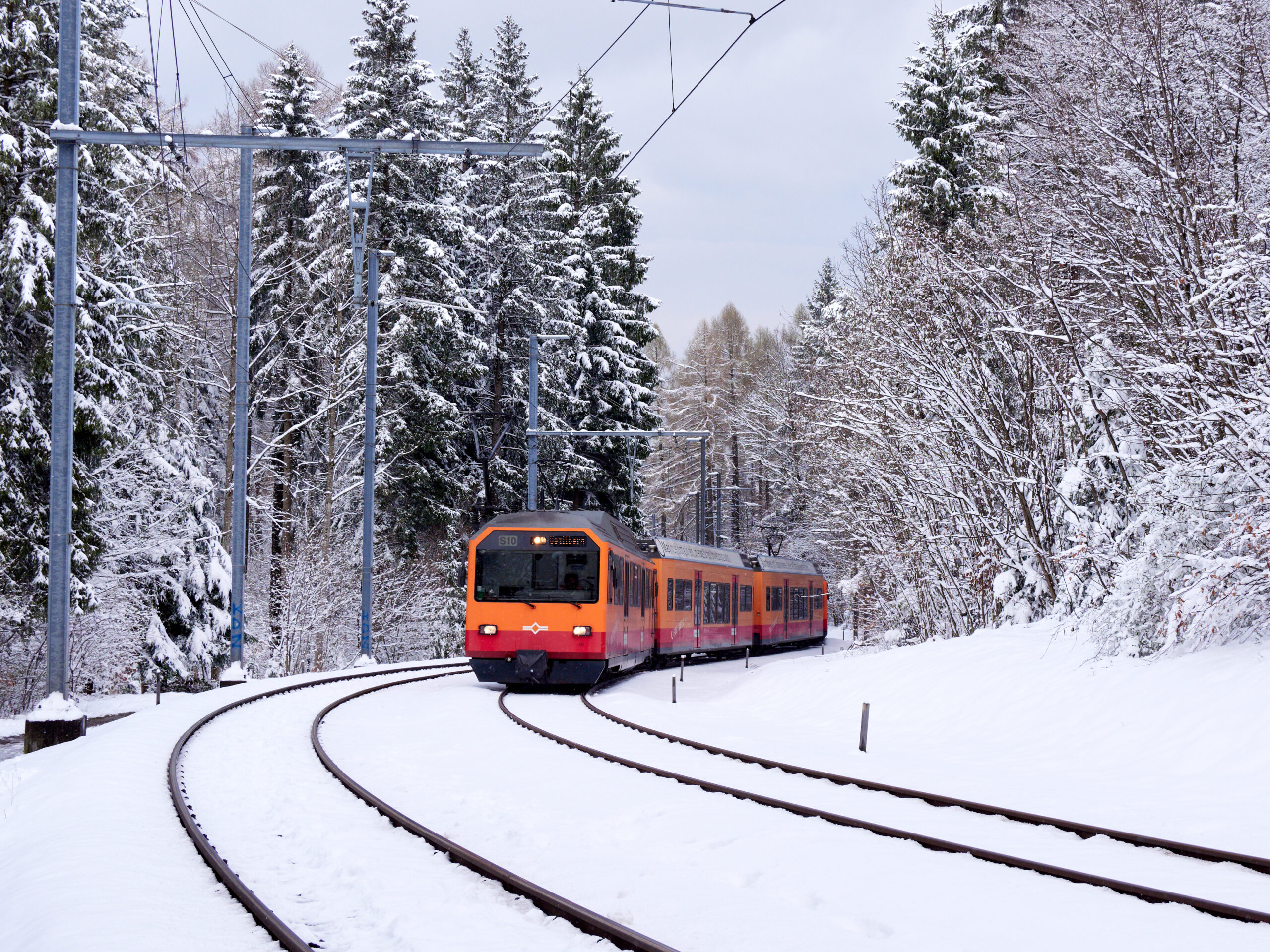
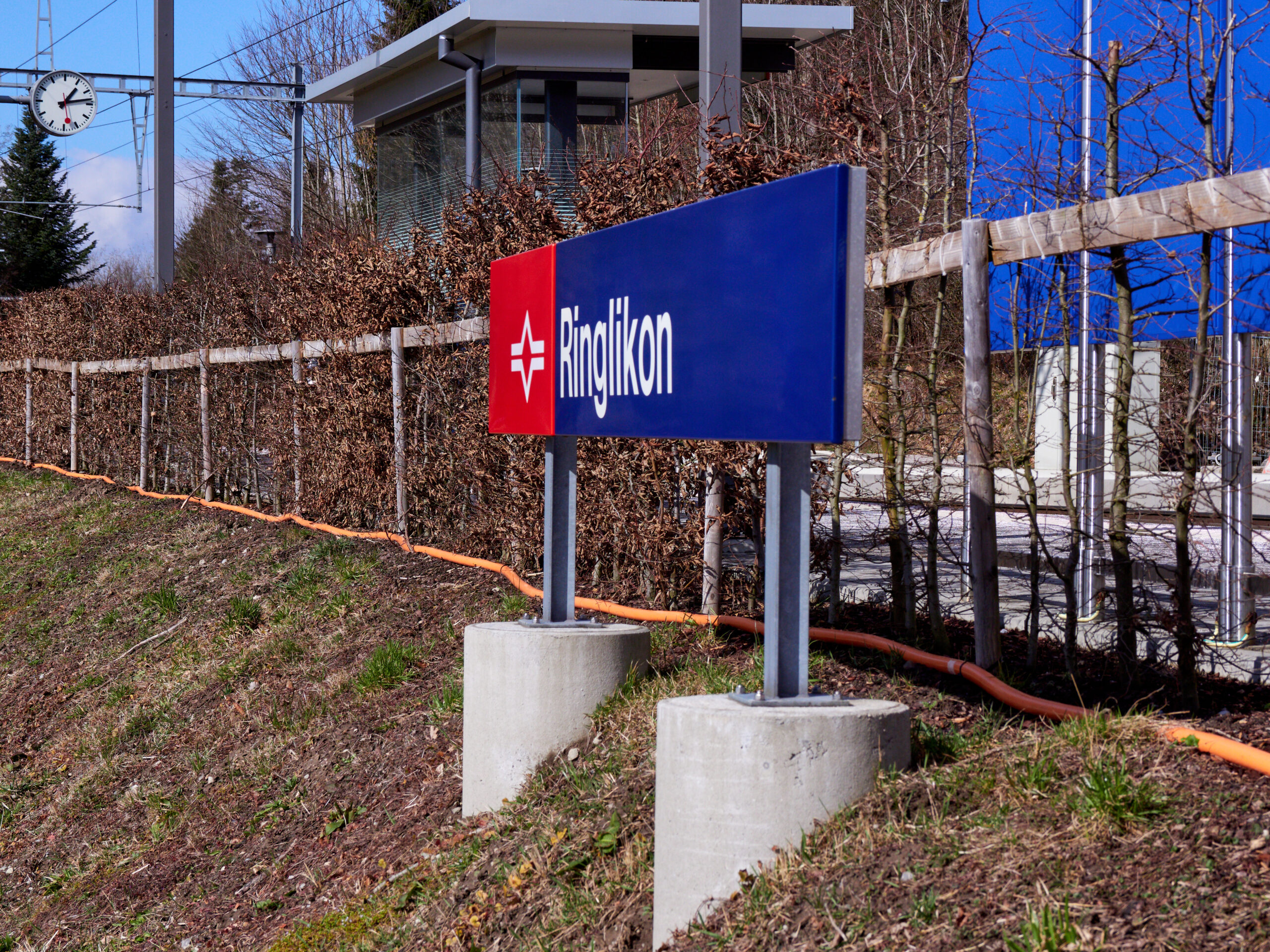
Ringlikon. Situated in a clearing, this is the last passing loop of the line and the only one which is also a commercial stop. It’s normally quiet here, but it can get busy on weekends, as there’s a big forest playground nearby.
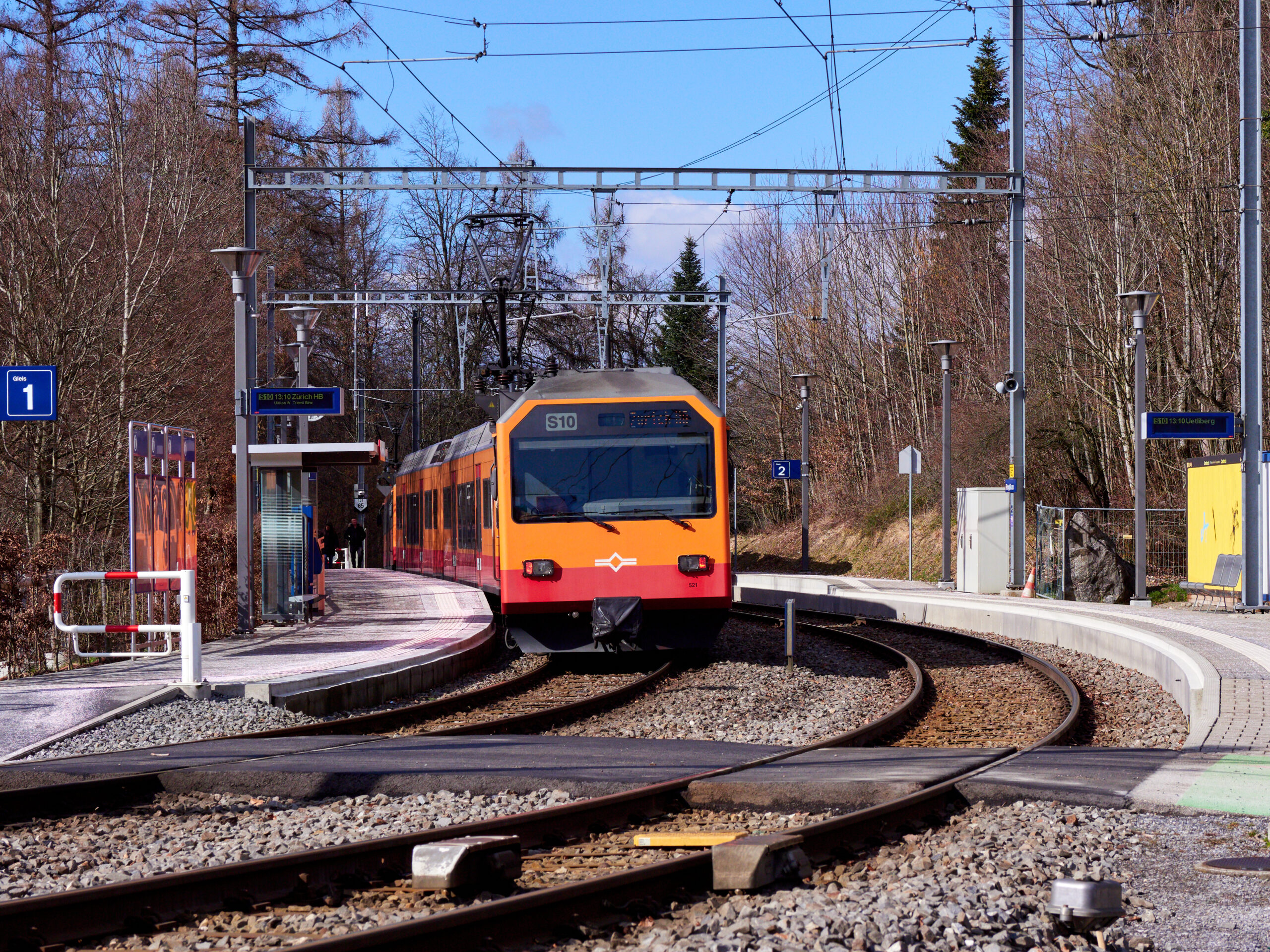
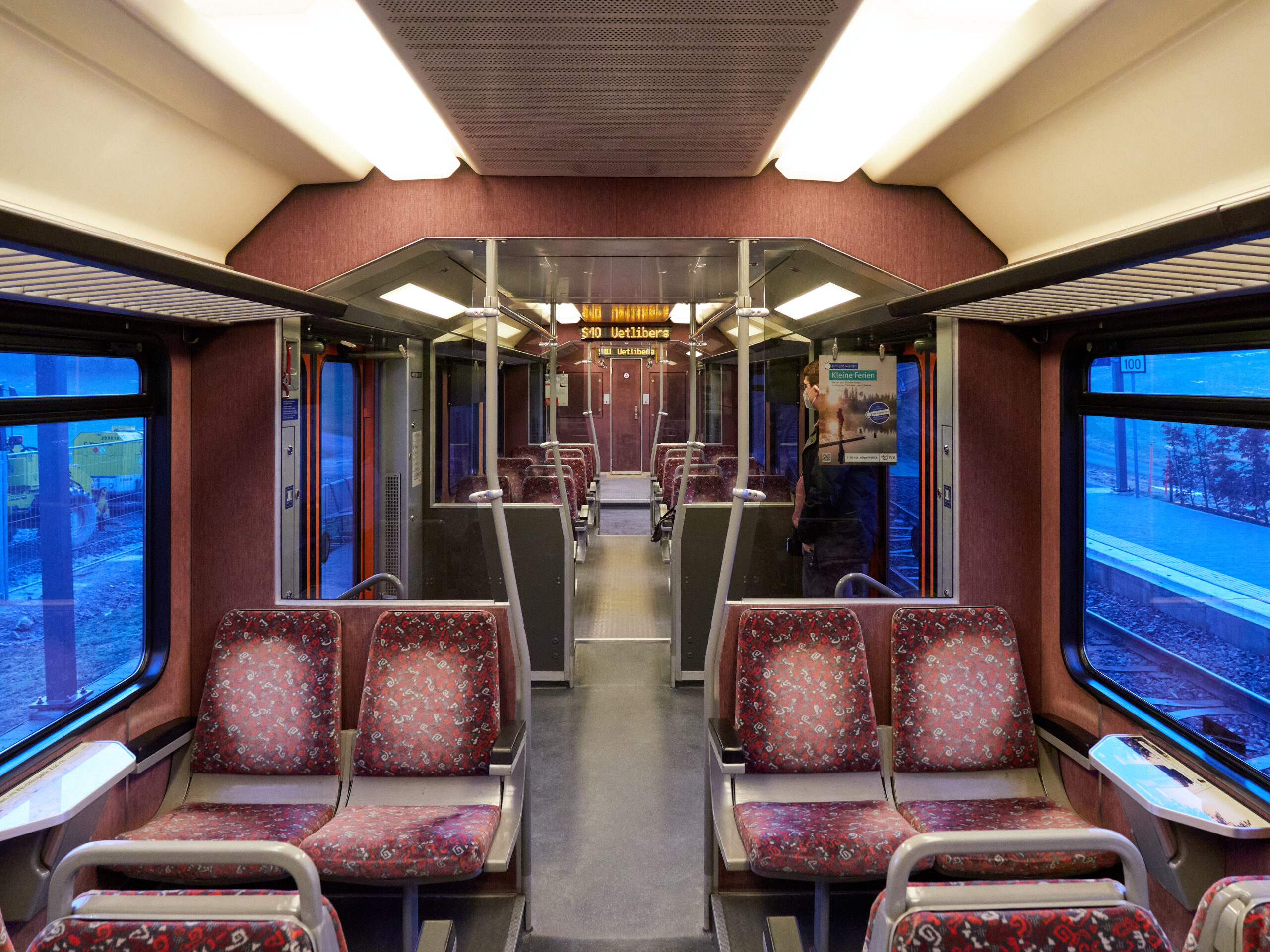
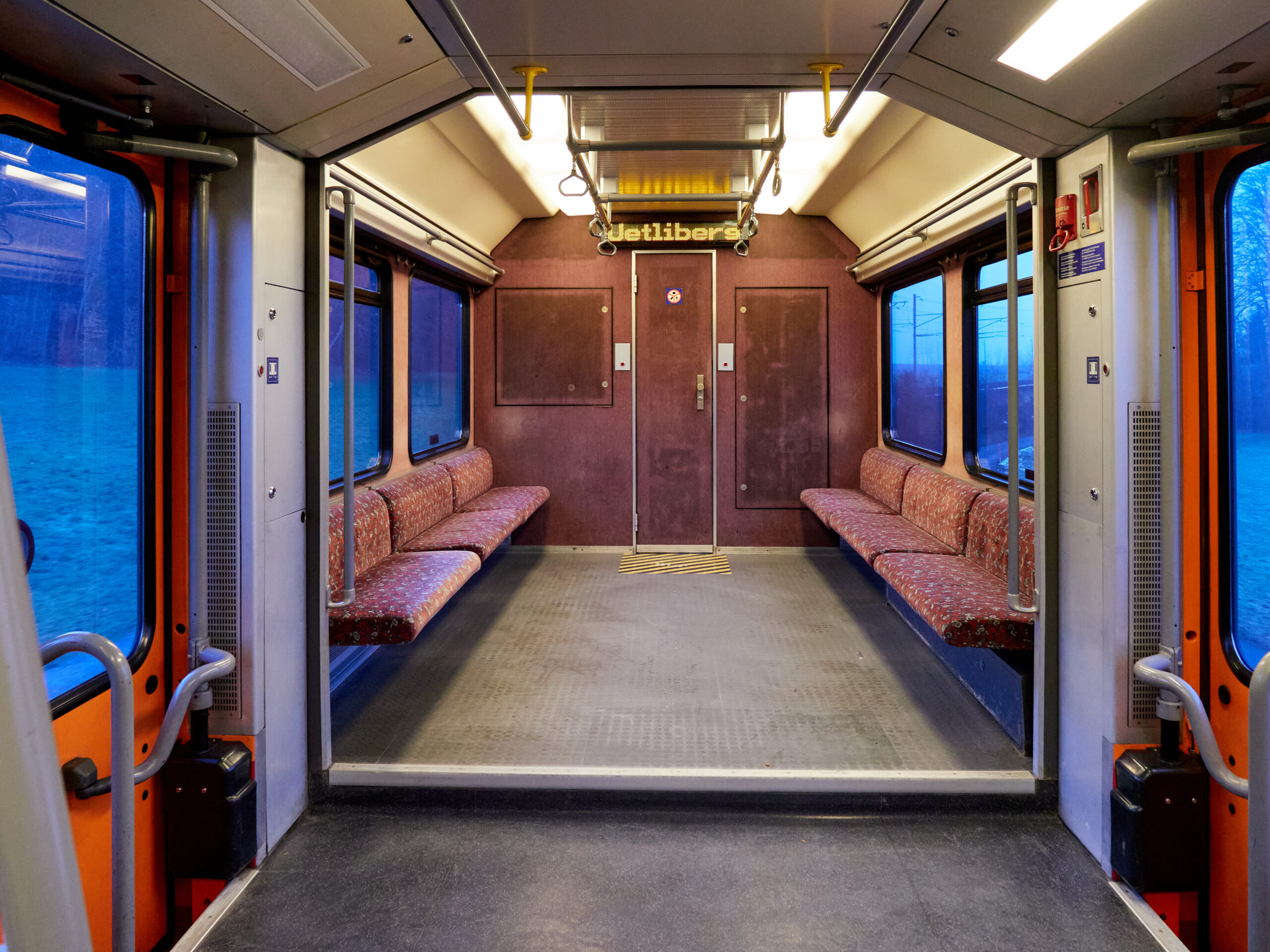
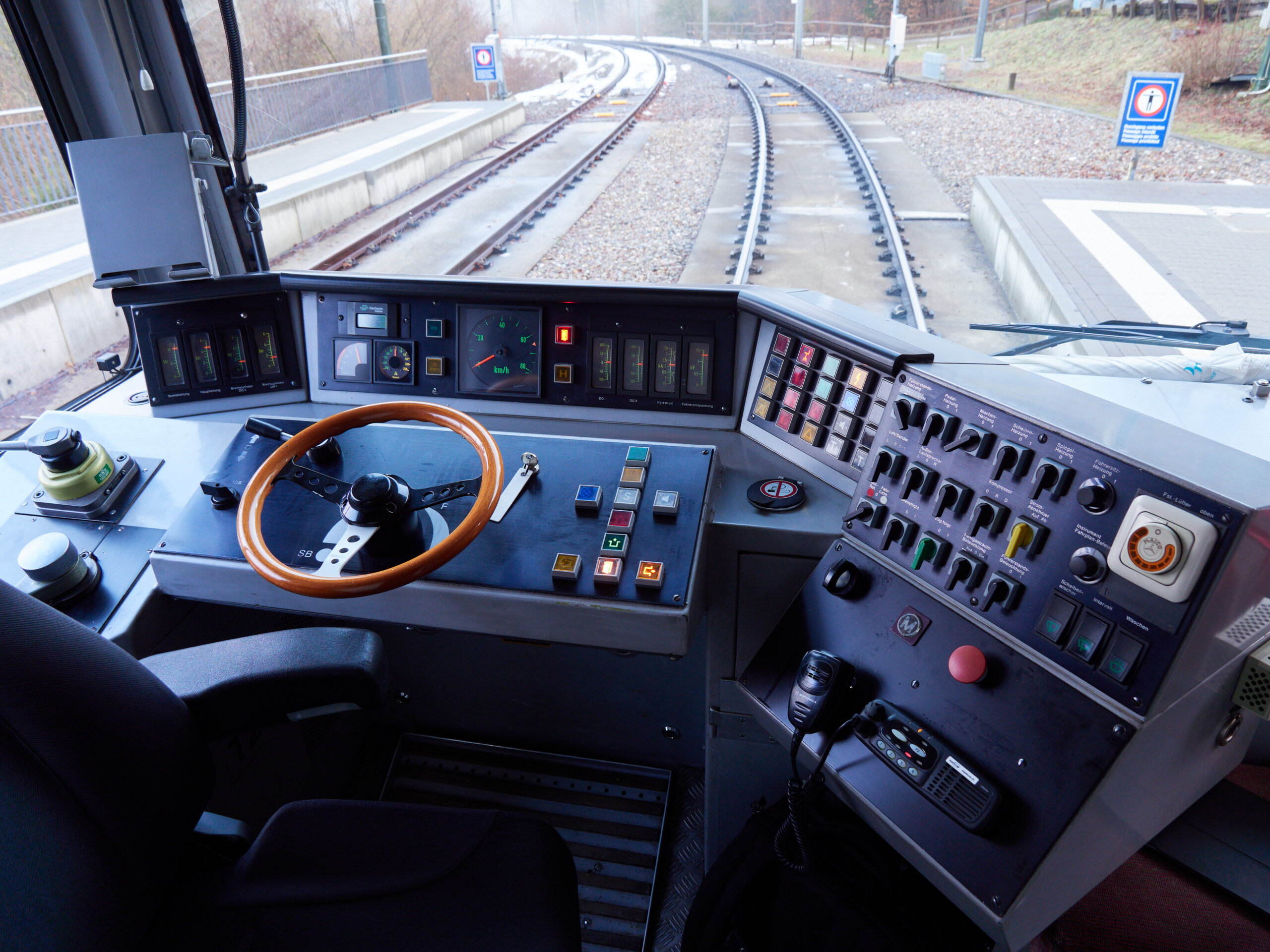
Before we’ll cover the last part, let’s have a look at the rolling stock: Star of the day are of course the eight class Be 520 railcars (full name Be 556 521-528). Built in 1992, they measure 22m and seat 63 passengers. After 30 years of shuttling between Zürich and Uetliberg, this is their last weekend in passenger service.
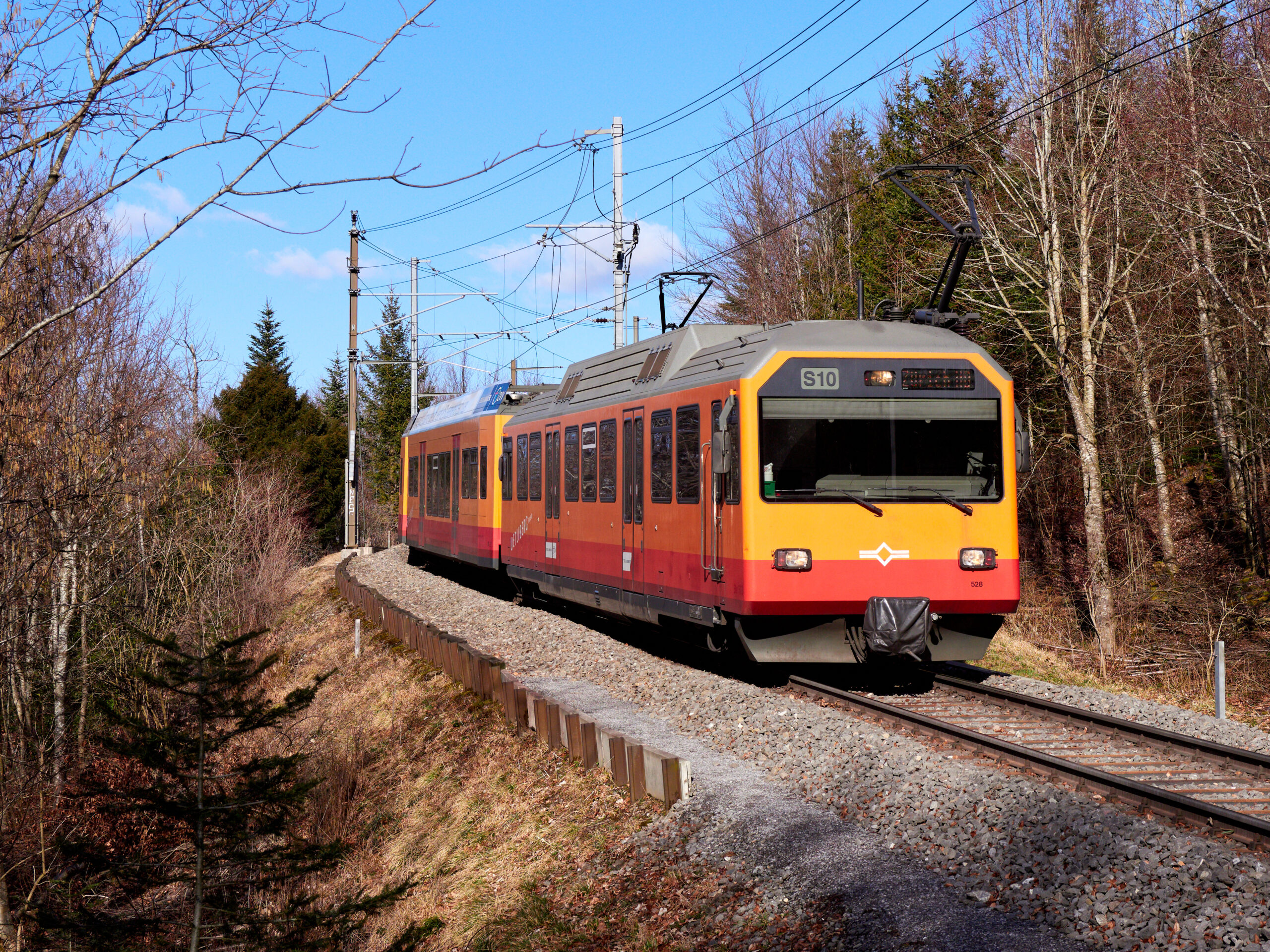
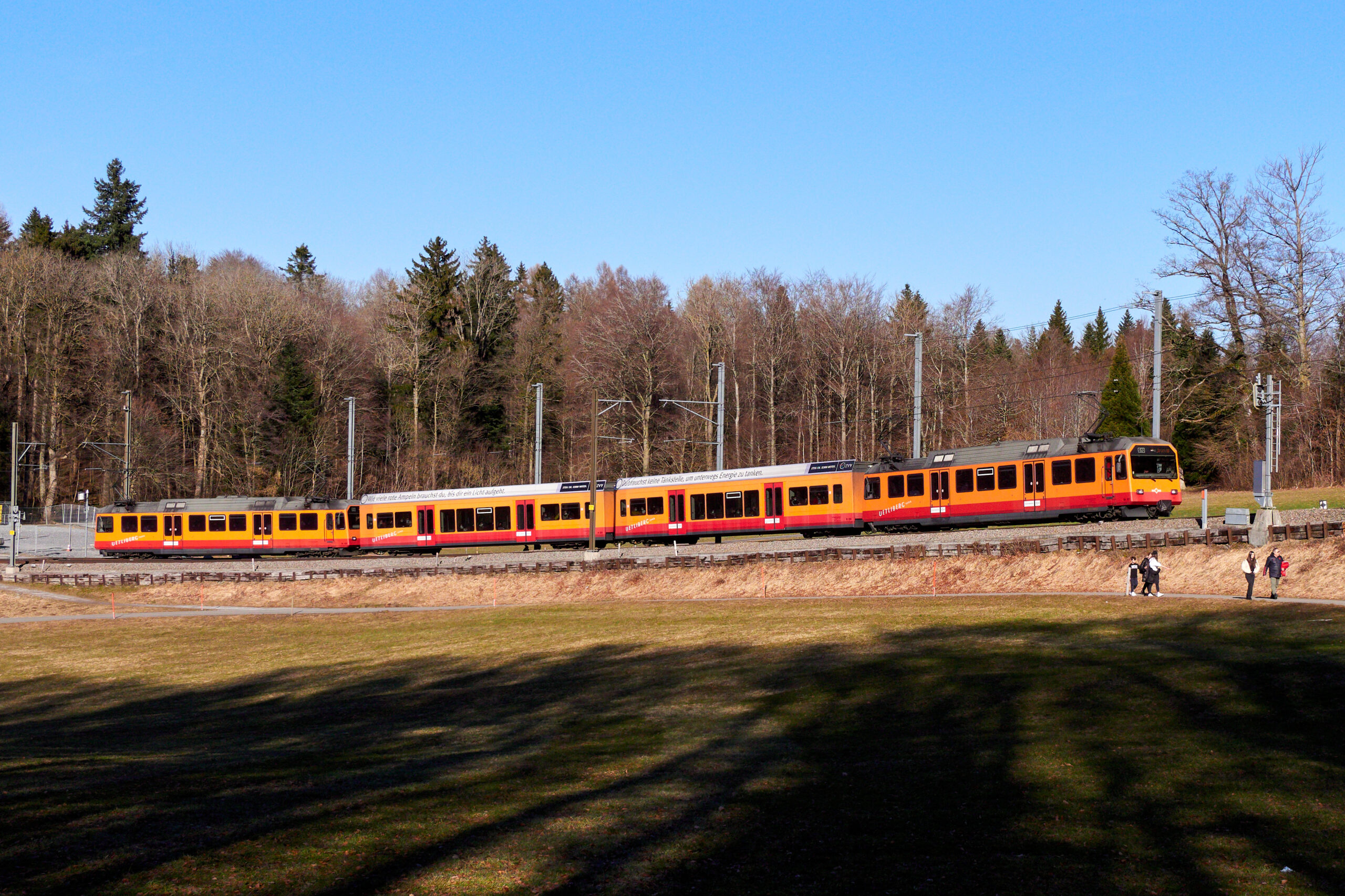
With 844 kW, they’re extremely well motorised and accelerate very fast. The intended driving trailers were never bought. Instead, Stadler delivered four low floor intermediate cars «B 220» in 2003. SZU formed three 4-car consists with 1 or 2 intermediate cars.
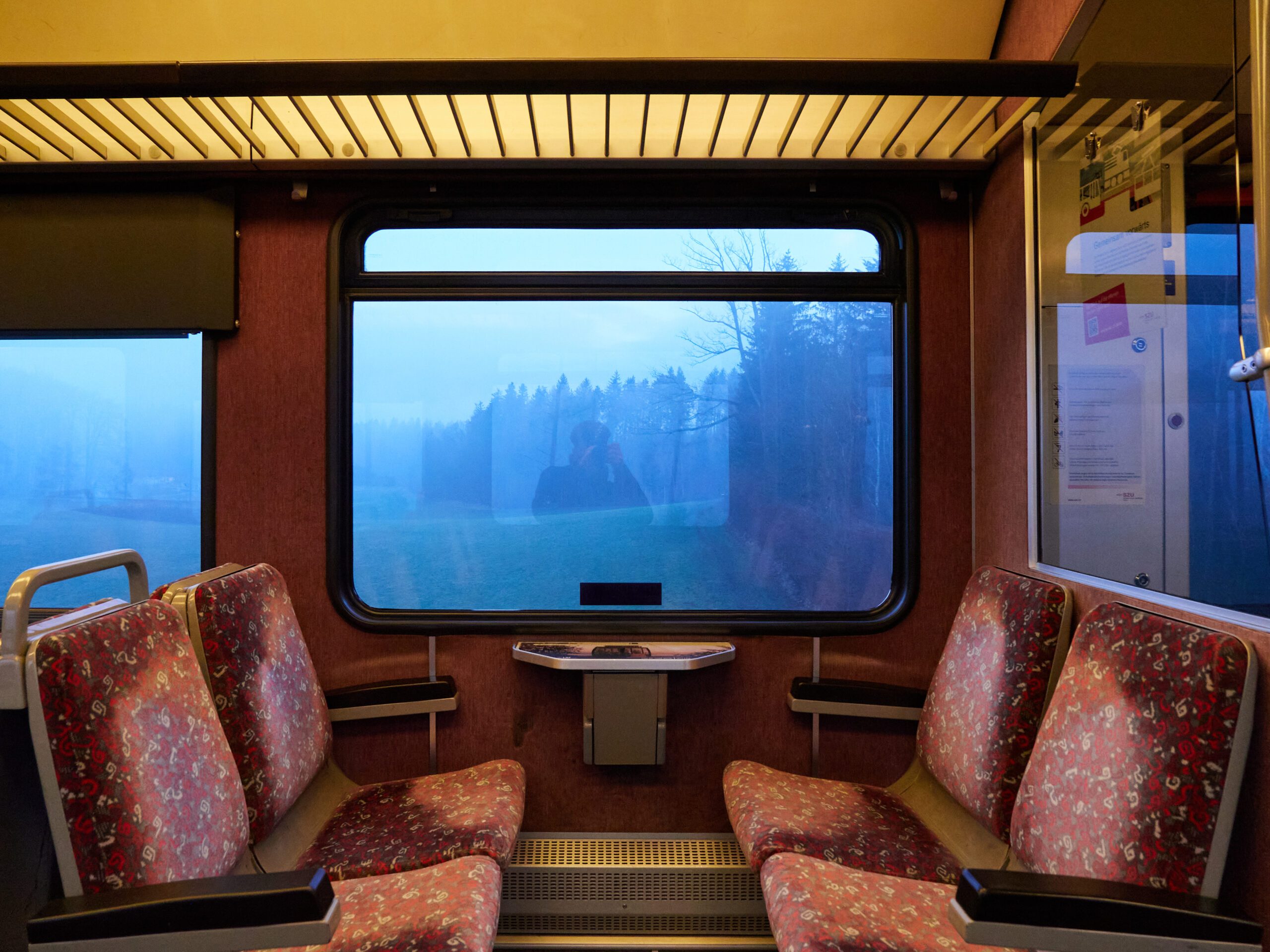
I exceptionally like the «metro style» exterior and interior design. They feature a big multifunctional compartment and wide doors. Note the moquette, the studded flooring and the fabric covered walls! All 90ies retro style now.
The new kids on the block are the Stadler class Be 510 multi-system EMU (full Name Be 522 511-516, 571-575): 50m, 1400 kW, 123 seats. Six of these 3-car units have been built 2013/2014, another five are in the making or already delivered.
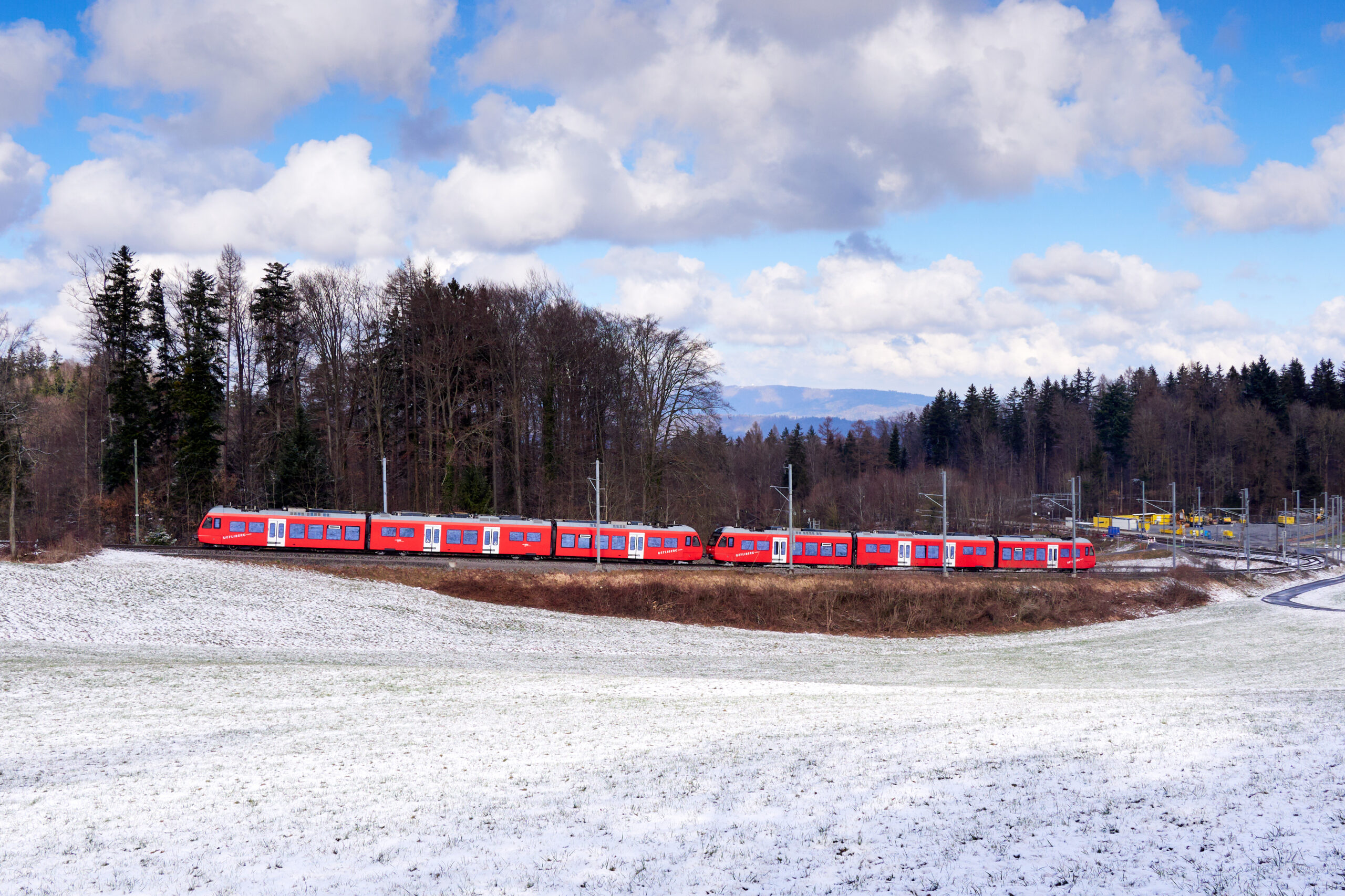
While I like them as passenger (standard modern EMU, quite enjoyable to ride, except for occasional motor drone), I think they’re extraordinarily ugly from the outside. Out of all questionable designs Stadler has ever built, this is imho one of the worst.
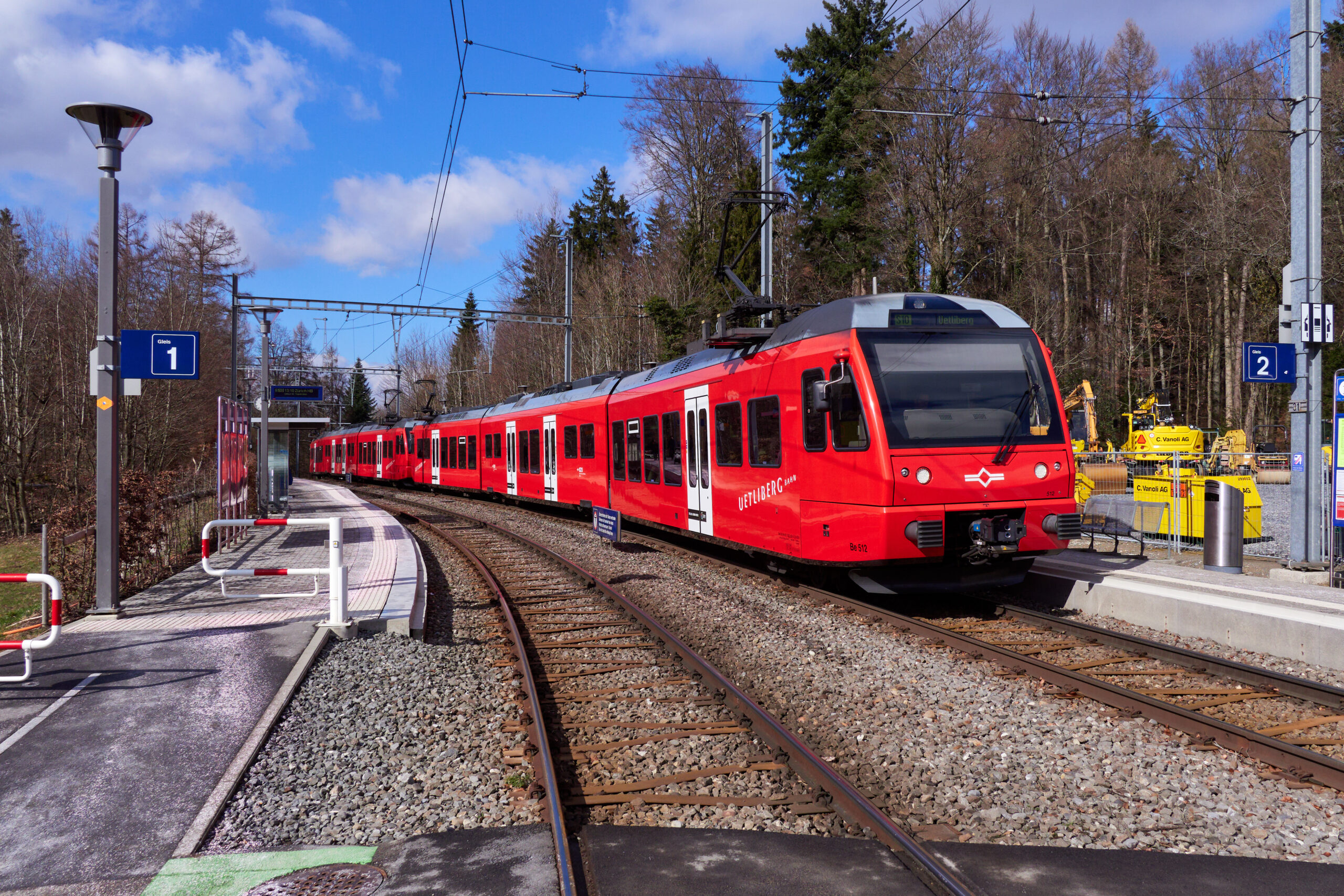
Also I’m not happy with SZU’s decision to ditch the traditional orange for an uniform red. Yes, these new trains could run on the traditionally „red“ Sihltalbahn, but they’ll probably make 95% of their km on the Uetliberg line. I’d very much preferred the original design proposal in the tradition of „metro style“ looking orange trains for the Uetliberg.
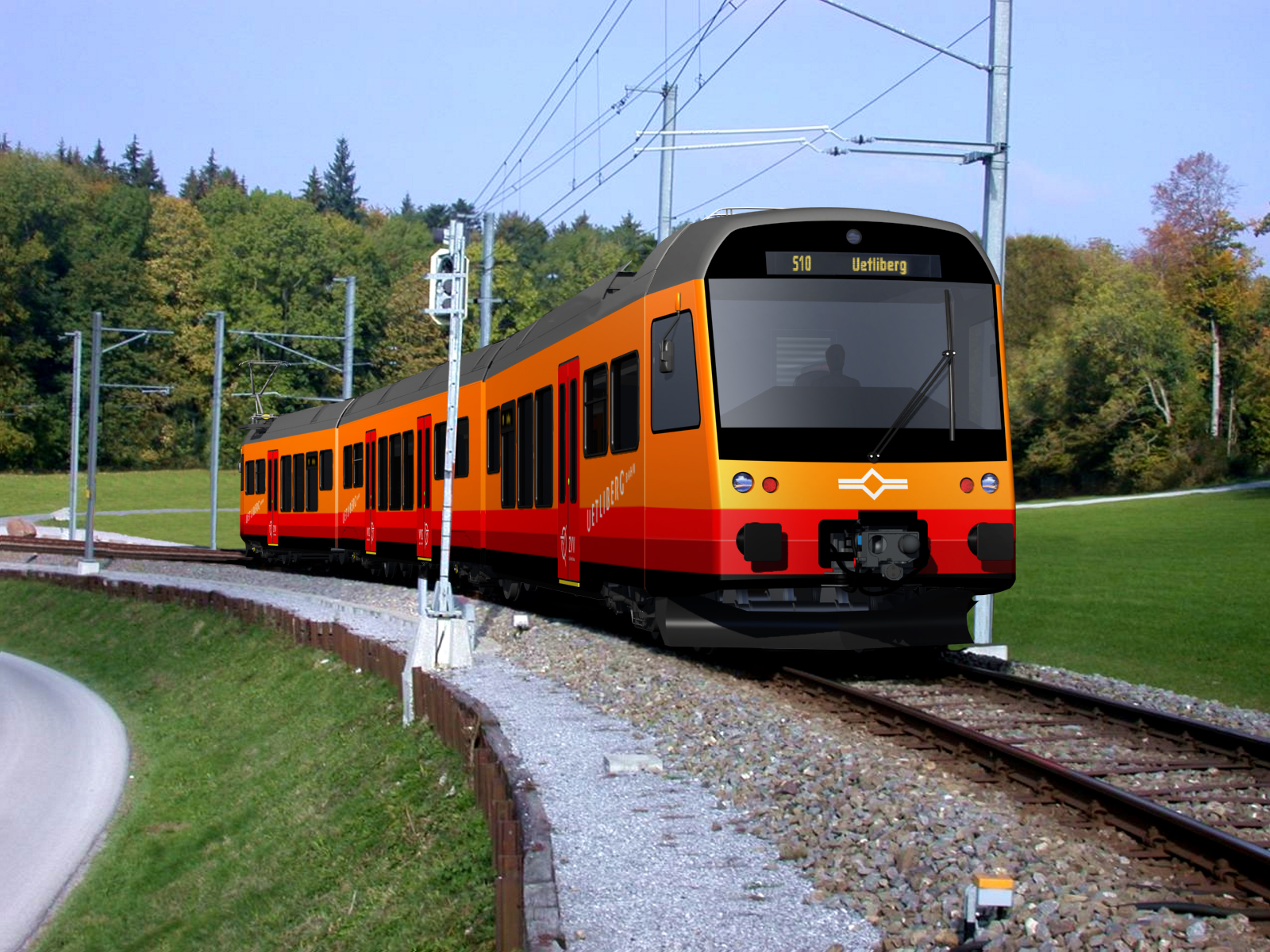
📷 Quelle: Stadler Rail/SZU
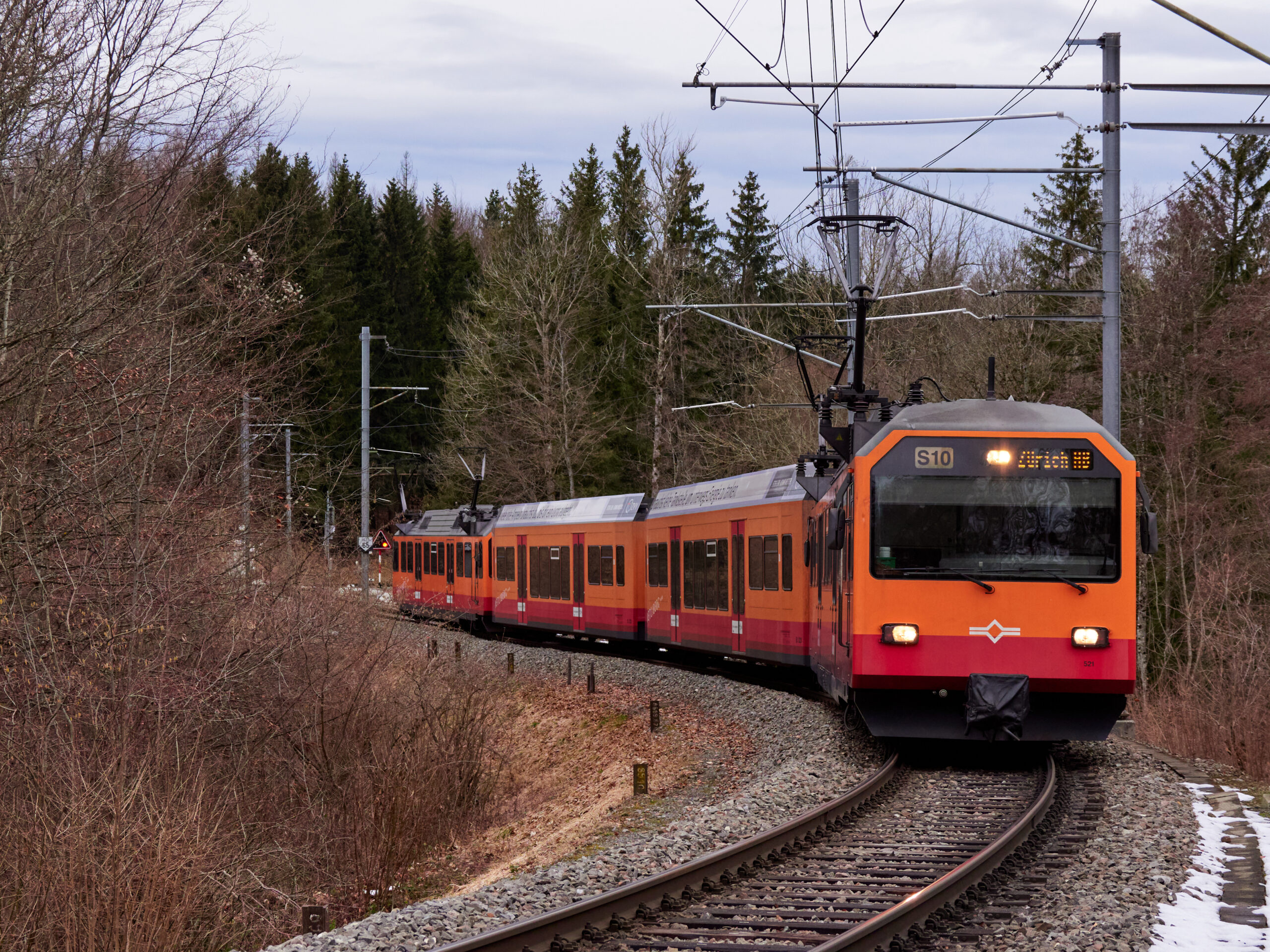
That being said, let’s continue our journey uphill. With 70 per mill, the line leaves Ringlikon and describes wide curves to gain height. Some photographers say, that this is the only spot to make decent pictures of the line. I hope, this thread proves otherwise – at least a bit.
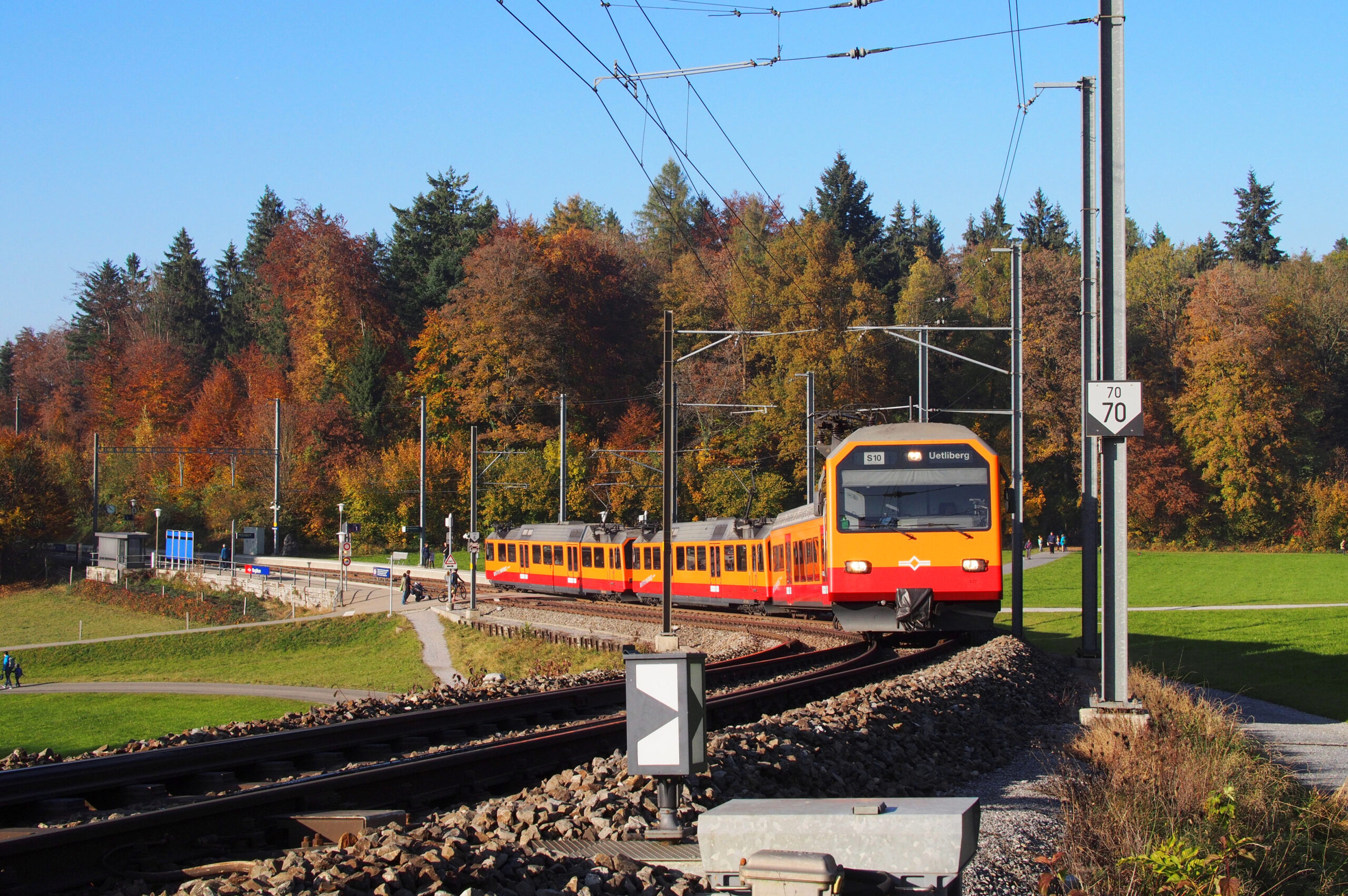
But yes, it is beautiful here! 🥰
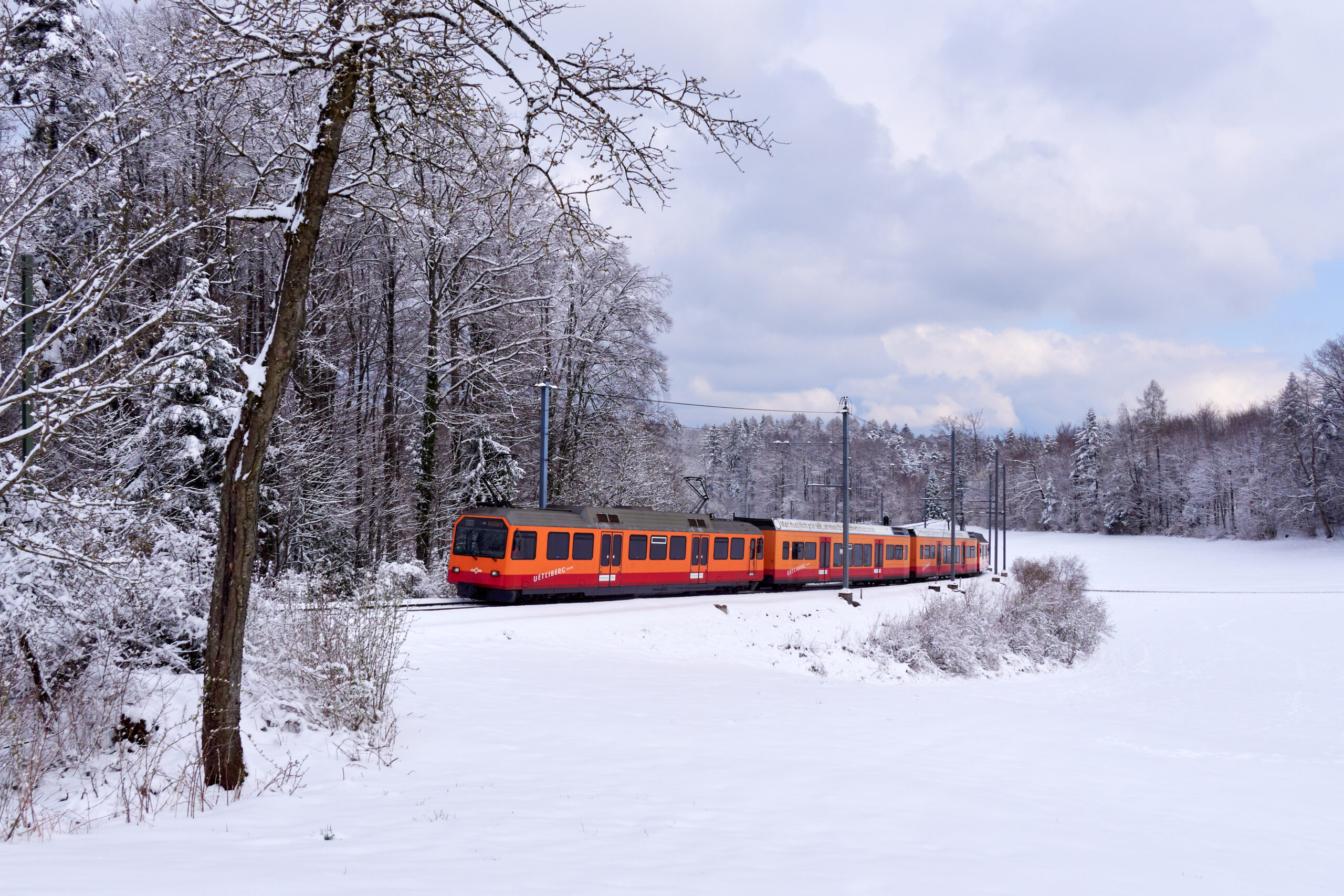
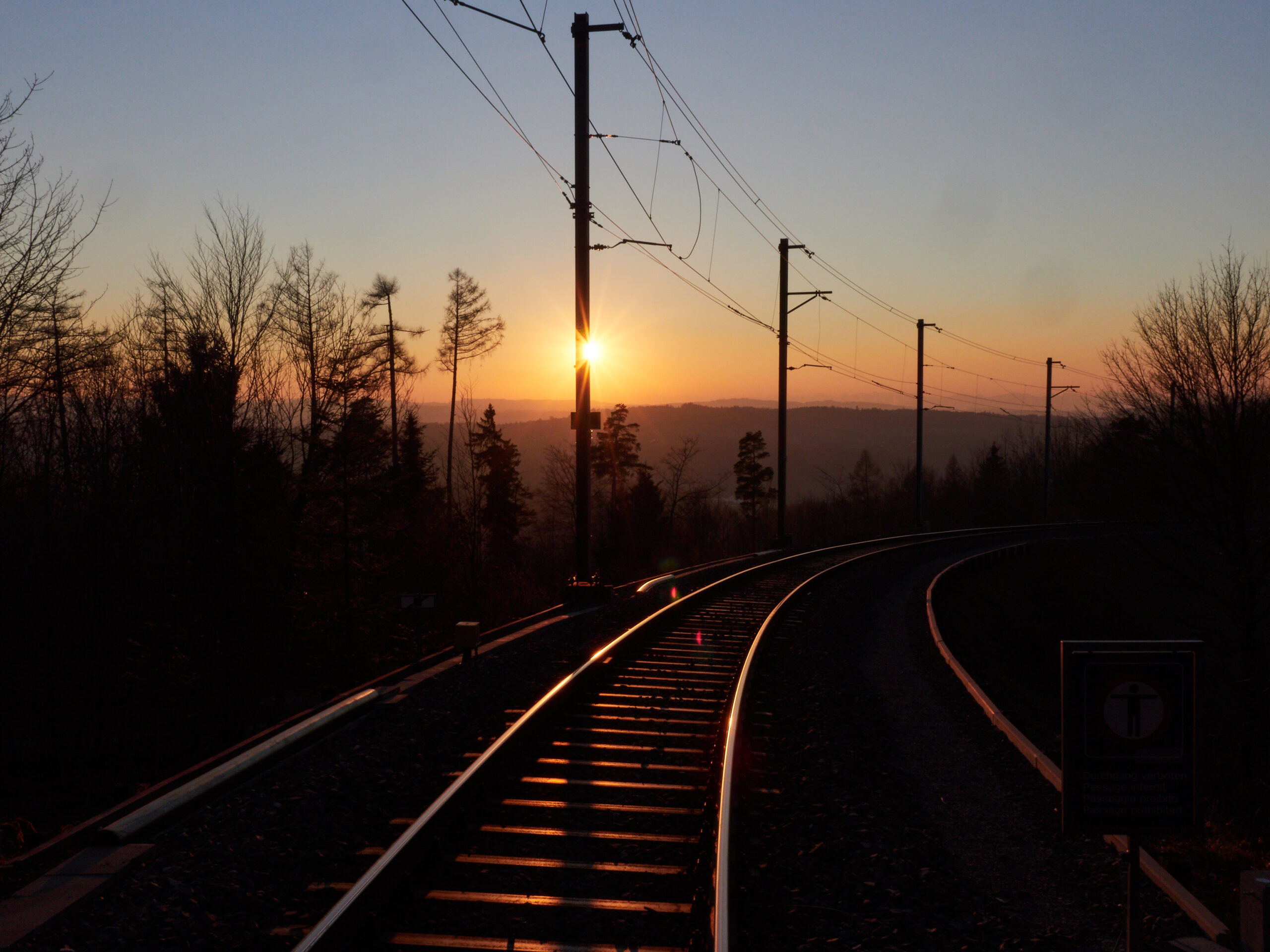
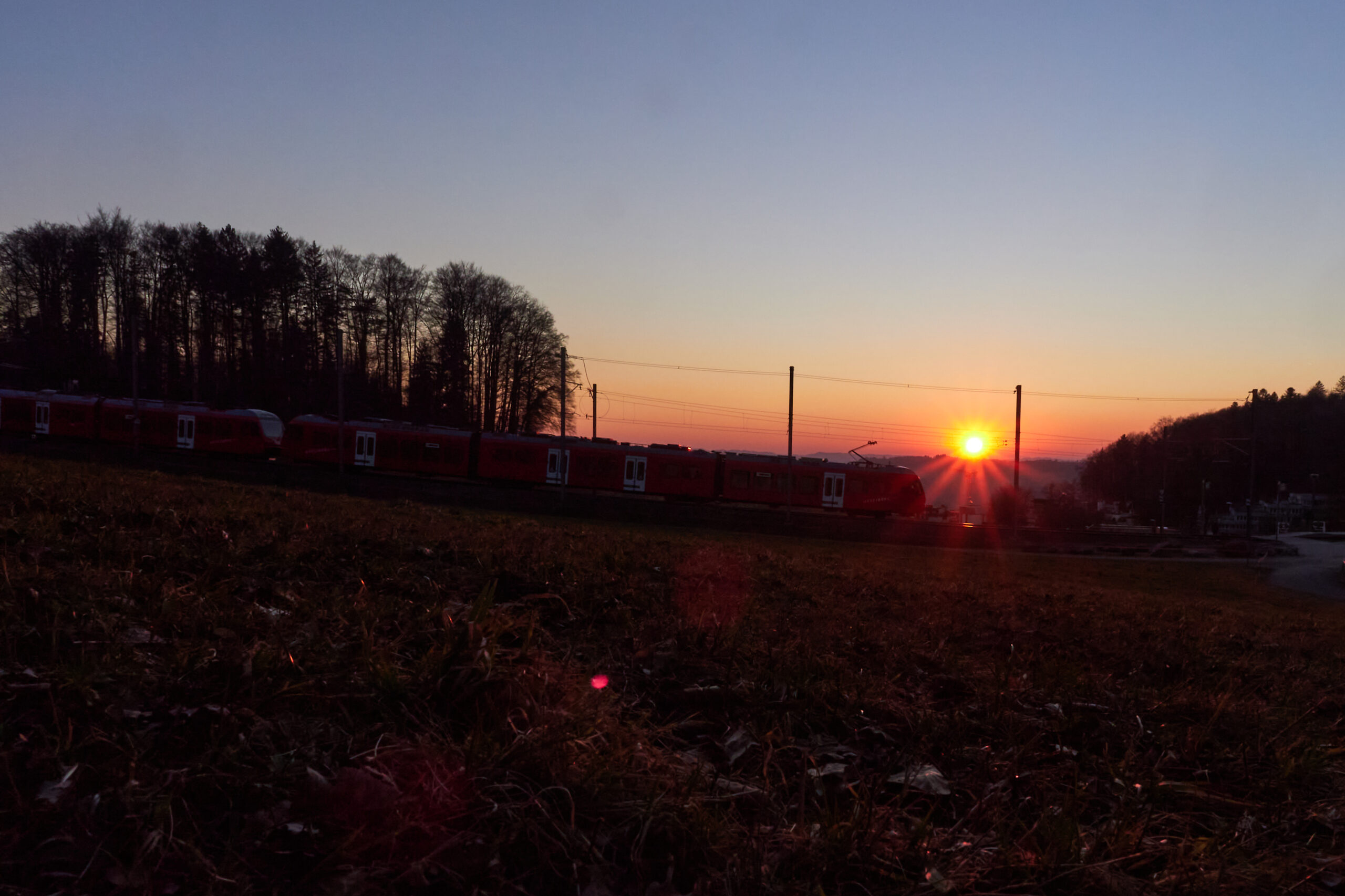
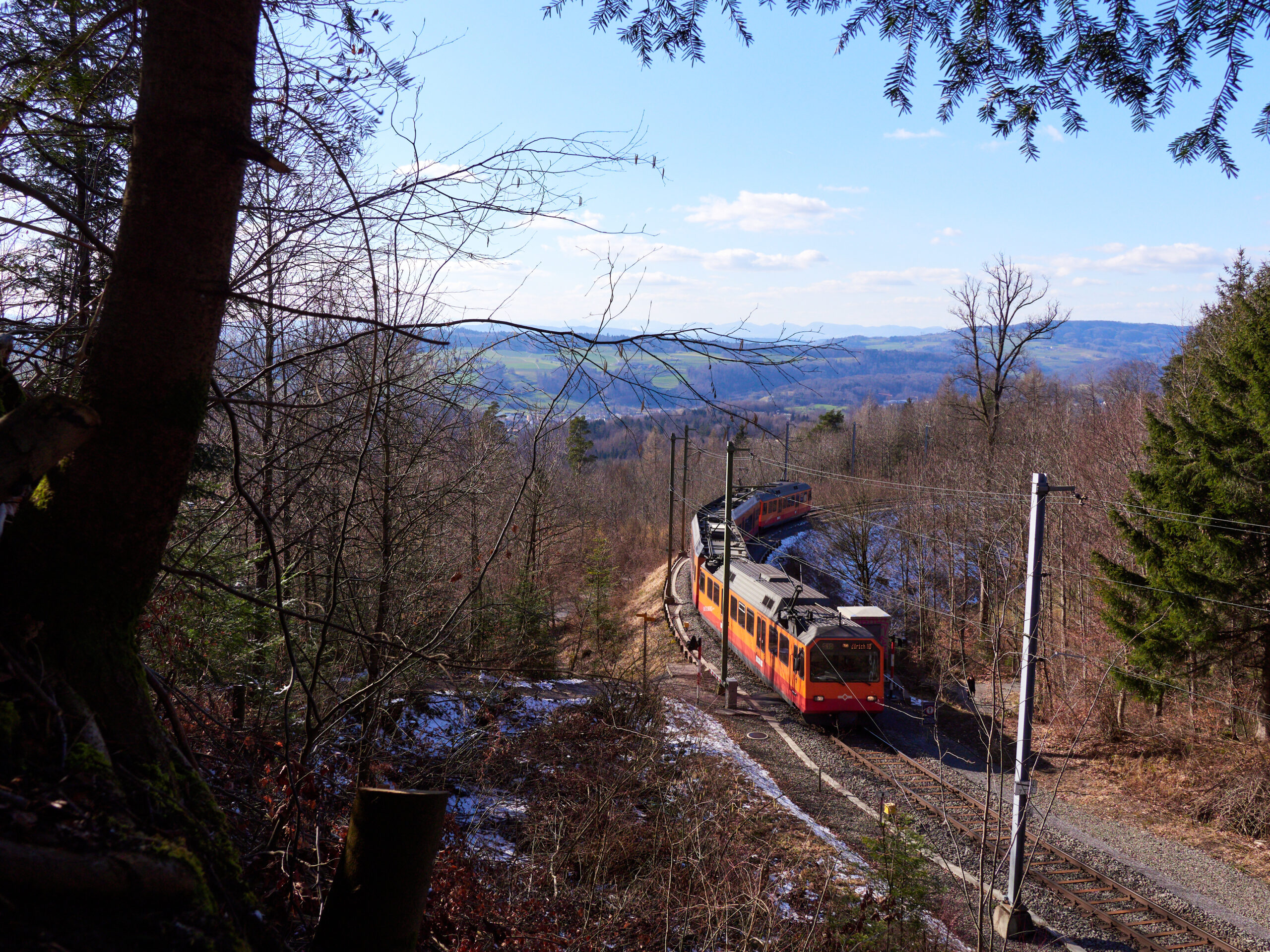
Back into the forest. 🌲🌲🌲
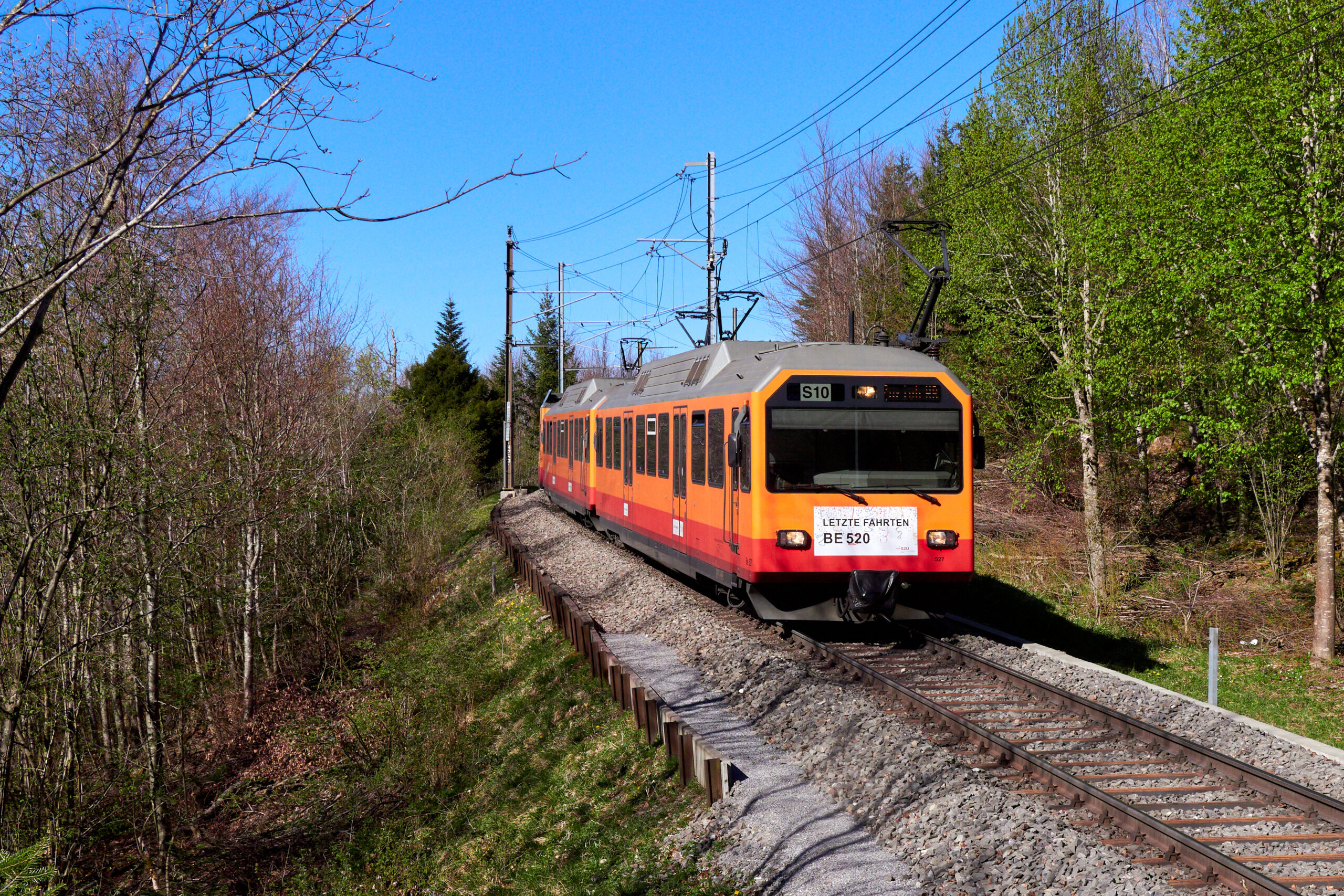
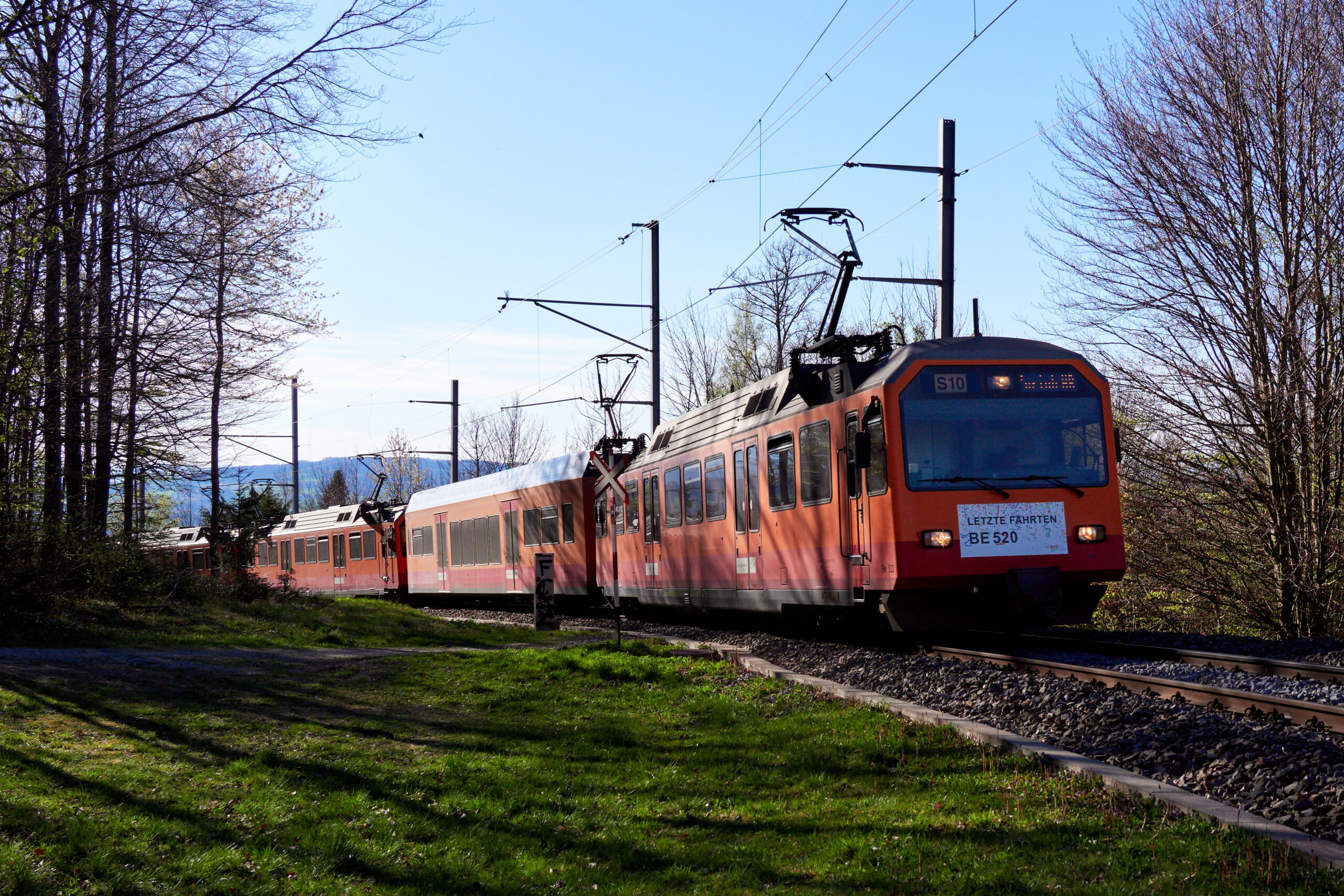
Around a last hill, into a last valley, and then, we approach the terminus. The 186 m high TV tower comes into view.
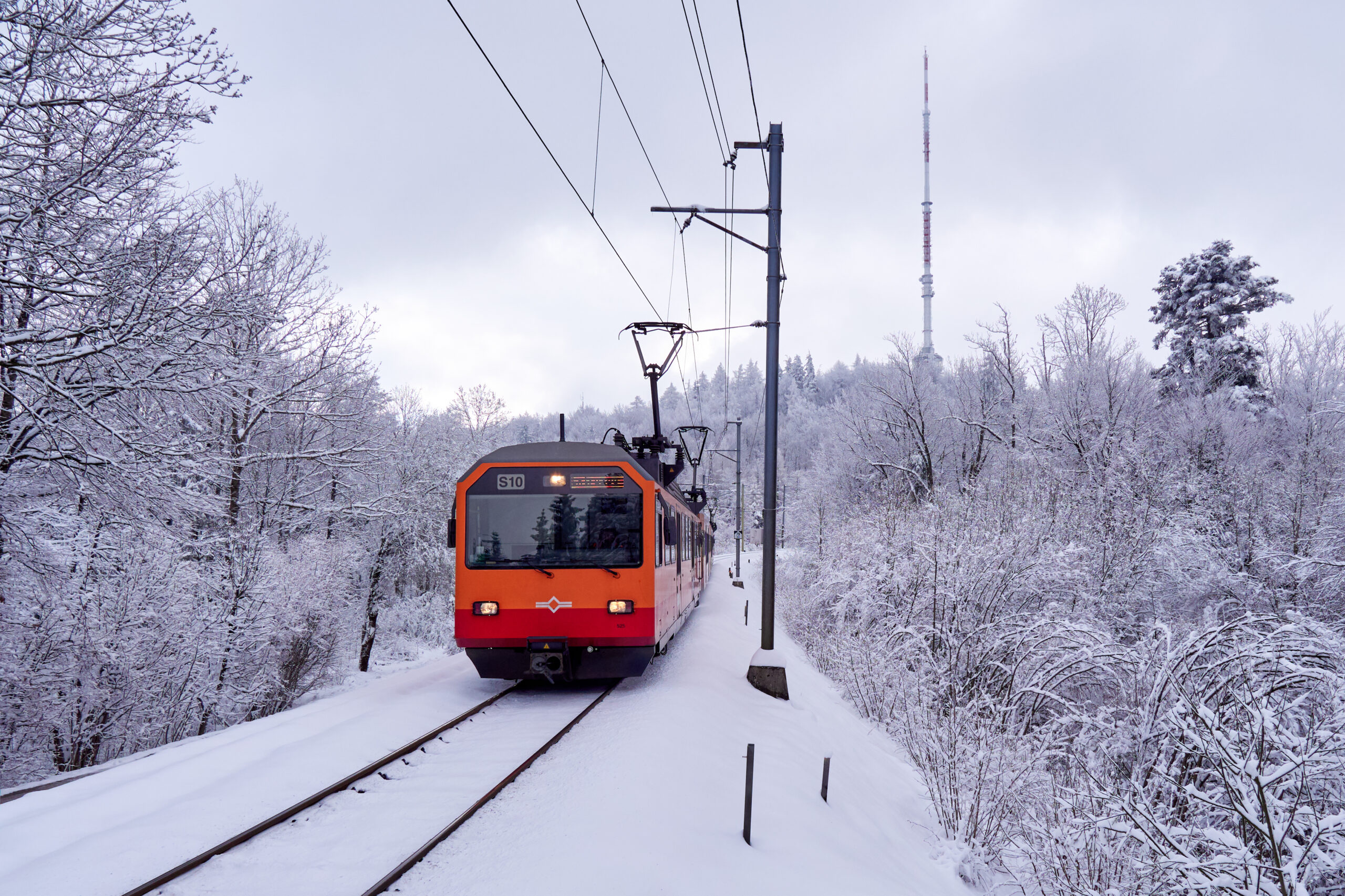
79‰! That’s as steep as it gets on non-rack normal gauge railways in Switzerland! ⛰️
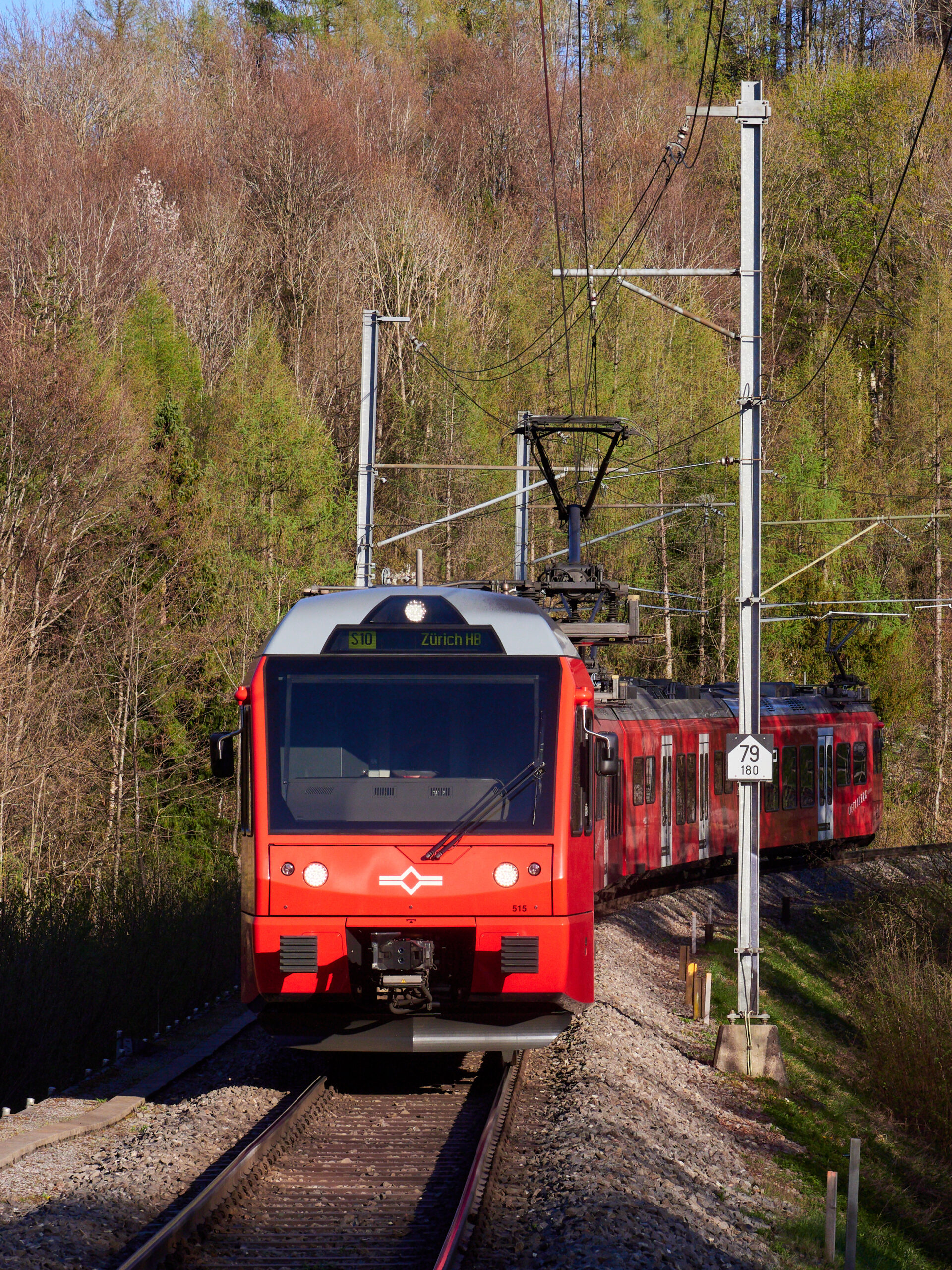
Driver removed digitally as he was very clearly visible in this picture.
Uetliberg Kulm, 813m. Terminus with a view. ⛰️
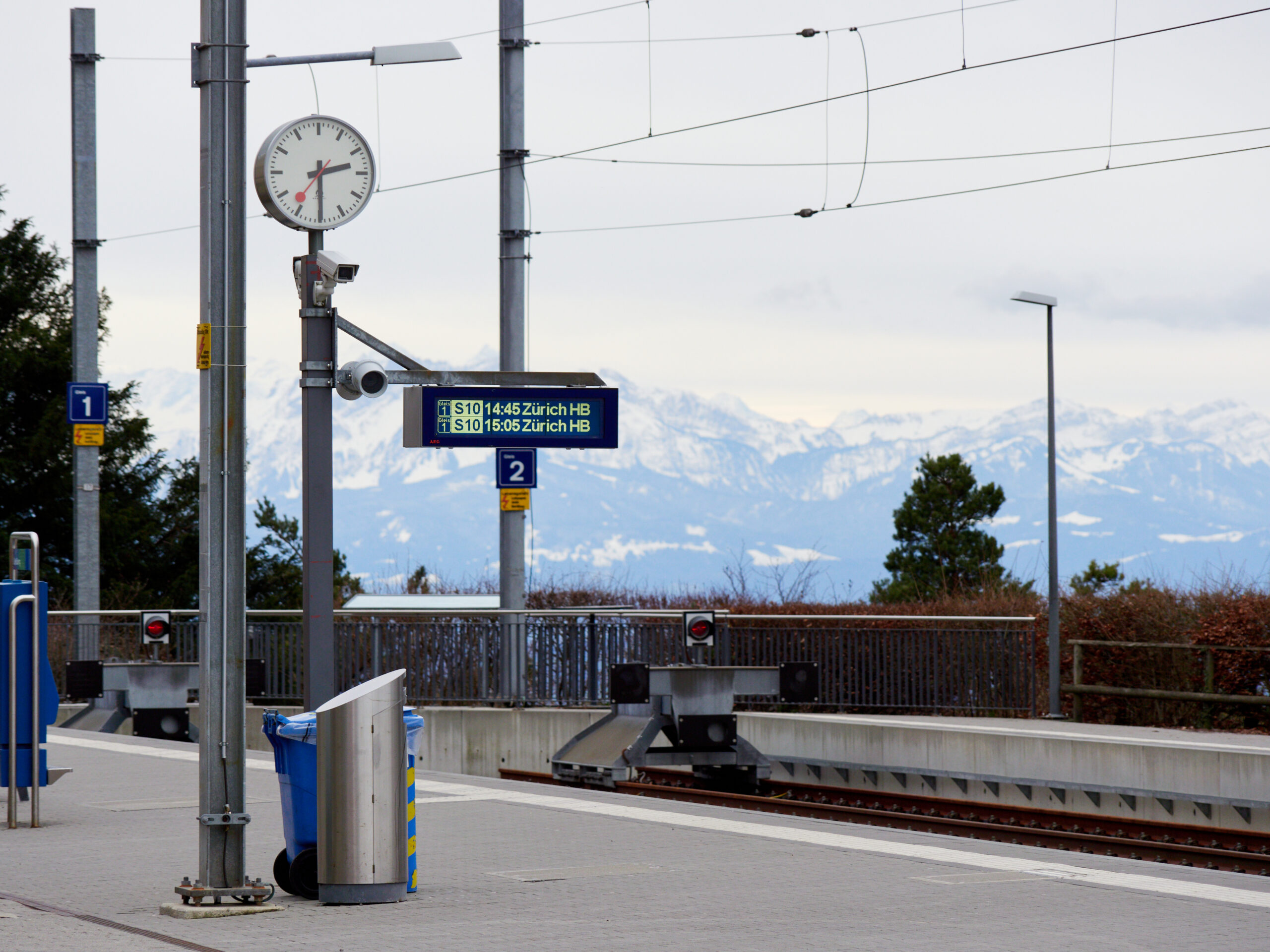
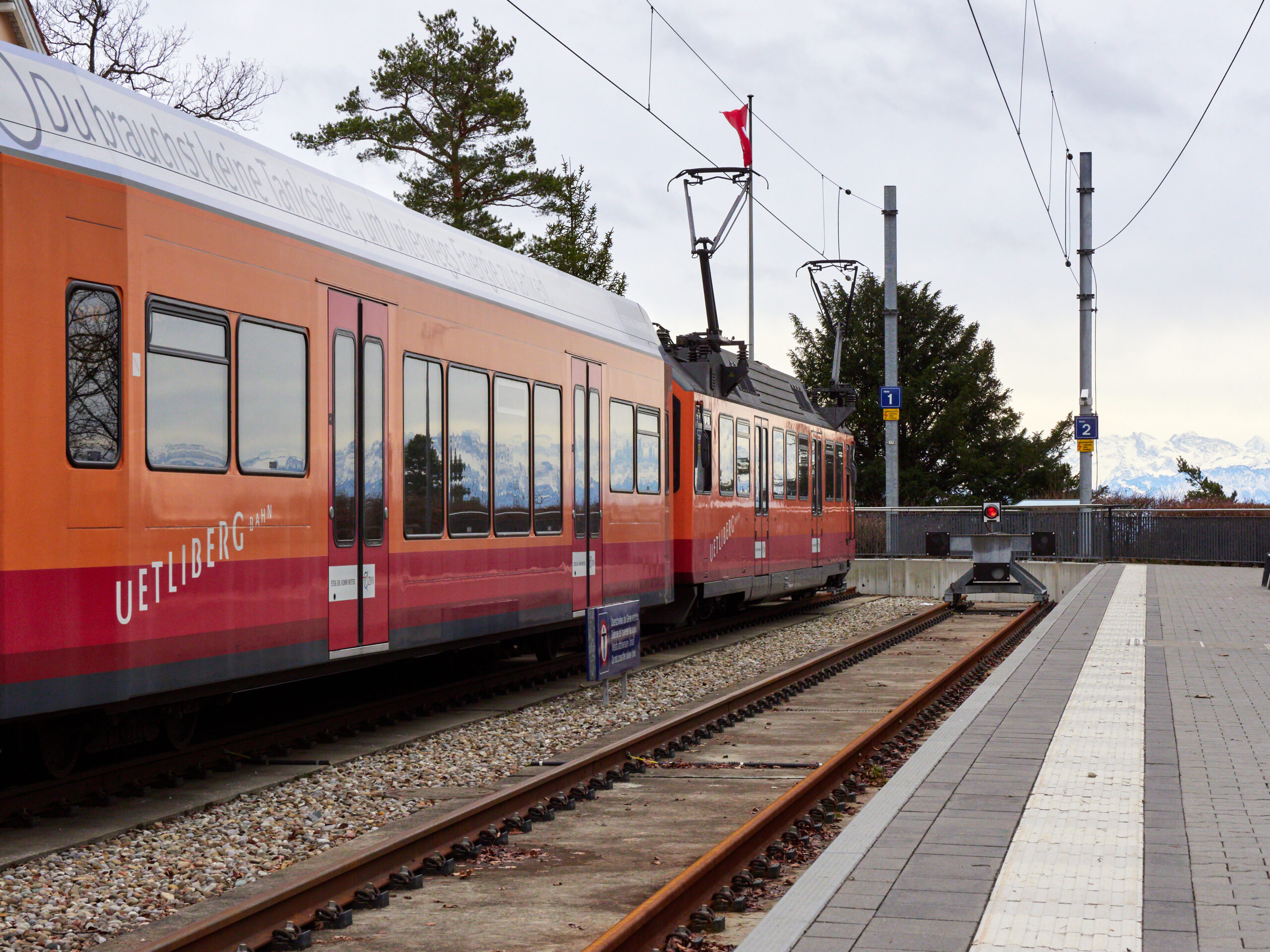
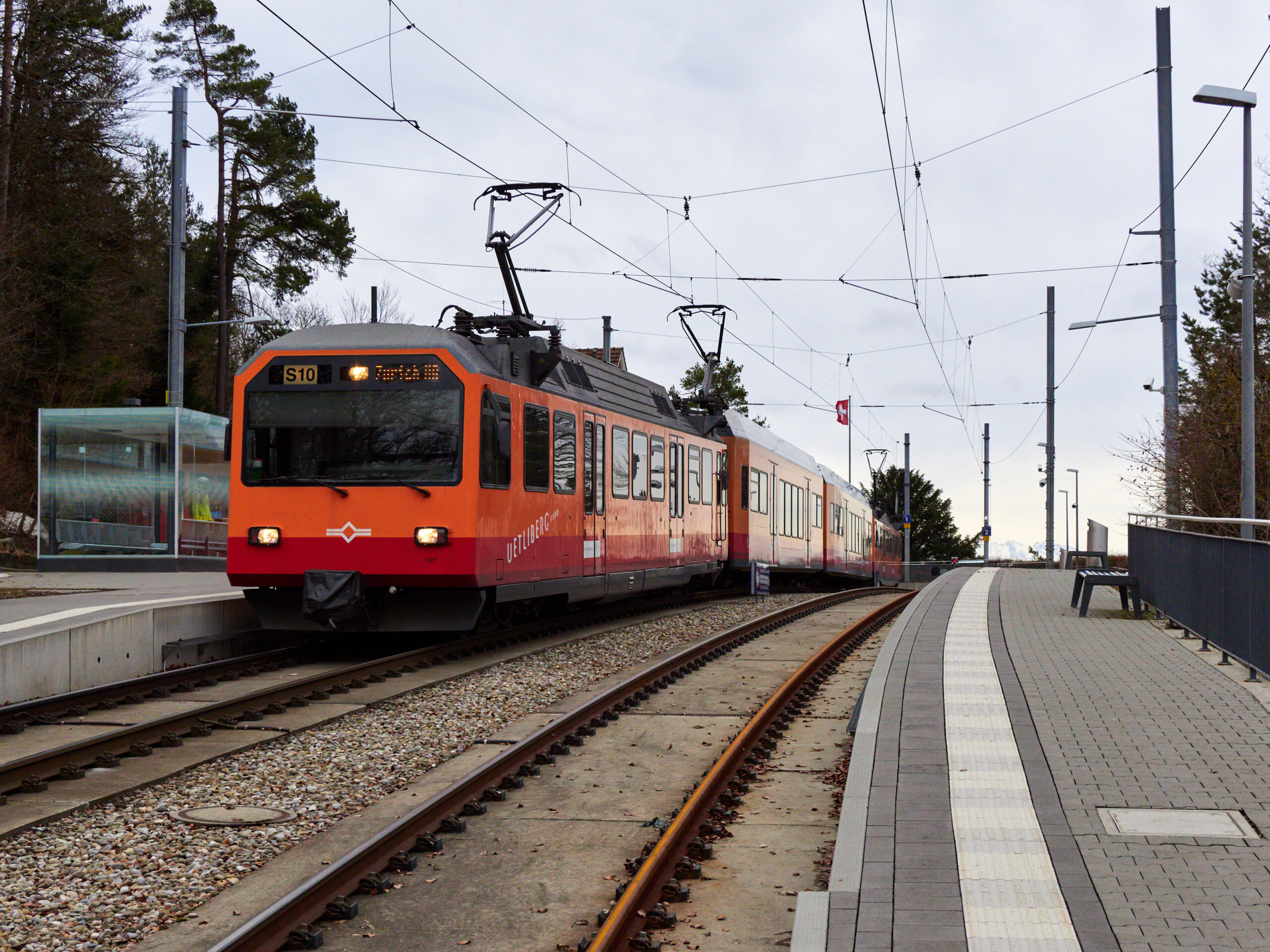
There is a restaurant here, where you can sit on the platform and drink coffee. ☕ Of course, it’s recommended to take the footpath to Uetliberg peak with a wonderful view. Or even further to Felsenegg (cable car & train back to Zürich) or Albis pass (bus&train back). 🥾
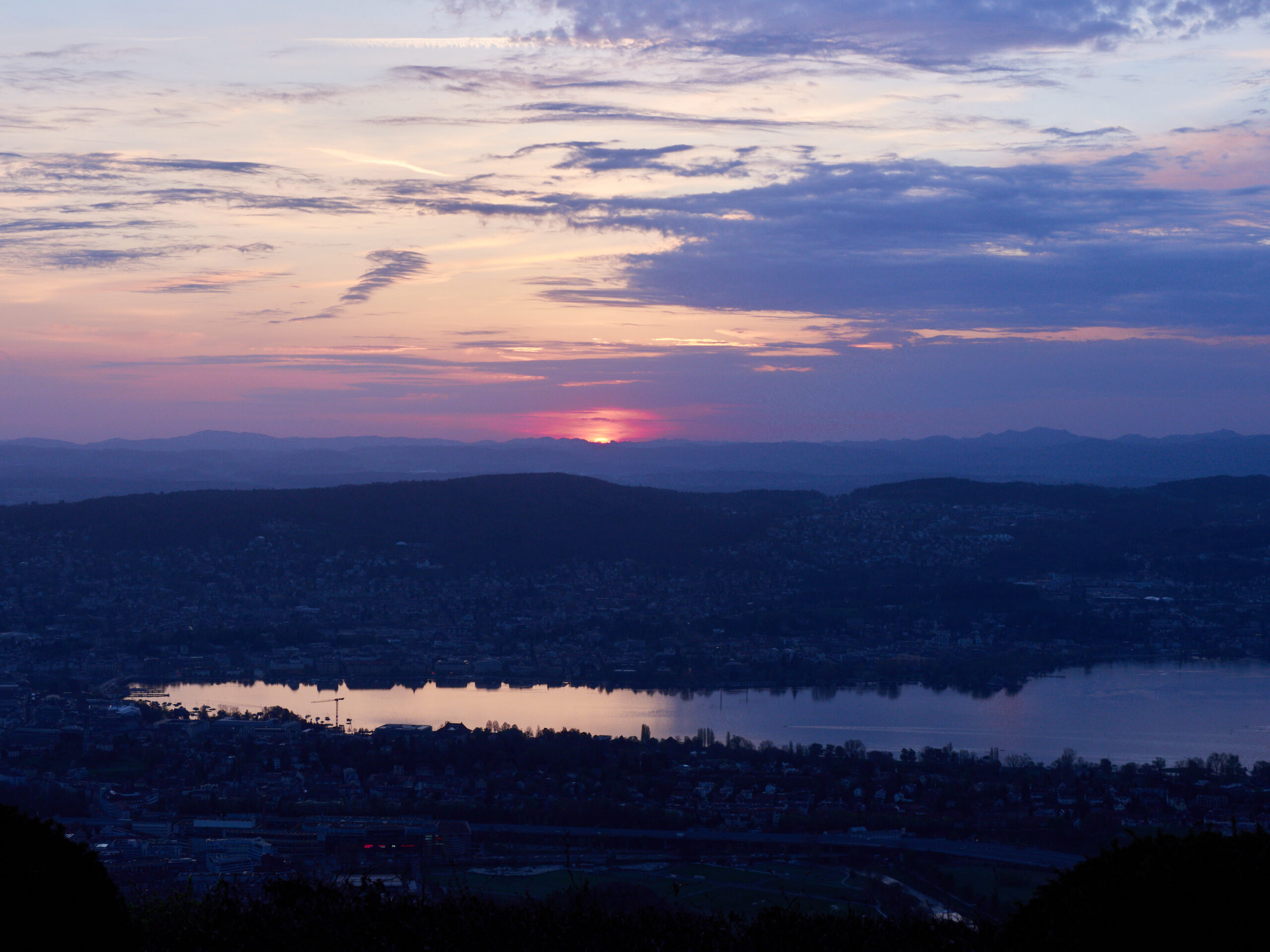
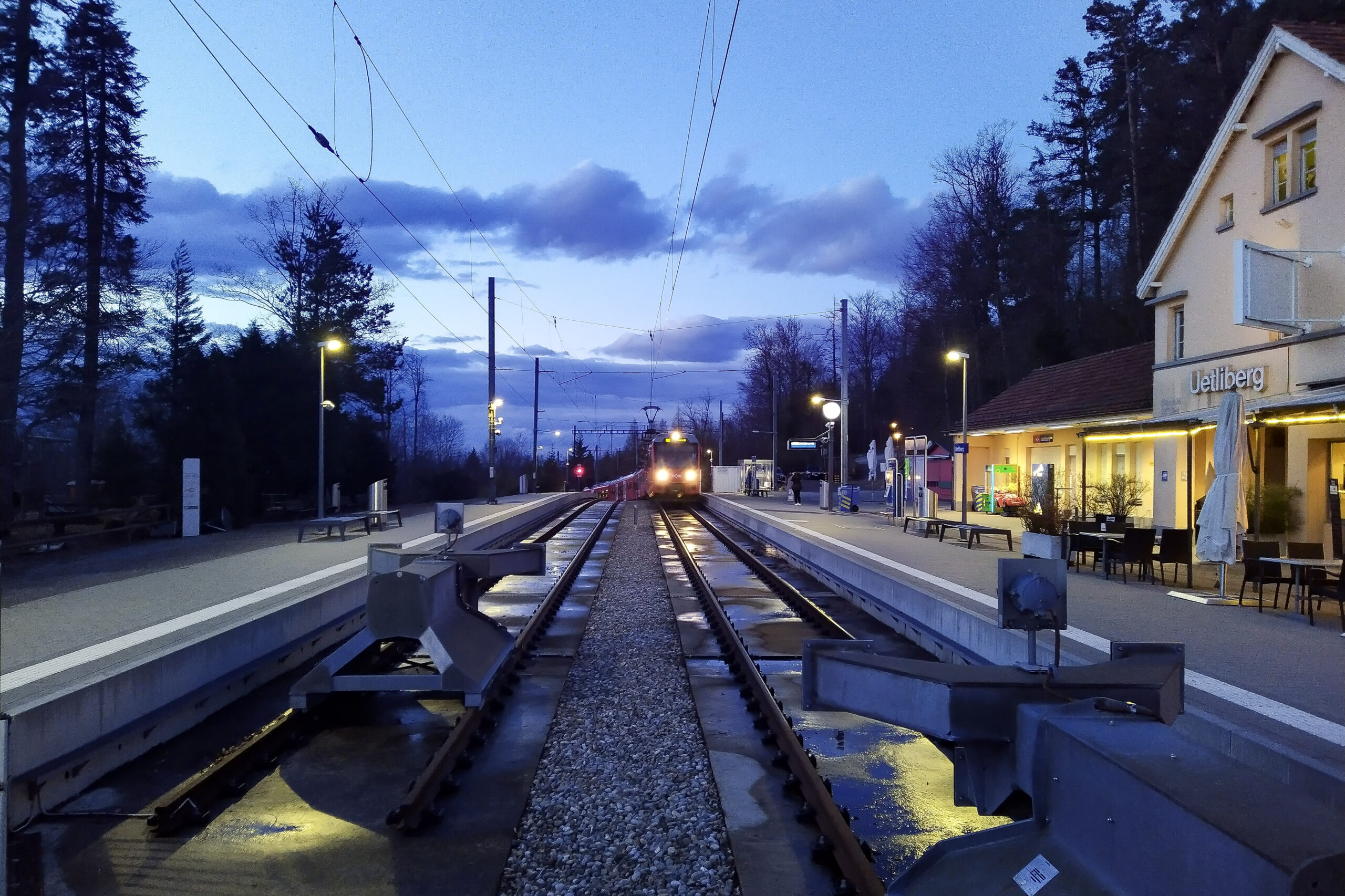
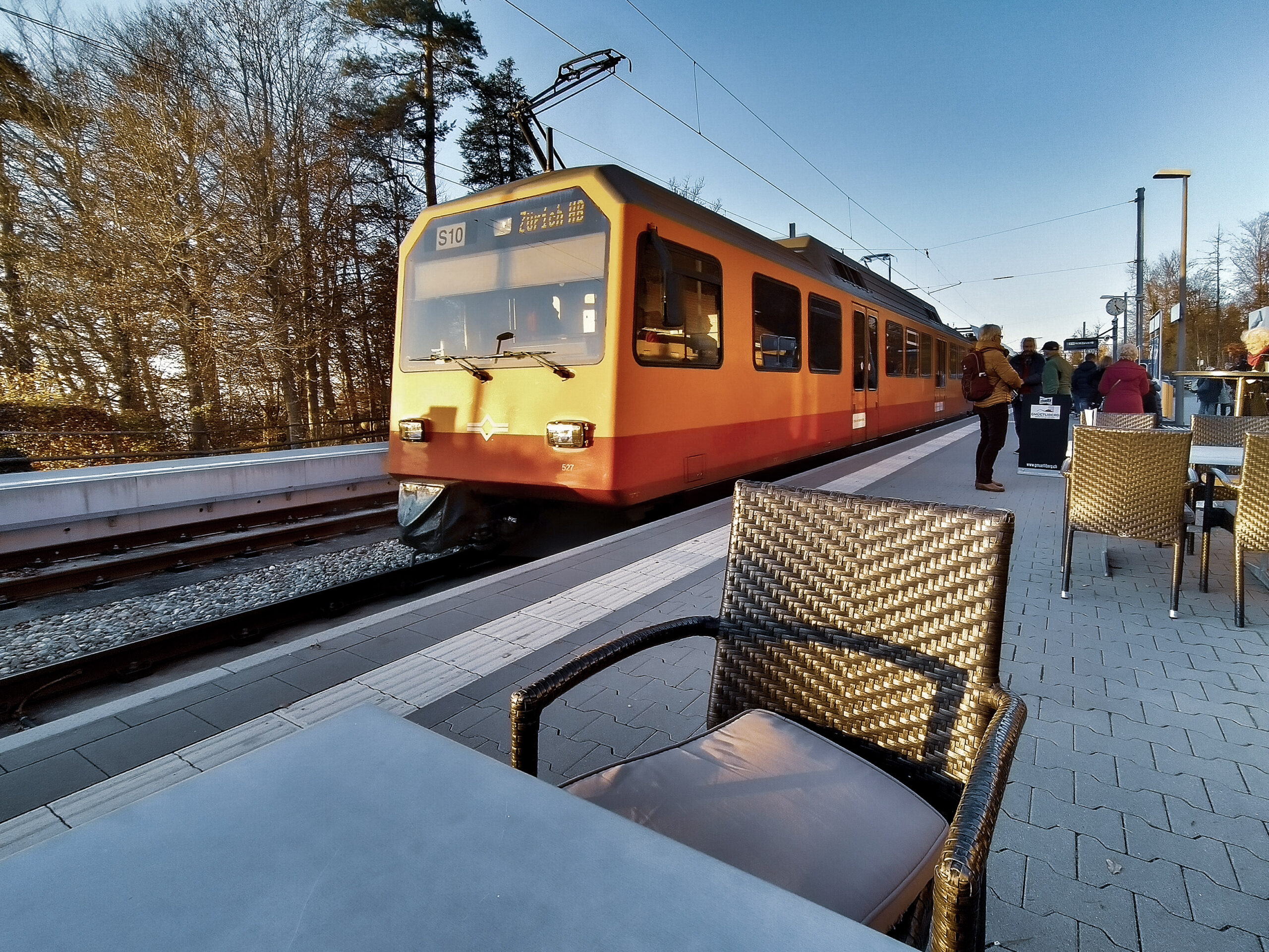
And now, it’s time to face the inevitable. It’s 19:00. The probably last ever passenger train worked by class Be 520 arrives at Uetliberg.
Last photos. There are around 20 fans here to say goodbye and I saw many more during the day – including children happy to see «an orange one». This is also thanks to the open communication towards us fans. Thank you, SZU! 😊
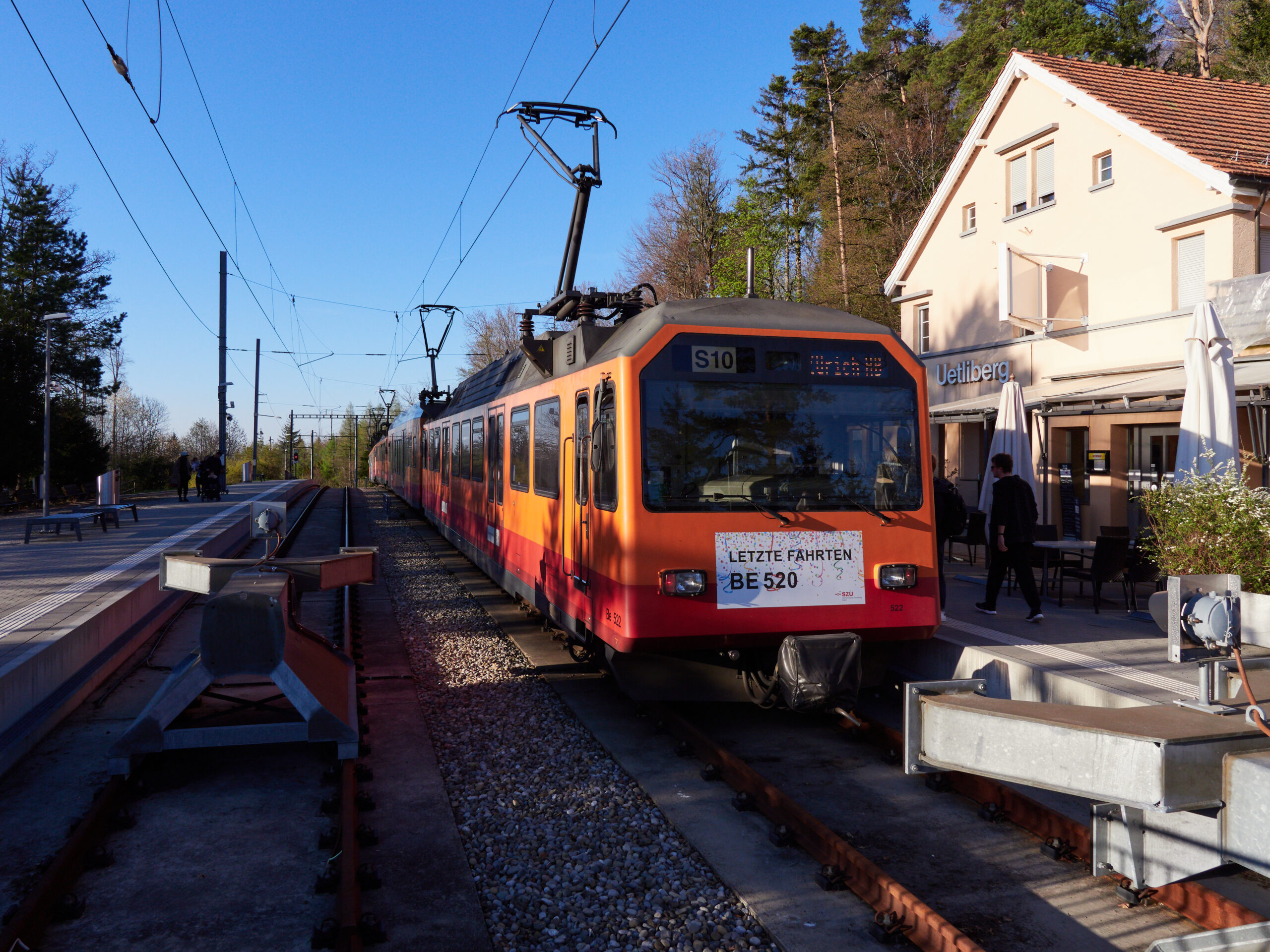
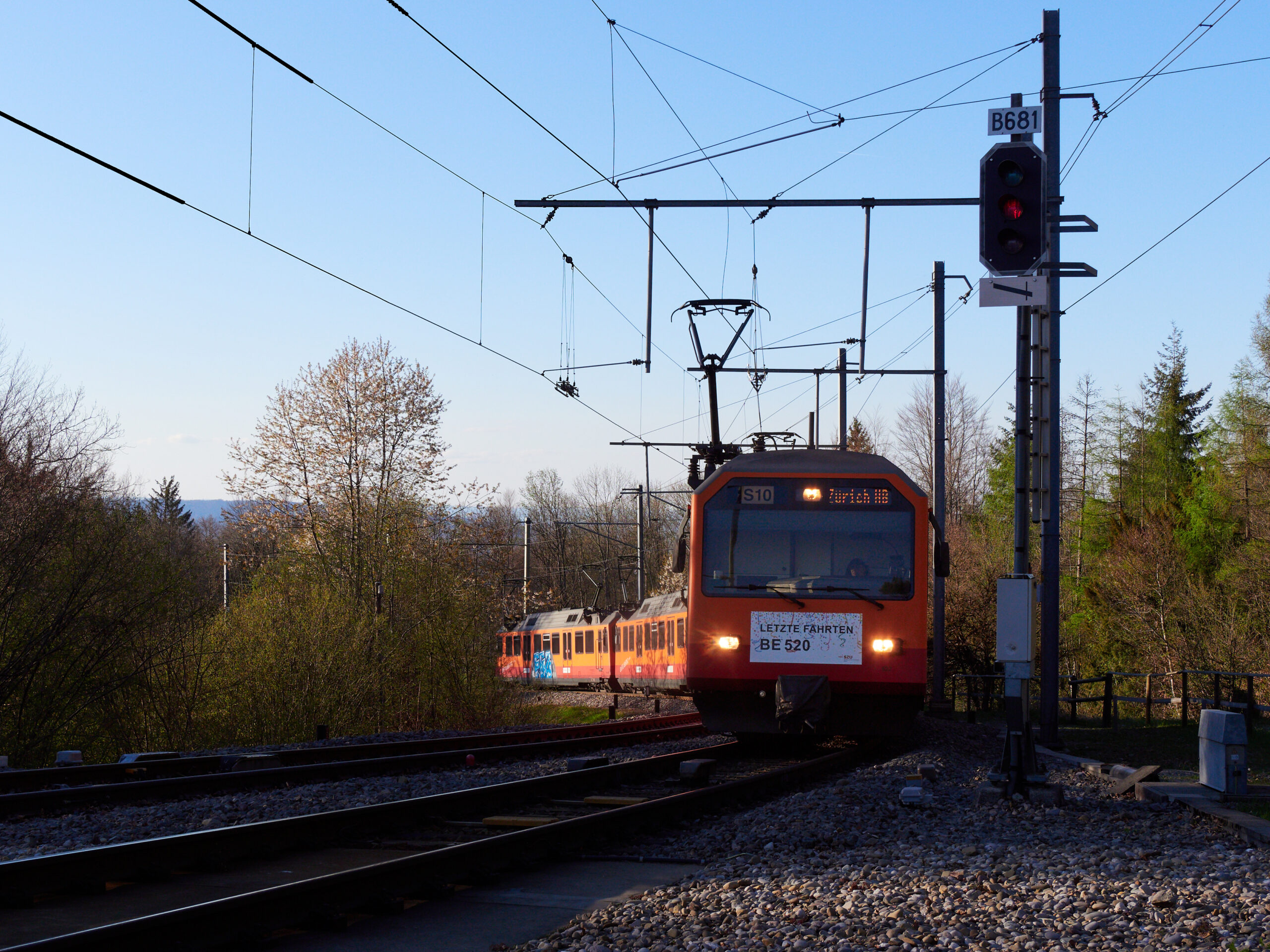
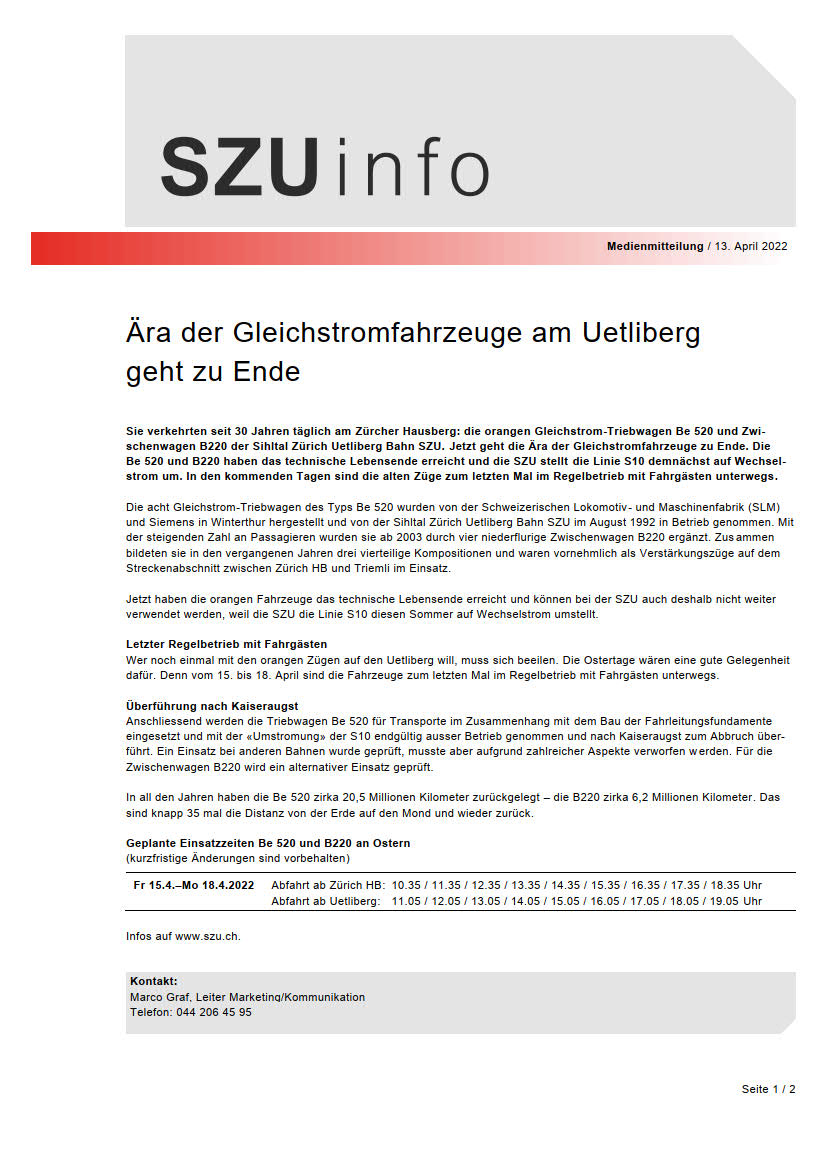
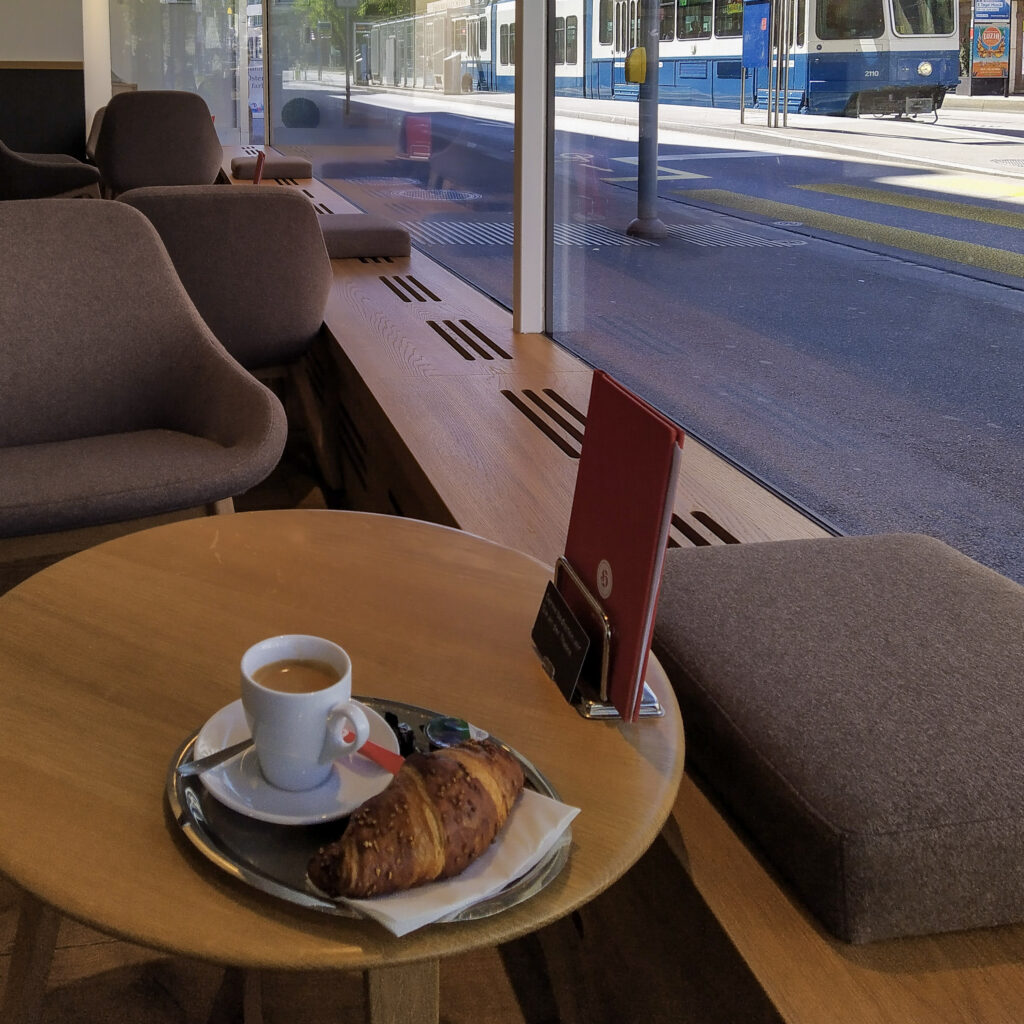
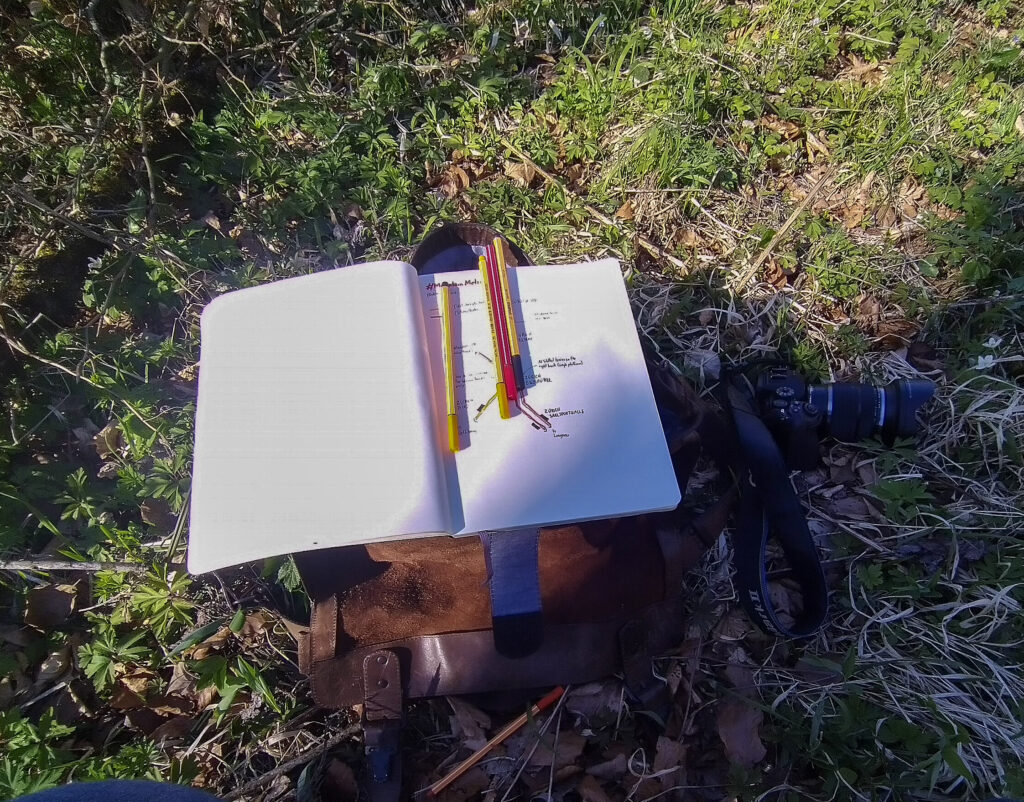
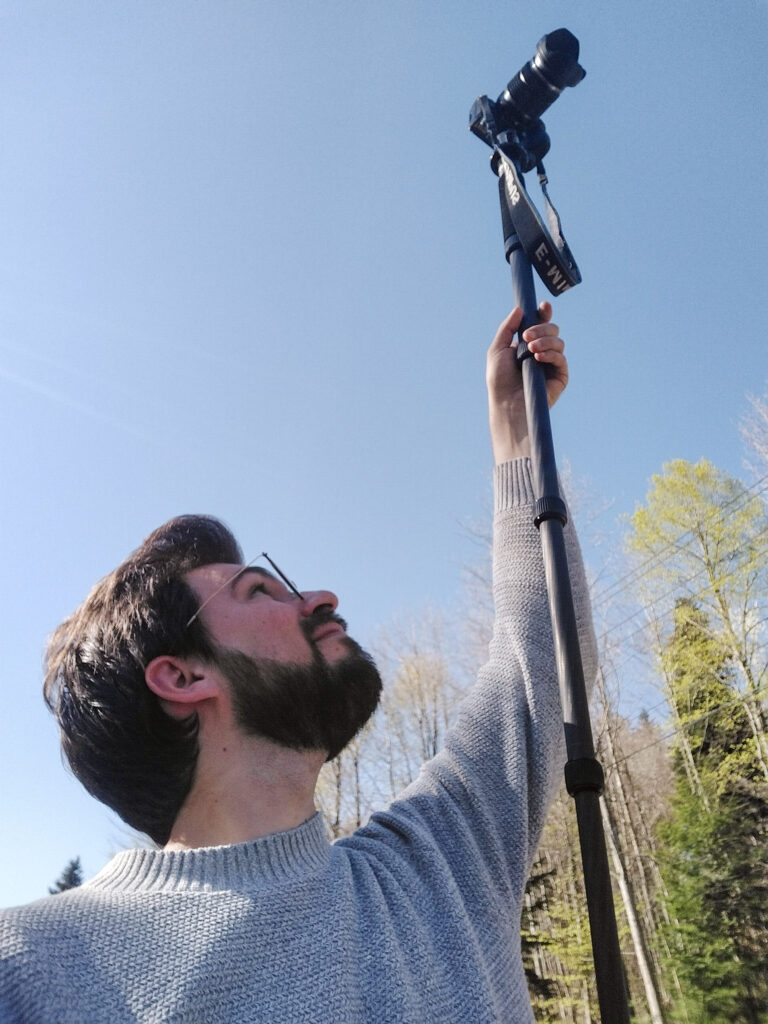
Making of #MountainMetro. Even some of the pictures are from the last few months, the thread was written on this day at different spots along the line, as I was enjoying the «old» Uetliberg railway with the Be 520 for one last time on this beautiful spring day.
And now, it’s time to say goodbye. The departure of the last Be 520 from Uetliberg is imminent.. 😢
In the last Be 520 train down to the city. At Ringlikon, the driver makes a short announcement that this is the Be 520 last ever ride down from Uetliberg with passengers.
Note: Voices of other passengers were removed digitally.
Farewell, my #MountainMetro! 👋😢
That’s it. They’re gone. And with the Be 520’s 30 years long career, this nearly as long thread comes to an end. I hope you liked this virtual trip to my neighborhood. Thanks for reading #MountainMetro and have a good rest of your day!
🟥🟧